Medicine ball exercises: build a medicine ball workout
How to pick a medicine ball weight, the best moves for power and core strength, and how to program explosive medicine ball training.
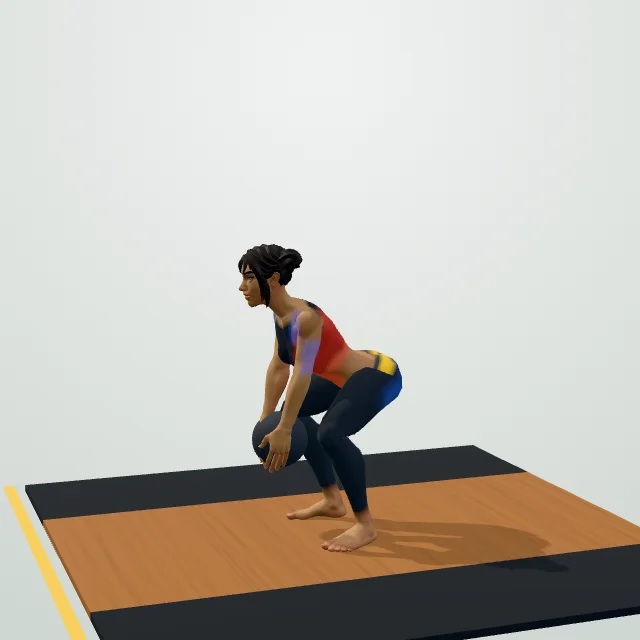
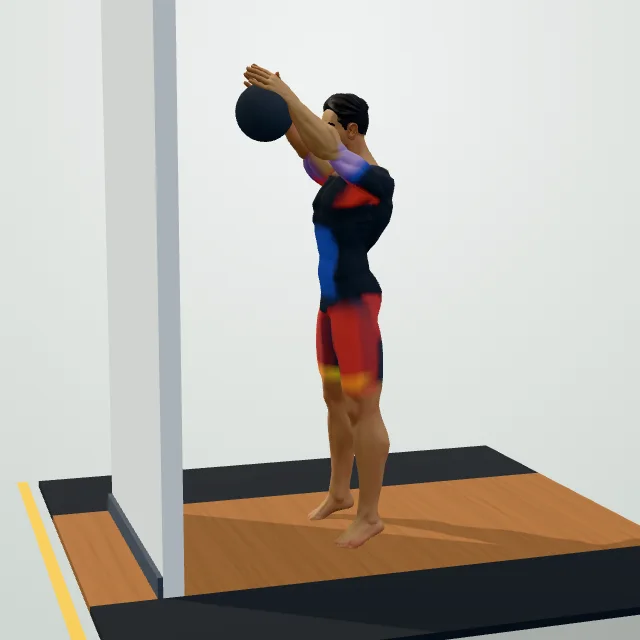
Medicine ball exercises add explosive, rotational and throwing power to a strength routine — movements a dumbbell or barbell can't safely replicate, since you can throw or slam a medicine ball without worrying about dropping it on your foot. A well-built medicine ball workout is popular with athletes in baseball, golf and sprinting because rotational power transfers directly to those sports, but the core and power benefits apply just as well to general fitness. The 3D coach shows setup for the medicine ball slam and wall ball shot.
Choosing a medicine ball weight
Lighter balls (2–4 kg / 4–9 lb) suit fast, explosive movements like slams and rotational throws, where speed matters more than load. Heavier balls (6–10 kg / 13–22 lb) suit slower strength moves like a wall ball squat-to-throw or carries. If you're buying one ball for general use, a 4–6 kg ball is a versatile starting point for most adults.
Safety and setup
Use a "slam ball" (non-bounce, textured surface) rather than a bouncy medicine ball for floor slams, since a bouncing ball can rebound unpredictably. Clear the throwing or slamming space of people and breakables, and on rotational throws, lead with the hips rather than only the arms to protect the lower back. If you have lower back pain, start with lighter loads and slower, controlled versions of these moves rather than full-speed slams.
Best medicine ball exercises
The medicine ball slam is a full-body power move that also doubles as a conditioning finisher — pick the ball fully overhead and drive it into the floor using your hips and core, not just your arms. The wall ball shot combines a squat with an overhead throw against a wall, building lower-body power and shoulder endurance together, and is a staple of many conditioning-style workouts.
Sample medicine ball workout
| Exercise | Sets × reps | Rest |
|---|---|---|
| Medicine ball slam | 4 × 8–10 | 60 s |
| Wall ball shot | 3 × 10–15 | 75 s |
How to program medicine ball training
Because these are explosive, whole-body moves, keep sets relatively short (6–12 reps) with enough rest (60–90 seconds) to keep each rep powerful rather than grinding through fatigue. Medicine ball work fits well as a conditioning finisher after strength training, or as its own short circuit for athletes building rotational power. Beginners should start with slower, controlled reps at a lighter weight before adding speed, and seniors can use a light ball for seated core rotations and gentle throws rather than full-speed slams.
Medicine ball training for women and men
The same slam and wall ball patterns train the same muscles and power qualities regardless of gender — a lighter ball (2–4 kg) is a sensible starting point for anyone new to explosive training, not specifically for women, and progression to a heavier ball follows the same principle of adding load once technique and control are solid.
Medicine ball vs kettlebell training
Both build explosive, whole-body power, but the movement patterns differ: kettlebell swings train a hip-hinge repeated at speed, while medicine ball slams and throws train the whole body releasing force into an object that leaves your hands. Many conditioning-style programs use both — kettlebells for hip-dominant power, medicine balls for throwing and rotational patterns that a kettlebell can't safely replicate. If you only have one, a kettlebell trains more of the lower body directly; a medicine ball trains more rotational and overhead power.
Who should modify medicine ball training
The explosive nature of slams and throws means anyone with an acute shoulder, elbow or lower back injury should hold off until healed, or work with a physiotherapist on a modified, slower version first. Pregnant exercisers can typically continue light seated rotations with a doctor's guidance but should avoid forceful floor slams and any move with a fall risk. As with all training, stop for sharp joint pain rather than pushing through it — normal fatigue in the muscles you're using is expected, joint pain is not.
Where medicine ball exercises fit into your training
Medicine ball moves work well alongside kettlebell training and bodyweight conditioning in a fat-loss or general fitness plan, and complement rotational core work found in the abs and core hub. If you train at home without a wall you're willing to slam a ball against, both exercises here can be swapped for their kettlebell equivalents — the kettlebell swing gives a similar hip-power stimulus to the wall ball, and step-ups or lunges cover the leg-drive component of a slam. Use the plan builder to include conditioning finishers in your own plan.