Full body · Home or gym
Medicine ball slam: explosive power for your whole body
The medicine ball slam lifts a slam ball overhead and drives it into the floor as hard as possible, training explosive power through the lats, abs and hips in one simple movement.
- Secondary
- Front deltsTricepsGlutes
- Level
- Beginner
- Type
- Compound · Both sides together
- Sets × reps
- 3 × 10-12 reps
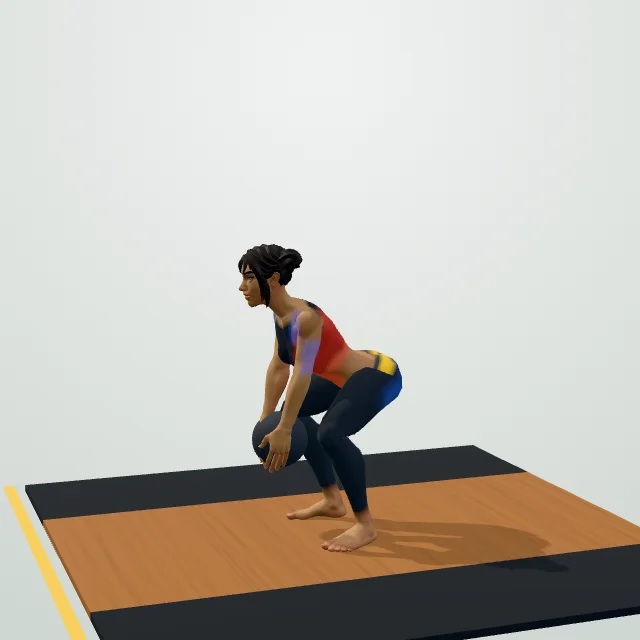
How to do it
- Stand with feet shoulder-width, holding the ball with both hands.
- Raise the ball straight overhead, reaching tall onto your toes.
- Brace your core hard as you begin to bring it down.
- Slam the ball into the floor as hard as you can in front of you.
- Squat down to catch the rebound or pick it back up.
- Reset your stance and repeat.
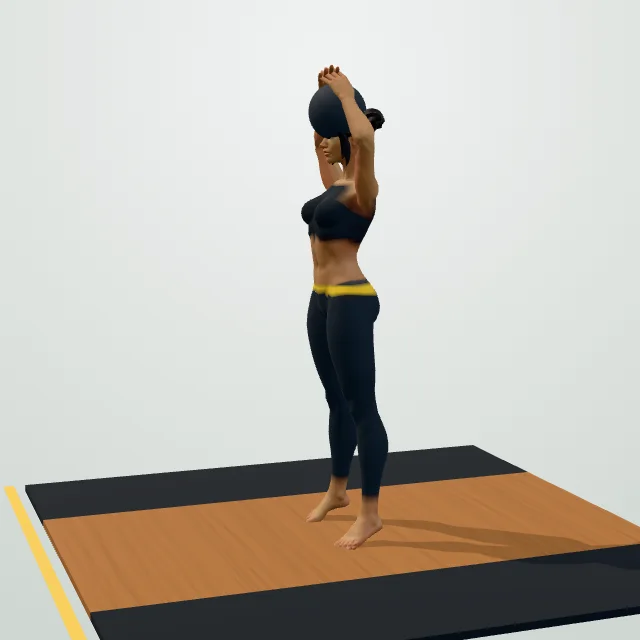
Coach cues
- Raise the ball overhead, reach up onto your toes.
- Brace your core hard.
- Slam it down as hard as you can.
- Squat down, pick it back up, reset.
Breathing: Breathe in as you raise the ball; exhale sharply as you slam it down.
Common mistakes
Make it easier / Make it harder
Sets and reps by goal
| Goal | sets | reps | Rest |
|---|---|---|---|
| Strength | 3–5 | 3–6 | 2–4 min |
| Muscle growth | 3–4 | 6–12 | 90–150 s |
| Endurance | 2–3 | 15–20 | 30–60 s |
The medicine ball slam raises a heavy slam ball overhead and drives it into the floor with as much force as you can generate, then picks it back up to repeat. It is one of the simplest ways to train explosive power, since there is no technical catch or complex sequence to learn — just a fast, full-body effort into the ground.
What muscles does the medicine ball slam work
Your lats and abs drive the downward whip of the slam, contracting hard and fast as the ball accelerates toward the floor. Your front delts, triceps and glutes assist, extending your hips and shoulders as you lift the ball overhead and then helping decelerate and redirect it downward, which is why the slam trains power through your whole trunk rather than just your arms.
Benefits of the medicine ball slam
- Builds explosive power through the core and hips that transfers to sports and other fast movements.
- A healthy outlet for effort, since it lets you move as hard and fast as you want without an external weight to control on the way down.
- Low skill demand compared with Olympic lifts, so most people can perform it safely with light coaching.
- Works well in circuits, since short bursts of slams raise your heart rate quickly for conditioning.
How to do the medicine ball slam with proper form
Setup
Stand with feet shoulder-width apart, holding the slam ball with both hands. Raise it straight overhead, reaching tall onto your toes as it reaches the top.
The slam
Brace your core hard as you begin bringing the ball down, then slam it into the floor directly in front of your feet as hard as you can, driving the movement from your hips and core rather than just your arms. Squat down to pick it back up or catch the rebound, then reset your stance for the next rep.
Medicine ball slam vs wall ball and battle ropes
A dedicated "slam ball" is built with a dead, non-bouncy fill so it does not rebound off the floor, unlike a standard medicine ball, which can bounce back unpredictably — use a proper slam ball for this exercise if you have access to one. Compared with the wall ball shot, which combines a squat with an upward throw, the slam is purely a downward, whole-body power movement. It pairs well with battle rope waves in conditioning circuits, since both are simple, equipment-based ways to raise your heart rate fast.
Sets, reps and how to program it
For power, 3–4 sets of 8–12 reps with full recovery between sets keeps every slam fast and explosive rather than fatigued and sloppy. It also works well as a short, timed conditioning burst, such as 20–30 seconds inside a circuit using the interval timer. Because the movement is high-intensity, most people include it once or twice a week rather than every session.
Variations and alternatives
A rotational slam, bringing the ball down and across your body to one side, adds a rotational power element for sports that involve twisting. A side slam keeps the same rotational idea but starts and finishes at hip height instead of overhead. If you do not have a slam ball, a burpee or battle ropes can deliver a similar explosive, no-skill conditioning stimulus.
Safety and who should modify it
Slamming mostly with your arms instead of your hips and core is the main technique fault, and it also reduces how much power you actually generate, so focus on driving the movement from your center. Rounding your back to pick the ball back up off the floor is the other common issue — hinge your hips and squat down instead. People with a current back or shoulder injury, or high blood pressure or heart disease, should check with a doctor or physiotherapist before this kind of high-intensity, ballistic training, and everyone should stop for sharp pain, dizziness or chest discomfort.
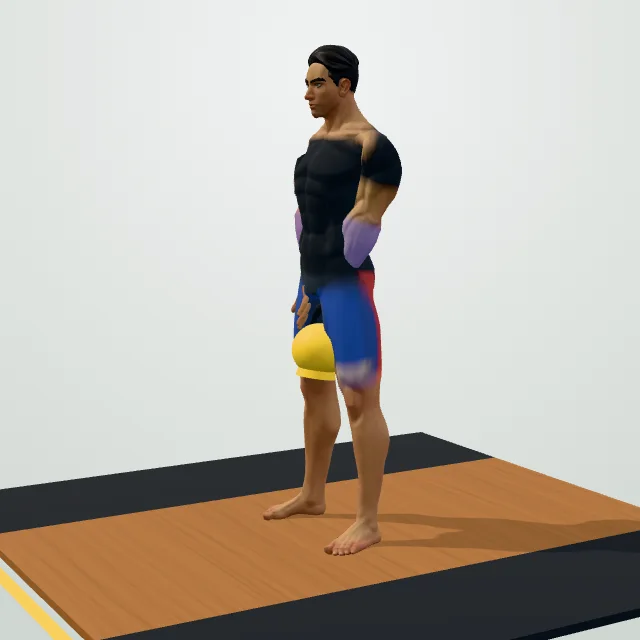
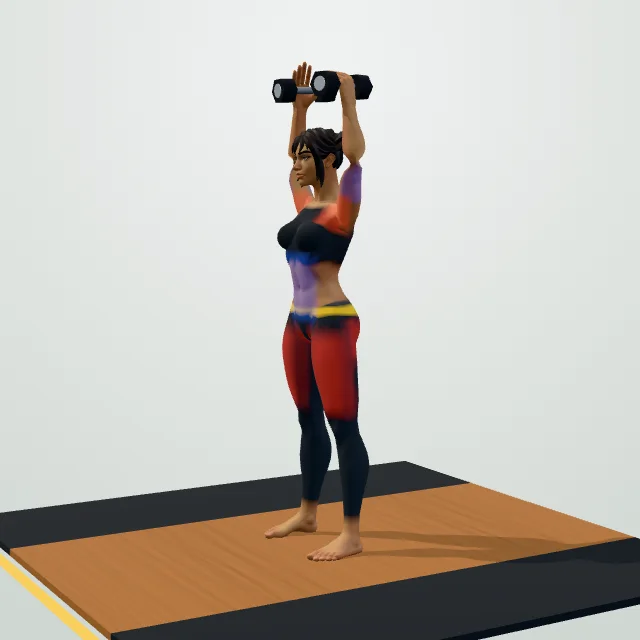
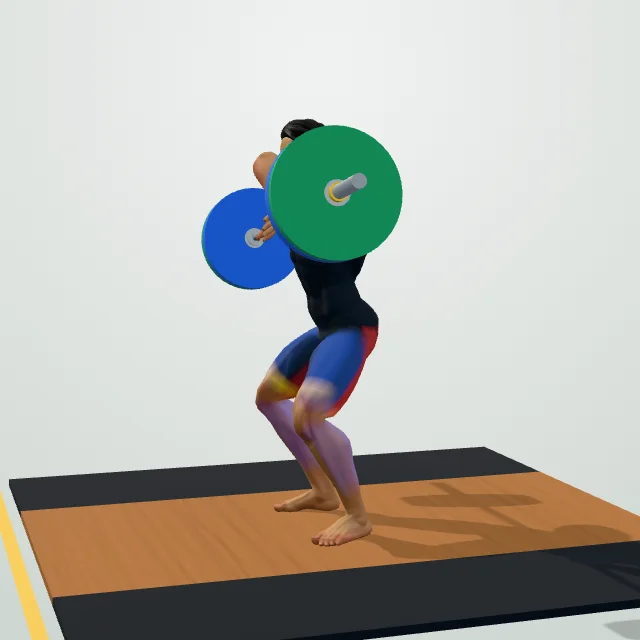
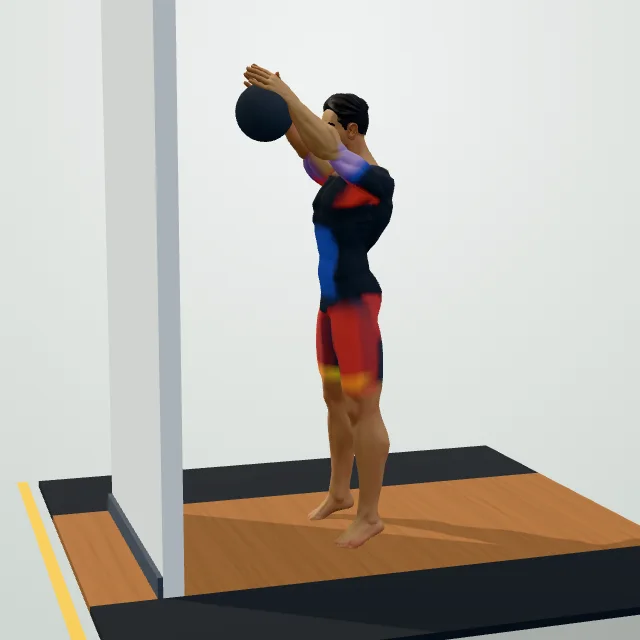
More exercises for full body
Questions people ask
What is a medicine ball slam?
What is the difference between a slam ball and a medicine ball?
What muscles do medicine ball slams work?
Are medicine ball slams effective?
Can I do medicine ball slams at home without a slam ball?
How heavy should my slam ball be?
Are medicine ball slams good for beginners?
General fitness information, not medical advice. Check with a doctor or physiotherapist before starting if you have a health condition, an injury or are pregnant. Stop if you feel chest pain, dizziness or sharp pain.