Kettlebell exercises: a kettlebell workout for beginners
How to choose your first kettlebell, the core kettlebell exercises everyone should learn, and a beginner workout to start with.
Workout plans
General fitness · Beginner
Beginner Full-Body Gym Workout
Build muscle · Beginner
Full-Body Dumbbell Workout Plan
Fat loss · Beginner
4-Week Fat-Loss Workout Plan
General fitness · Beginner
Beginner Gym Workout Plan for Women
General fitness · Beginner
Kettlebell Workout for Beginners
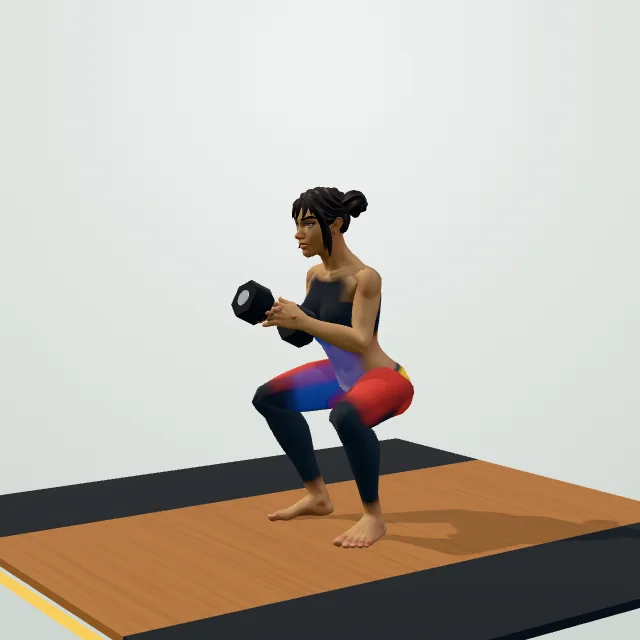
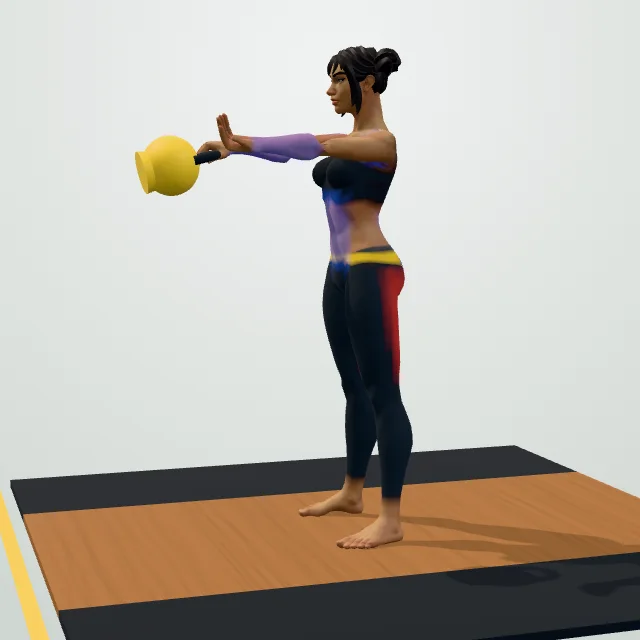
A single kettlebell can deliver a full-body strength and conditioning session, which is why kettlebell exercises are one of the most efficient ways to train at home. Unlike a dumbbell, the offset handle and off-center weight of a kettlebell make swinging, hinging and rotating moves natural, so a good kettlebell workout for beginners looks different from a dumbbell routine — more hip-hinge and ballistic work, less isolated pressing. The free 3D coach shows the exact hip-hinge timing of the kettlebell swing and the setup for the goblet squat so you can learn the pattern safely from the first rep.
Choosing a kettlebell weight
Most beginner women start around 8–12 kg (18–26 lb) and beginner men around 12–16 kg (26–35 lb) for swings and squats, since these moves use the hips and legs, which are strong even for untrained beginners. For presses and other upper-body moves, a second, lighter kettlebell (often half the swing weight) is useful since shoulders fatigue faster. If you can only buy one, choose a weight you can swing for 10–15 reps with good form but that still feels like real effort by the last few reps.
Safety and setup
The kettlebell swing is a hip-hinge, not a squat and not a front raise — power comes from snapping the hips forward, with the arms simply along for the ride. Keep the swing at or below shoulder height until your hip drive is consistent, and always let the bell take a natural arc rather than muscling it up with your shoulders, which strains the lower back. Give yourself space (a swing needs room front, back and overhead), and keep the handle dry and chalked or use gloves if your grip tires before your hips do.
Best kettlebell exercises
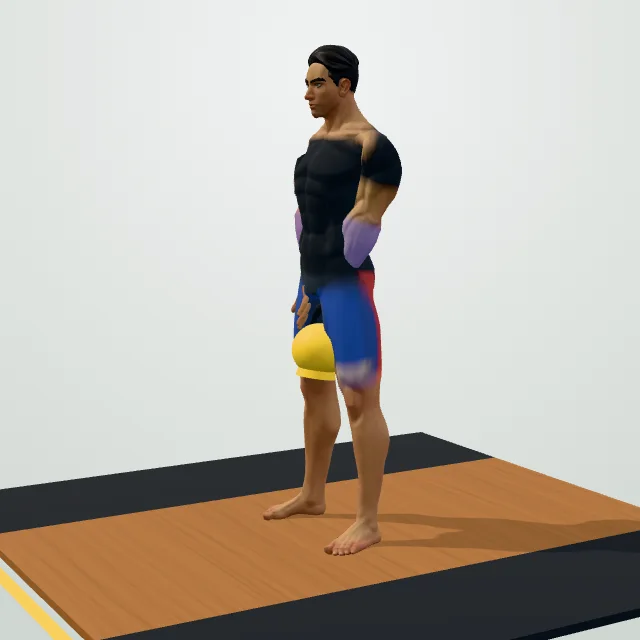
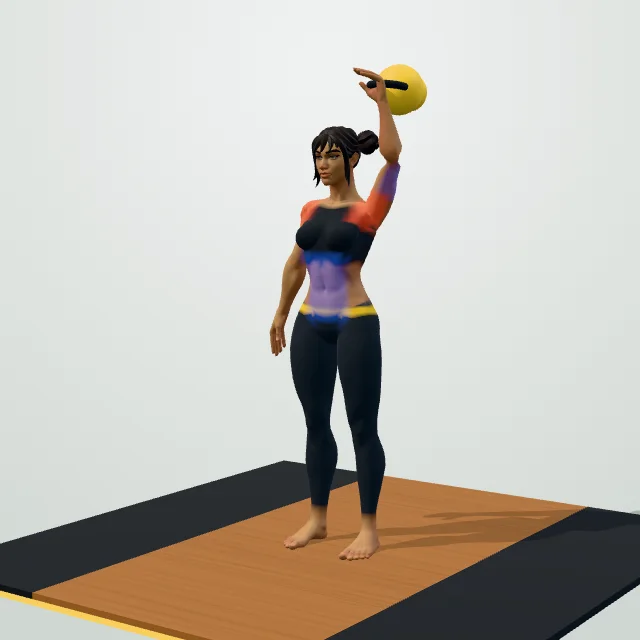
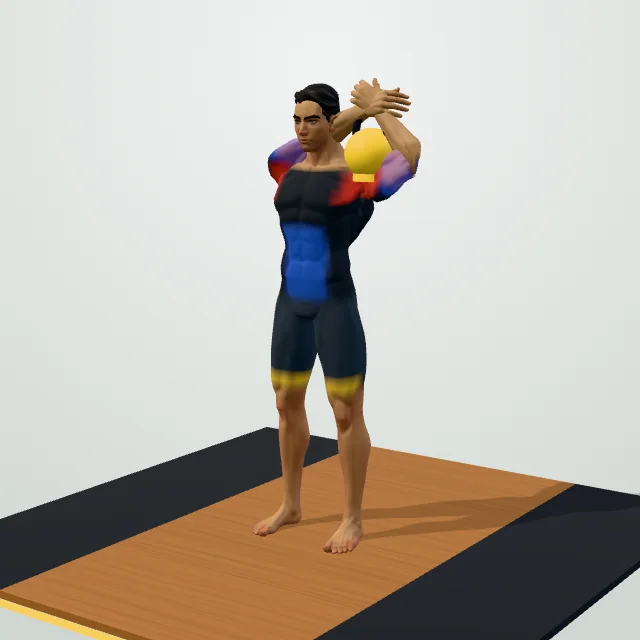
The kettlebell swing is the signature move — it trains the glutes, hamstrings and core explosively and doubles as a conditioning tool. The goblet squat (held at the chest) is one of the easiest ways to learn a good squat pattern with a weight in front to counterbalance your torso. The kettlebell deadlift teaches the hip hinge for anyone not ready for a barbell deadlift. The single-arm kettlebell press builds the shoulders while also challenging core stability against the offset load, and the kettlebell halo is a light mobility and shoulder-stability move that works well as a warm-up.
Sample kettlebell workout for beginners
| Exercise | Sets × reps | Rest |
|---|---|---|
| Kettlebell swing | 4 × 12–15 | 60 s |
| Goblet squat | 3 × 10–12 | 60 s |
| Kettlebell deadlift | 3 × 10–12 | 60 s |
| Single-arm kettlebell press | 3 × 8 per side | 60 s |
| Kettlebell halo | 2 × 6 per direction | 30 s |
How to program kettlebell training
Kettlebell swings work well as both strength and conditioning — 3–5 sets of 10–20 reps builds hip power, while longer sets or interval formats (like 30 seconds on, 30 off, repeated) build cardio fitness. Beginners should train 2–3 times a week with a full-body approach covering the swing, squat, hinge and press patterns, and let 48 hours pass between hard sessions early on while the hip-hinge pattern beds in. Use the interval timer for swing intervals and the calories burned calculator to estimate the energy cost of a longer conditioning-style session.
Kettlebell training for women and older beginners
Kettlebell exercises work identically regardless of gender — the swing, squat and hinge patterns build the same glutes, hamstrings and core in everyone, and there's no reason to choose a lighter kettlebell purely because you're a woman rather than because you're new to the movement. For women or older beginners specifically searching for a starting weight, the 8–12 kg range above is a sound starting point and can move up quickly once the hip hinge feels natural. Older adults benefit from kettlebell training for the same reasons younger lifters do — hip and core strength support balance and daily function — but should master the deadlift and goblet squat patterns at a light weight before adding the ballistic swing, and skip the swing entirely if it aggravates the lower back.
Workout plans that use a kettlebell
The kettlebell workout for beginners plan is built entirely around these moves, session by session. If you want a plan tailored to your own kettlebell weight and available days, use the plan builder and select kettlebell as your equipment.