Full body · Gym
Wall ball shot: squat and throw for full-body conditioning
The wall ball shot squats down with a medicine ball, then drives up and throws it against a wall target, combining lower-body strength with pushing power in one continuous rep.
- Primary
- QuadsGlutesFront delts
- Level
- Intermediate
- Type
- Compound · Both sides together
- Sets × reps
- 3 × 12-15 reps
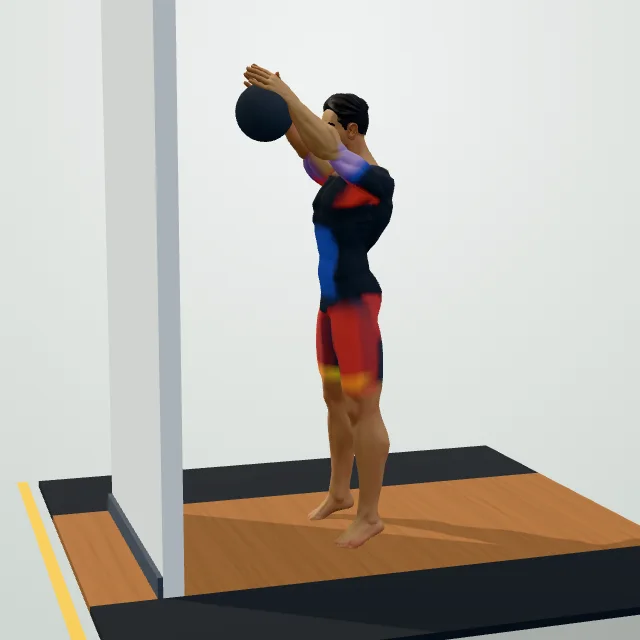
How to do it
- Stand facing a wall, ball held at your chest, feet shoulder-width apart.
- Squat down until your hips drop below knee height.
- Drive up explosively through your legs.
- Use the momentum to push the ball up to a target on the wall.
- Catch the ball as it comes back down at your chest.
- Absorb the catch by sinking straight into the next squat.
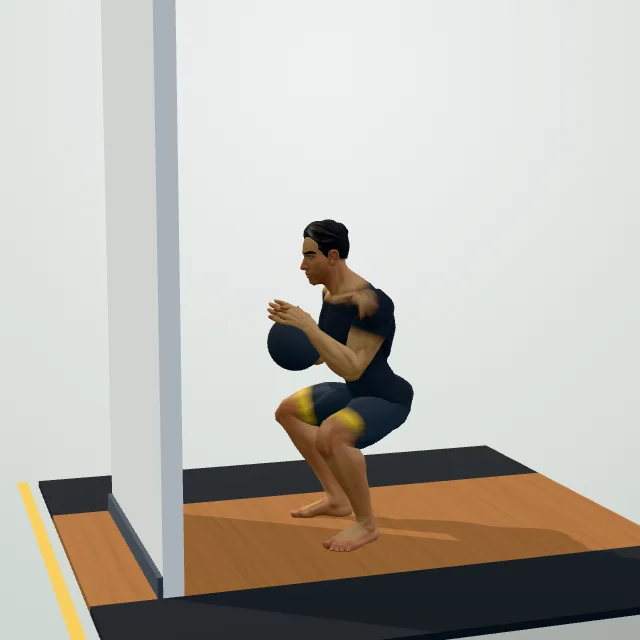
Coach cues
- Ball at your chest, feet shoulder-width.
- Squat below parallel, chest up.
- Drive up and push the ball to the target.
- Catch it at your chest, sink into the next rep.
Breathing: Breathe in on the way down into the squat; breathe out as you drive up and throw.
Common mistakes
Make it easier / Make it harder
Sets and reps by goal
| Goal | sets | reps | Rest |
|---|---|---|---|
| Strength | 3–5 | 3–6 | 2–4 min |
| Muscle growth | 3–4 | 6–12 | 90–150 s |
| Endurance | 2–3 | 15–20 | 30–60 s |
The wall ball shot squats down holding a medicine ball at your chest, then drives up through your legs to throw the ball at a target on a wall, catching it as it drops back down before squatting straight into the next rep. It is a staple of CrossFit and HYROX-style training because it demands both leg strength and cardio in the same continuous movement.
What muscles does the wall ball shot work
The squat drives most of the work through your quads and glutes, while the throw adds a push through your front delts and triceps. Your abs brace to link the two halves of the movement, which is why wall balls fatigue your whole body quickly, not just your legs or shoulders on their own.
Benefits of the wall ball shot
- Builds work capacity, since the constant squat-and-throw rhythm is demanding on both muscles and cardio at once.
- Trains coordinated power, transferring force from your legs into an overhead throw.
- A common benchmark movement in CrossFit and HYROX events, so training it directly helps with those formats.
- Lower joint impact than many other conditioning moves, since there is no jumping or landing involved.
How to do the wall ball shot with proper form
The squat
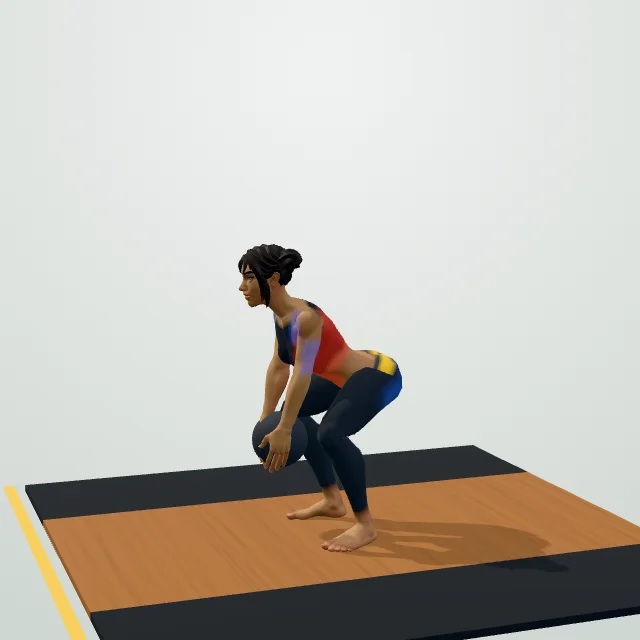
Stand facing a wall with the ball held at your chest, feet shoulder-width apart. Squat down until your hips drop below knee height, keeping your chest up.
The throw and catch
Drive up explosively through your legs and use that momentum to push the ball up to a target on the wall, rather than throwing with your arms alone. Catch the ball as it comes back down at your chest, absorbing it by bending your elbows, and sink straight into the next squat.
Wall ball vs thruster
The wall ball shot and the dumbbell thruster follow almost the same squat-to-press pattern, but the wall ball throws a medicine ball at a fixed target while the thruster presses dumbbells overhead under full control. If you train at home without a wall target or medicine ball, the thruster is the closest equivalent and a practical substitute.
Sets, reps and how to program it
For conditioning, 3 sets of 12–15 reps with short rest, or timed rounds inside a HIIT-style circuit using the interval timer, work well with a ball weight you can throw consistently to the same target height. For pure leg and shoulder strength rather than conditioning, fewer reps with a heavier ball and full rest between sets shifts the emphasis, though most people use wall balls primarily as a conditioning tool.
Variations and progressions
Lowering the target height or using a lighter ball are the easiest ways to scale the movement for beginners, while raising the target or increasing ball weight adds difficulty for more advanced training. If you do not have access to a wall or medicine ball, the dumbbell thruster or a bodyweight jump squat both train a similar squat-and-explode pattern at home.
Safety and who should modify it
Shallow squat depth and catching the ball with straight, locked arms are the two most common technique issues, both of which reduce how much your legs share the workload and increase strain elsewhere. People with knee, shoulder or lower-back conditions, or high blood pressure or heart disease, should check with a doctor or physiotherapist before this kind of repeated, high-intensity squat-and-throw work, and everyone should stop for sharp joint pain, dizziness or unusual breathlessness.
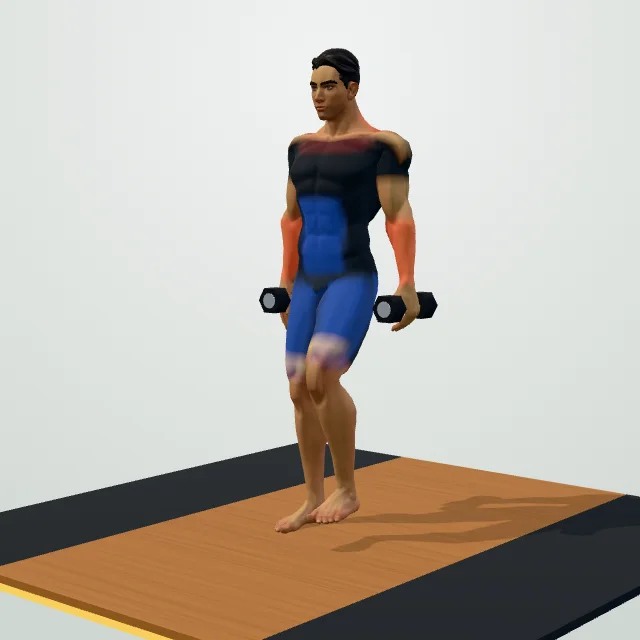
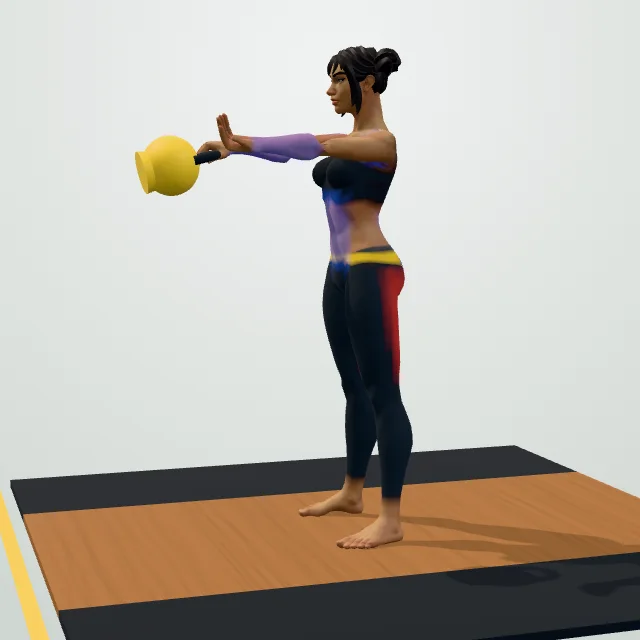
More exercises for full body
Questions people ask
What is a wall ball shot?
What muscles do wall ball shots work?
What ball do you use for wall ball shots?
Are wall balls good for you?
Wall ball vs thruster: what is the difference?
How do I do wall ball shots at home without a wall target?
How heavy should my wall ball be?
General fitness information, not medical advice. Check with a doctor or physiotherapist before starting if you have a health condition, an injury or are pregnant. Stop if you feel chest pain, dizziness or sharp pain.