Ab wheel workout: how to use an ab roller correctly
The ab wheel rollout is one of the hardest core exercises around — here is how to build up to it safely and get the most from it.
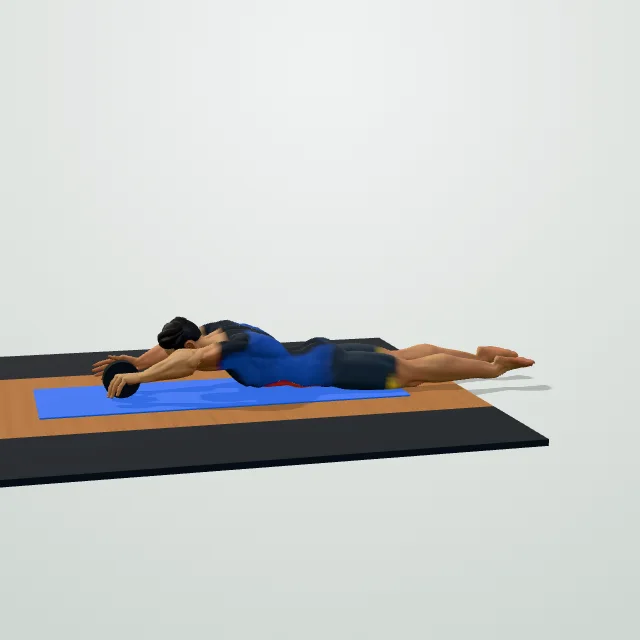
The ab wheel looks simple — a wheel with two handles — but the ab roller rollout it's built for is one of the toughest core exercises most people ever try, because it asks the abs to resist your whole bodyweight pulling you into an arch as you roll out. A good ab wheel workout respects that difficulty and builds up gradually rather than attempting a full rollout on day one. The 3D coach shows the full range for the ab wheel rollout.
What the ab wheel works, and why it's hard
The rollout trains the rectus abdominis (the "six-pack" muscle) and deep core stabilizers to resist spinal extension — as you roll the wheel forward, gravity and momentum try to pull your lower back into an arch, and your job is to keep the spine in a stable, slightly rounded position throughout. This anti-extension demand is why the ab wheel is considered harder than a crunch or sit-up of similar duration: it's not just about how many reps you can do, but how well you resist the arch.
Safety and how to use an ab roller correctly
Kneel on a cushioned surface (a mat or towel) and only roll out as far as you can keep your lower back from sagging toward the floor. If your hips drop or your back arches, you've gone too far — stop, reverse, and roll out a shorter distance next time. Never let momentum carry you further than your core can control; the moment you lose that anti-arch tension, you're at risk of lower back strain. Build up gradually rather than everyday use of a full rollout.
Building up to a full rollout
Most beginners can't do a full standing or even kneeling rollout right away, and that's expected — the exercise responds well to regressions. Start with a small range of motion (rolling out just a few inches and back), then gradually increase the distance over several sessions as your core learns to resist the arch. Building general core strength first with the plank, dead bug and Pallof press makes the rollout considerably more approachable.
Sample ab wheel session
| Exercise | Sets × reps | Rest |
|---|---|---|
| Plank (warm-up) | 2 × 30–45 s | 30 s |
| Ab wheel rollout (partial range) | 3 × 6–10 | 60 s |
| Dead bug | 2 × 10 per side | 45 s |
How to program ab wheel training
Two to three sessions a week is plenty — this is a demanding exercise for the core and lower back, and daily maximal use doesn't add extra benefit over consistent, controlled sessions with adequate recovery. Keep reps low (6–12) and focus entirely on range and control rather than speed; increasing the distance you roll out is the main way to progress this exercise, since adding weight isn't practical.
Who should be cautious with the ab wheel
Anyone with existing lower back pain, a recent back injury, or who is new to core training should master the plank and dead bug first and approach the rollout with a very small range of motion, or avoid it until cleared by a physiotherapist. Stop immediately if you feel sharp lower back pain rather than the expected deep ab fatigue.
Ab wheel vs plank: which should you do?
Both train the core to resist movement rather than create it, but the ab wheel adds a moving lever arm that makes the demand progressively harder the further you roll out, while a plank's difficulty is fixed by how long you hold it. Many people use the plank as a stepping stone — once you can hold a plank for 45–60 seconds with good form, you likely have the base core strength to start a partial-range ab wheel rollout safely.
How long it takes to see results
Because the ab wheel is a strength exercise for the core rather than a fat-loss tool by itself, "results" here mean two different things: visible ab muscle definition, which depends mainly on overall body fat and diet, and functional core strength, which improves steadily over weeks of consistent practice. Most people notice they can roll out further and hold better control within 4–6 weeks of training the rollout 2–3 times a week, well before any change in visible definition. Pair it with a broader strength routine and a sensible diet if visible abs are the actual goal, since no ab exercise alone reduces fat from a specific area.
Where the ab wheel fits into your training
Core work like this pairs well with the exercises in the abs and core hub and the 10-minute abs workout. Use the plan builder to add core-focused sessions into your week.