Abs and core · Home or gym
Ab wheel rollout: how to roll out with a braced core
The ab wheel rollout trains your abs to resist your spine bending backward while your arms reach overhead. It looks simple and punishes bad bracing fast.
- Primary
- Abs
- Secondary
- LatsObliquesFront delts
- Level
- Advanced
- Type
- Compound · Both sides together
- Sets × reps
- 3 × 6-10 reps
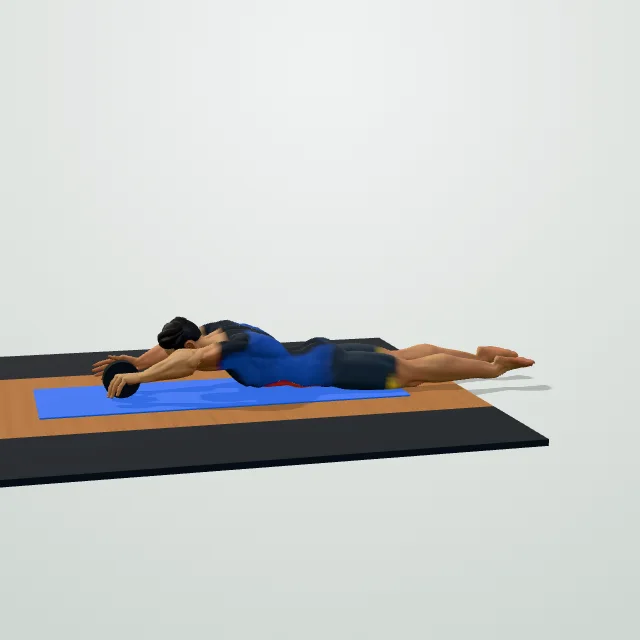
How to do it
- Kneel on a mat, wheel under your shoulders, hands shoulder-width on the handles.
- Brace your abs and glutes before you move at all.
- Roll the wheel forward slowly in a straight line, hips traveling with your shoulders.
- Stop as soon as your lower back wants to arch or your belly sags.
- Pause briefly at your furthest controlled point.
- Pull back to kneeling by squeezing your abs and lats, not by bouncing.
- Reset your brace fully before starting the next rep.
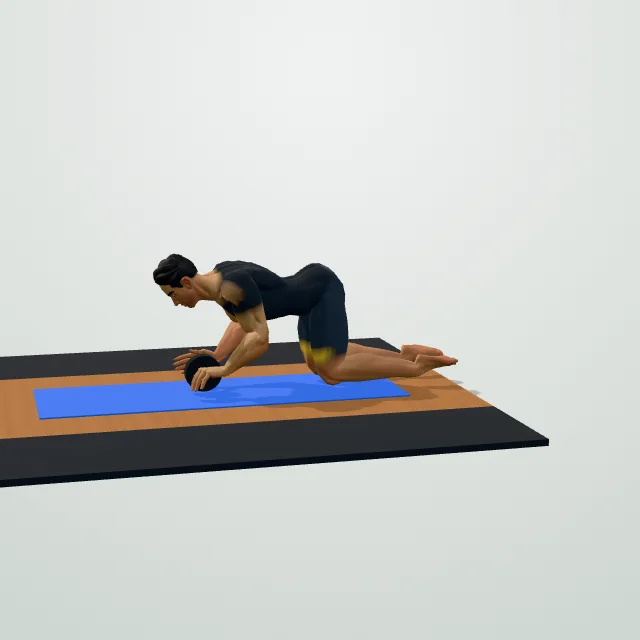
Coach cues
- Brace your core before you move.
- Roll out slowly, keep your hips level.
- Stop before your lower back arches.
- Pull back by squeezing your abs.
Breathing: Breathe in as you roll out, and breathe out as you pull back to kneeling.
Common mistakes
Make it easier / Make it harder
Sets and reps by goal
| Goal | sets | reps | Rest |
|---|---|---|---|
| Strength | 3–5 | 3–6 | 2–4 min |
| Muscle growth | 3–4 | 6–12 | 90–150 s |
| Endurance | 2–3 | 15–20 | 30–60 s |
The ab wheel rollout is one of the toughest core exercises you can do with a piece of equipment that costs almost nothing. You kneel on the floor, hold a small wheel in both hands, and roll it out in front of you until your body is nearly straight, then pull it back. The challenge is not the rolling out — gravity does that for you. The challenge is stopping your lower back from arching as your arms and the wheel move further from your hips.
What muscles the ab wheel rollout works
The rollout is primarily an anti-extension exercise for the abs: your rectus abdominis and the deeper transverse abdominis fire hard to stop your hips and spine from sagging toward the floor as the wheel travels forward. As the lever gets longer, your obliques help resist rotation if the wheel drifts to one side. Your lats and shoulders (front delts) also work hard to control the wheel and pull it back to kneeling, and your hip flexors help stabilize the pelvis. Very little of the work is "crunching" — it is bracing, which is why the rollout carries over so well to lifts like the squat and deadlift where a rigid trunk protects your spine.
Benefits of the ab wheel rollout
- Full-range core bracing. Few exercises load the abs through such a long lever, which builds real anti-extension strength rather than just endurance.
- Carries over to lifting. A core that resists extension keeps your spine safer under a barbell squat, deadlift, or overhead press.
- Minimal equipment. An ab roller is cheap, small, and works well in a home gym alongside a mat.
- Scalable. You can shorten the range for beginners or add distance and tempo for advanced lifters, so the same tool works for years.
Technique: how to do the ab wheel rollout correctly
Kneel on a mat with your hips stacked over your knees and the wheel on the floor directly under your shoulders, hands shoulder-width apart on the handles. Before you move an inch, take a breath and brace your abs as if you were about to be tapped in the stomach, and squeeze your glutes lightly. This bracing has to happen before the roll-out, not as a reaction to losing position.
Roll the wheel forward slowly and in a straight line. Your hips should travel forward with your shoulders, not lag behind and drop — if you feel your lower back arching and your belly pushing toward the floor, that is the end of your usable range for now. Beginners often only get 20–30 cm before they lose the brace, and that is a completely normal starting point. Stop there, hold for a beat, then pull back to kneeling by pulling with your lats and squeezing your abs — resist the urge to yank yourself back with a bounce.
Keep your neck long and your gaze slightly ahead of your hands rather than craning up, and keep your hands tracking straight instead of splaying outward as fatigue sets in.
How to program the ab wheel rollout
Because the rollout is a strength move for the abs rather than a light "finisher," treat it like a compound lift and stop reps well before your form breaks down.
| Goal | Sets | Reps | Rest |
|---|---|---|---|
| Strength / control | 3 | 6–10 | 60–90s |
| Muscle / endurance | 3–4 | 8–12 | 45–60s |
Pick a distance where the last 1–2 reps of each set are hard to keep braced, but your back never rounds or sags. Add a small amount of range every week or two rather than jumping straight to a full standing rollout — this is the same progressive overload principle used for any other lift. Two sessions a week is plenty for most lifters; it fits well as a finisher after squats or deadlifts, or inside a dedicated abs workout.
Variations and progressions
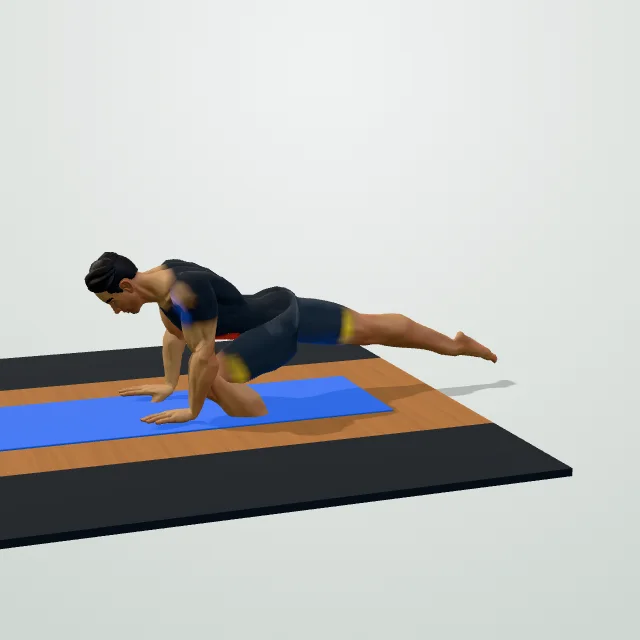
If a full kneeling rollout is too much, start with a wall-limited rollout: kneel a short distance from a wall so the wheel can only travel a few inches before it taps the skirting board, which caps your range and keeps you honest about form. Building the same anti-extension pattern with planks and dead bugs first is a sensible route in for total beginners. Once kneeling rollouts to full extension feel controlled, the natural progression is the standing ab wheel rollout, which uses a much longer lever from your feet and demands significantly more core and shoulder strength — most lifters need months of kneeling work before this is safe.
Ab wheel rollout vs. plank vs. sit-ups
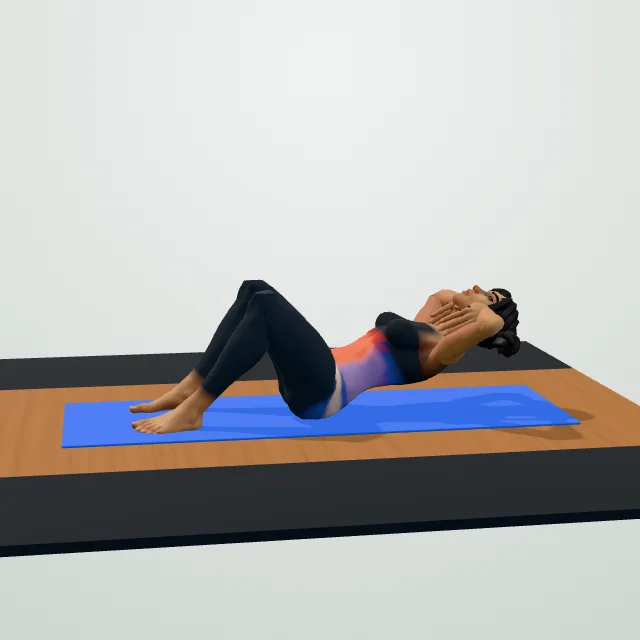
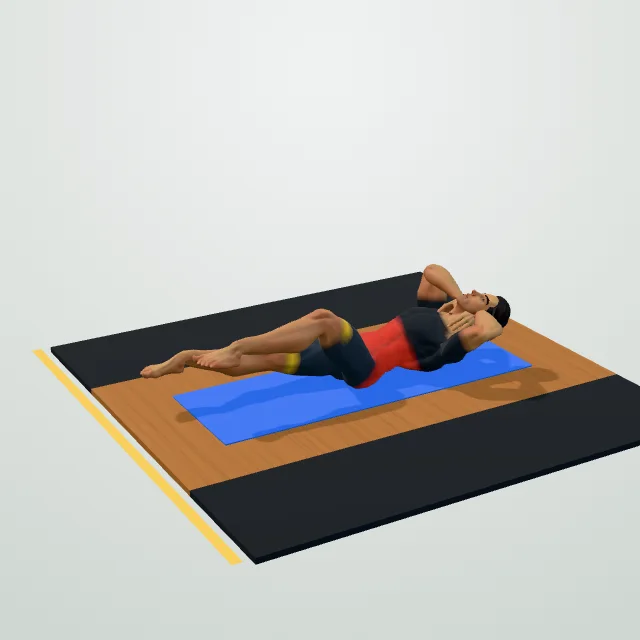
A plank trains the same anti-extension pattern isometrically, with no moving lever, which makes it a safer entry point but a lower ceiling for strength once you can hold two or three minutes. A sit-up is the opposite pattern — it flexes the spine rather than resisting extension — so the two are complementary, not interchangeable. The rollout builds a stronger, more resilient core for lifting than either alone, but it is also the least forgiving of the three if your lower back is already sore, so it is not the first exercise to reach for after a back tweak.
Safety: who should modify or avoid it
If you feel pain or pinching in your lower back rather than muscle effort in your abs, you are rolling out further than your core can currently control — shorten the range or regress to a wall-limited version. Anyone with a current lower-back injury, a hernia, or who is pregnant should check with a doctor or physiotherapist before adding rollouts, and everyone should stop for sharp pain, not just fatigue. Warm up your wrists and shoulders first, since they take load too.
More exercises for abs and core
Questions people ask
What muscles do ab wheel rollouts work?
Are ab wheel rollouts good for beginners?
Why does my lower back hurt during ab wheel rollouts?
Ab wheel rollout vs sit-ups: which is better for abs?
How do I make ab wheel rollouts harder?
How often should I do ab wheel rollouts?
General fitness information, not medical advice. Check with a doctor or physiotherapist before starting if you have a health condition, an injury or are pregnant. Stop if you feel chest pain, dizziness or sharp pain.