Dip station exercises: a parallel bar workout guide
What a dip station is for, how to do a dip safely, and how to progress from your first assisted rep to full sets.
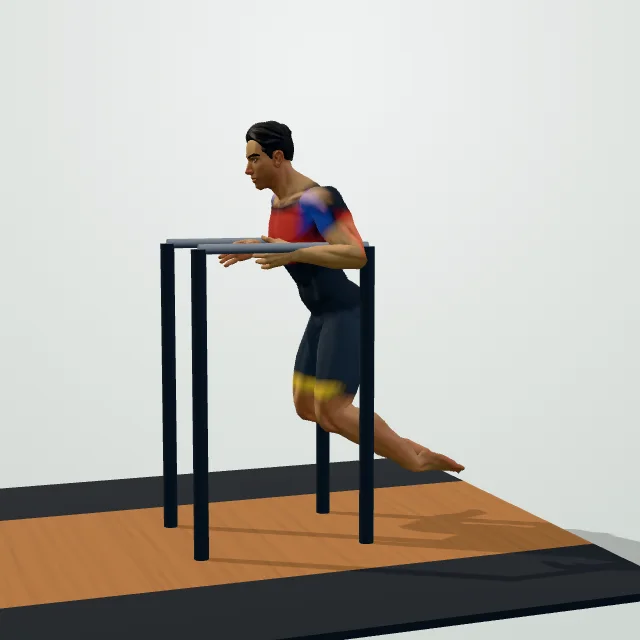
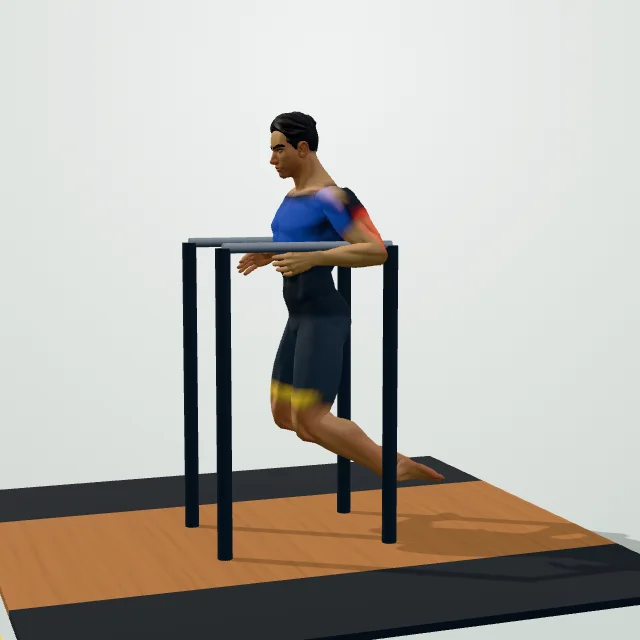
A dip station is a pair of parallel bars set at roughly shoulder width, and dip station exercises center on one powerful move — the dip — that loads the chest, shoulders and triceps with just your bodyweight. Because you're suspended between two bars rather than pushing against the floor, dips let you go deeper than a push-up and add resistance easily later with a weight belt. The 3D coach shows the full range for the chest dip and parallel bar dip.
What is a dip station, and what does it work?
A dip station is simply two parallel handles or bars at hip-to-chest height, freestanding or attached to a power rack, sometimes combined with a pull-up bar in one unit. Leaning the torso forward during the dip shifts more work to the chest (chest dip); staying upright with elbows close to the body shifts more work to the triceps (triceps dip). Both also recruit the shoulders and core to keep the body stable through the movement.
Safety and setup
Lower only as far as feels comfortable in the shoulder — going too deep, too soon is the most common cause of shoulder strain on dips. Keep the descent controlled rather than dropping, and if you feel shoulder pinching rather than muscle fatigue, reduce your depth or switch to the easier bench dip until shoulder mobility and strength catch up. Anyone with existing shoulder issues should check with a physiotherapist before adding dips to a routine.
Best dip station exercises
The chest dip (leaning forward) is one of the best bodyweight chest builders available, going deeper into the stretch than most push-up variations. The parallel bar dip (upright torso) is a top triceps exercise and a natural progression once the bench dip feels easy. If a full dip is too hard at first, use an assisted dip machine if your gym has one, or build strength with decline push-ups and bench dips before attempting full-range bar dips.
Sample dip station workout
| Exercise | Sets × reps | Rest |
|---|---|---|
| Chest dip | 3 × 6–12 | 90 s |
| Triceps dip | 3 × 6–12 | 90 s |
| Bench dip (finisher) | 2 × 12–15 | 45 s |
How to program dip training
Dips are demanding, so 3 sets of 6–12 reps is plenty for most people, twice a week with at least 48 hours between sessions. Progress from bodyweight to weighted dips (using a dip belt) only once you can comfortably complete 12+ bodyweight reps with full control, and pair dips with a pulling exercise like pull-ups or rows in the same session to keep the shoulders balanced front to back — see how to choose a workout split for structuring push and pull days.
Dip station vs bench dips
Bench dips (hands behind you on a bench or chair, feet on the floor or another surface) are an easier regression that most beginners should master before a full bar dip — they still train the triceps and chest but with less bodyweight loaded through the shoulders, since the feet help support part of your weight. A dip station, by contrast, suspends your full bodyweight between the hands, which is why it builds strength faster once you're ready but also demands more shoulder mobility and control from the first rep.
Parallel bar exercises for older adults
Full dips are demanding on the shoulders, so older adults or anyone returning to exercise should start with supported leg raises on the parallel bars or bench dips rather than full-range dips, building shoulder and triceps strength gradually. If a dip station is combined with a pull-up bar in one frame, the supported hang alone is a useful grip and shoulder exercise before attempting any pushing or pulling movement. Progress slowly and stop for any joint pain rather than pushing through it, since the shoulder joint takes longer than muscle to adapt to new load.
Progressing to weighted dips
Once bodyweight dips feel easy for 3 sets of 12+ reps, a dip belt lets you add plates for continued progress rather than only adding more reps. Add small increments (2.5–5 kg at a time) and prioritize keeping the same depth and control you used at bodyweight — a heavier, sloppier dip is not real progress. Weighted dips are an advanced step and not necessary for general fitness; plenty of lifters get strong, well-developed chests and triceps from bodyweight dips alone.
Workout plans that use dip stations
Dips feature in the chest and triceps workout and calisthenics workout for beginners (using bench dips as a regression). Use the plan builder to add dip station work into your own weekly plan.