Triceps · Home, no equipment
Bench dip: a bodyweight triceps builder using a chair or bench
The bench dip, or chair dip, uses two elevated surfaces to load your bodyweight onto the triceps and chest. Here is the safest depth, technique and how to make it harder.
- Primary
- Triceps
- Secondary
- ChestFront delts
- Level
- Beginner
- Type
- Compound · Both sides together
- Sets × reps
- 3 × 8-15 reps
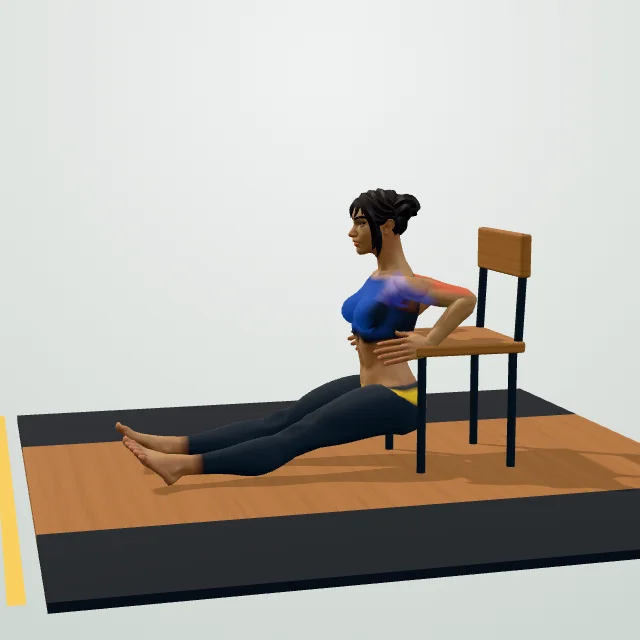
How to do it
- Sit on a bench edge, hands gripping just outside your hips.
- Walk your feet out and slide your hips off the bench.
- Bend your knees for an easier version, or extend legs for harder.
- Lower your body until your elbows reach about 90 degrees.
- Keep your shoulders down, away from your ears.
- Press back up by straightening your arms.
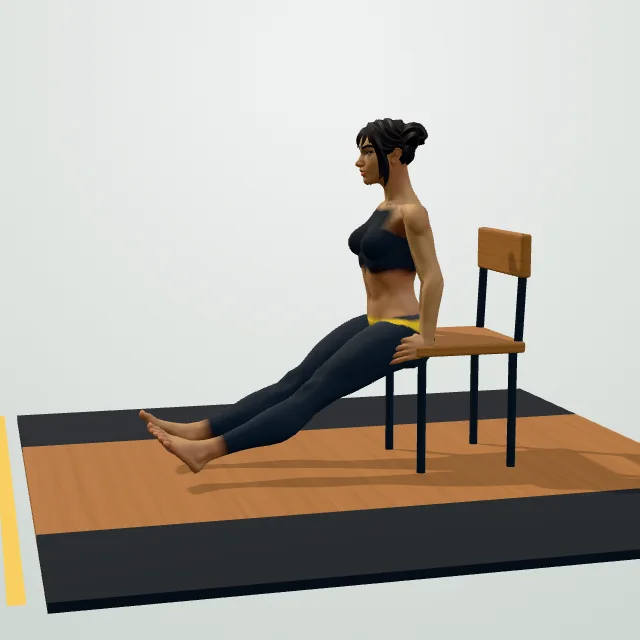
Coach cues
- Hands grip just outside your hips.
- Lower until elbows reach 90 degrees.
- Keep shoulders down, not hunched.
- Press up, straighten your arms.
Breathing: Breathe in as you lower your body, and breathe out as you press back up.
Common mistakes
Make it easier / Make it harder
Sets and reps by goal
| Goal | sets | reps | Rest |
|---|---|---|---|
| Strength | 4–5 | 3–6 | 2–4 min |
| Muscle growth | 3–4 | 6–12 | 90–150 s |
| Endurance | 2–3 | 15–25+ | 30–60 s |
The bench dip, also called a chair dip, is a bodyweight exercise where you lower and raise your body between two surfaces — usually a bench behind you and your heels in front — using only your arms. It is one of the most accessible triceps exercises there is: no bar, no gym, just a sturdy bench, chair or sofa edge, which is why it is a fixture in home and bodyweight workouts.
Because your feet stay on the floor (or another surface) rather than fully suspending your bodyweight like a parallel bar dip, it is also a gentler entry point into dip training for people building up strength. See the chair or sofa exercises hub for more no-equipment options.
Muscles the bench dip works
The bench dip trains the triceps brachii as the prime mover through elbow extension, with the chest and front deltoids assisting, especially as you lower deeper. Your core and shoulders work isometrically to keep your torso stable and close to the bench throughout the movement. Bending the knees to bring the feet closer reduces the load, while straightening the legs out in front increases how much of your bodyweight the arms have to lift.
Benefits of the bench dip
- No equipment needed: works with any sturdy bench, chair, sofa edge, or low step.
- Scalable difficulty: bending the knees or straightening the legs easily adjusts the load.
- Builds toward harder dips: a natural stepping stone to the full parallel bar dip.
- Trains a full lockout: useful for pressing strength in the arms overall, not just the triceps.
Technique: hand position, depth and knee angle
Sit on the edge of a bench with your hands gripping the edge just outside your hips, fingers pointing forward or slightly inward. Walk your feet out until your knees are bent around 90 degrees for an easier version, or extend your legs out straight for a harder one, then slide your hips off the bench so your weight is supported by your arms. Lower your body by bending your elbows until they reach about 90 degrees — going much deeper increases stress on the front of the shoulder without adding much benefit — then press back up by straightening your arms.
Keep your shoulders down and back rather than letting them creep up toward your ears, and keep your body close to the bench rather than drifting forward, which shifts more strain onto the shoulder joint.
How to program the bench dip
| Goal | Sets | Reps | Rest |
|---|---|---|---|
| Strength | 3 | 6–10 | 90 seconds |
| Muscle (hypertrophy) | 3 | 8–15 | 60–90 seconds |
| Endurance | 2–3 | 15+ | 45 seconds |
Beginners can start with bent knees and shallow depth, building up reps before straightening the legs or adding weight on the lap. It pairs well with the push-up and diamond push-up in a home bodyweight upper-body session, and progresses naturally into full dips — see the progressive overload guide for how to structure that progression over weeks.
Variations and progressions
- Bent-knee bench dip: the easiest version, good for beginners or higher reps.
- Straight-leg bench dip: more bodyweight on the arms, a solid intermediate progression.
- Feet-elevated bench dip: resting your heels on a second surface increases the load further.
- Weighted bench dip: add a plate on your lap once bodyweight reps feel easy.
Once bench dips feel too easy even weighted, progress to the parallel bar dip for a harder, full-range version.
Bench dip vs parallel bar dip
The parallel bar dip suspends your whole bodyweight between two bars, using a bigger range of motion and generally involving more chest along with the triceps. The bench dip is easier to scale down for beginners, since your feet stay on the ground and can bear some of your weight, but the shoulder position — arms behind the torso, hands fixed on a bench — puts more stress on the front of the shoulder at a similar level of effort. Many people use the bench dip as a stepping stone toward full dips rather than a permanent substitute.
Safety and who should modify it
Bench dips are one of the more shoulder-stressful bodyweight exercises because the arms move behind the torso under load. Keep the depth to about a 90-degree elbow bend rather than sinking as low as possible, and stop if you feel pinching or sharp pain in the front of the shoulder rather than normal muscle fatigue. If you have a history of shoulder impingement or instability, the push-up or triceps pushdown are gentler alternatives on that joint.
Workout plans with this exercise
General fitness · Beginner
30-Day Home Workout Plan (No Equipment)
Build muscle · Beginner
Dumbbell Arm Workout (Biceps and Triceps)
Strength · Beginner
Calisthenics Workout for Beginners
General fitness · Beginner
The 7-Minute Workout
More exercises for triceps
Questions people ask
What muscles do bench dips work?
How deep should I go on a bench dip?
Are bench dips bad for the shoulders?
How do I make bench dips easier?
How do I make bench dips harder?
Bench dip vs parallel bar dip — which should I do?
General fitness information, not medical advice. Check with a doctor or physiotherapist before starting if you have a health condition, an injury or are pregnant. Stop if you feel chest pain, dizziness or sharp pain.