Chest · Gym
Chest dip: lean forward for a lower chest builder
A small change in torso angle turns a dip from a triceps exercise into a serious chest builder. Here is the lean, the depth, and how to work up to it safely.
- Secondary
- Front delts
- Level
- Advanced
- Type
- Compound · Both sides together
- Sets × reps
- 3 × 6-12 reps
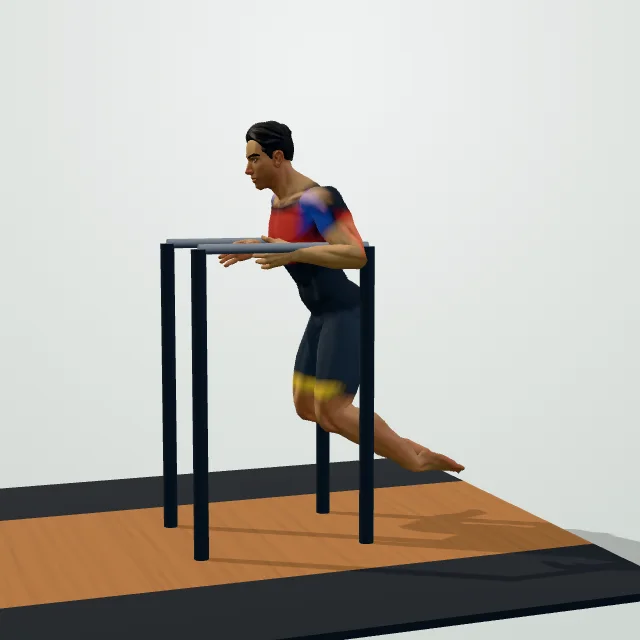
How to do it
- Grip the bars and support yourself with straight arms.
- Lean your torso forward from the hips, about 30–45°.
- Let your elbows flare out slightly as you lower.
- Lower until your upper arms are level with your elbows.
- Press back up through the same path, keeping the forward lean.
- Straighten your arms fully at the top before the next rep.
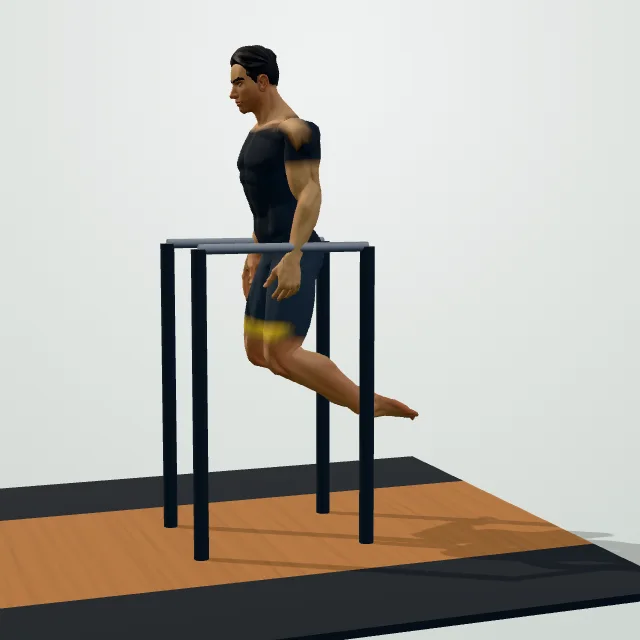
Coach cues
- Lean forward from the hips.
- Let the elbows flare slightly.
- Lower to a comfortable shoulder stretch.
- Press back up, keep the lean.
Breathing: Breathe in as you lower between the bars, then breathe out as you press back up.
Common mistakes
Make it easier / Make it harder
Sets and reps by goal
| Goal | sets | reps | Rest |
|---|---|---|---|
| Strength | 3–5 | 3–6 | 2–4 min |
| Muscle growth | 3–4 | 6–12 | 90–150 s |
| Endurance | 2–3 | 15–20 | 30–60 s |
The chest dip is a bodyweight press done on parallel bars, lowering your body between them and pressing back up. Leaning your torso forward and letting your elbows flare slightly is what shifts a dip from a triceps-dominant exercise toward a genuine lower-chest builder, and it is one of the more demanding pushing exercises on this site.
Muscles worked and why
With a forward lean, the chest becomes the prime mover, especially its lower fibers, with the triceps and front shoulders assisting heavily. An upright torso with elbows tucked close shifts the same exercise toward the triceps instead — the lean, not a different exercise, is what decides which muscle does more of the work.
Benefits
Because you are lifting your entire bodyweight, the chest dip is one of the more demanding pushing exercises you can do without equipment beyond a set of bars, and it builds pressing strength and chest size that carries over to the bench press and other presses. Once bodyweight dips feel manageable for good reps, adding a weight belt or a dumbbell between your feet lets you keep progressing well beyond what most other bodyweight chest exercises allow.
Forward lean, depth and elbow position
Grip the bars and support yourself with arms straight, then lean your torso forward from the hips — roughly a 30–45° forward lean is what shifts emphasis toward the chest rather than the triceps. Let your elbows flare out slightly rather than tucking them tight to your sides.
Lower yourself until your upper arms are roughly level with your elbows, or your shoulders feel a comfortable stretch — going much deeper than that is where most shoulder strain happens, especially for people with limited shoulder mobility. Press back up through the same path, keeping the forward lean the whole way rather than straightening up as you push, which would shift the work back toward the triceps.
How to program it
Use chest dips as a main pressing exercise on chest or push days, generally after a barbell or dumbbell press since dips are demanding and better performed with some strength in reserve. 3 sets of 6–12 reps with 90 seconds to 2 minutes of rest is a common range; once you can comfortably do more than 12–15 reps, add weight rather than reps, following progressive overload. Leave 1–2 reps in reserve on most sets, per the RPE and RIR guide.
Progressions and regressions
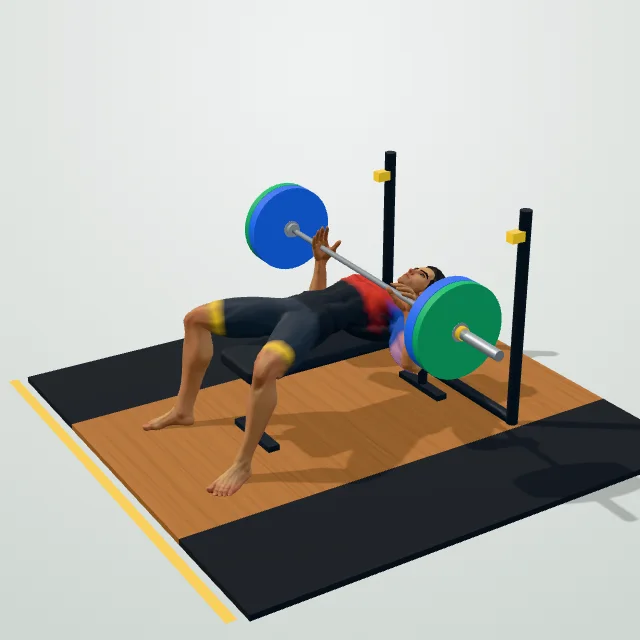
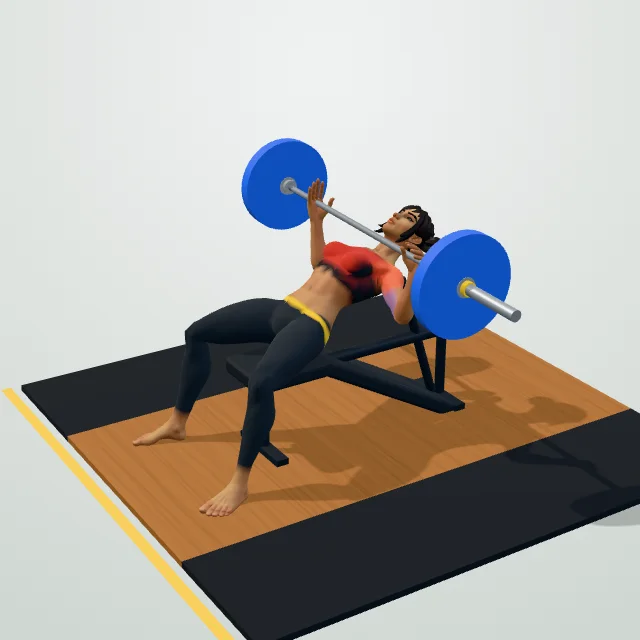
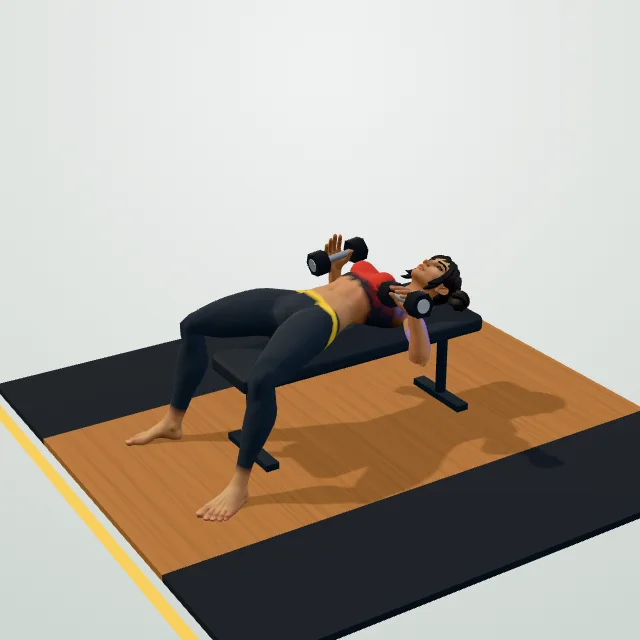
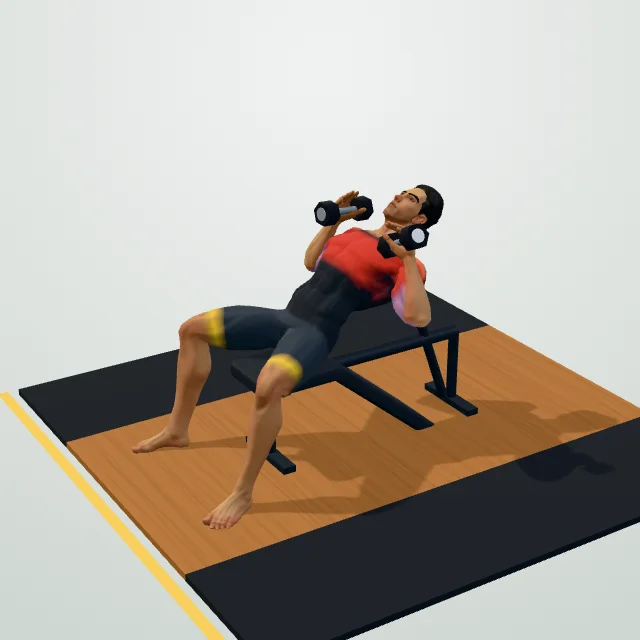
If a full bodyweight dip is too demanding, start with the bench dip or an assisted dip machine, which reduce the load until you build enough pressing strength. The decline bench press trains a similar lower-chest and triceps combination with a barbell if bars are not available. Once dips feel comfortable, add weight with a dip belt to keep progressing.
Chest dip vs triceps dip
These are the same exercise with a different torso angle: leaning forward and letting the elbows flare targets the chest more; staying upright with elbows tucked close targets the triceps more (see the parallel bar dip for that version). Most lifters benefit from doing some of each across a training week rather than picking one style permanently.
Safety: who should modify it
Do not lower past the point where your shoulders feel a comfortable stretch — going deeper is the leading cause of shoulder injury on this exercise, especially for beginners or anyone with limited shoulder mobility. If you feel pinching at the front of the shoulder, shorten your range or switch to bench dips or the decline bench press for a while. Build up gradually with an assisted dip machine or resistance bands if a full bodyweight dip is currently too demanding, and check with a physiotherapist if shoulder pain continues.
Bar width and grip
Dip bars set slightly wider than shoulder width, roughly 20–24 inches apart for most people, tend to allow more of a chest-focused forward lean than very narrow bars, which push you into a more upright, triceps-dominant position. If your gym has both a straight dip station and a wider, angled one, try the wider set first for chest work. Grip the bars firmly with your wrists straight rather than bent back, since a bent wrist under load adds unnecessary strain for no benefit to the exercise itself.
Questions people ask
What muscles do chest dips work?
How do I make dips work my chest instead of my triceps?
How deep should I go on a chest dip?
Are chest dips better than bench press?
What if I cannot do a full chest dip yet?
How many reps should I do on chest dips?
Are chest dips safe for the shoulders?
General fitness information, not medical advice. Check with a doctor or physiotherapist before starting if you have a health condition, an injury or are pregnant. Stop if you feel chest pain, dizziness or sharp pain.