Shoulders · Home or gym
Kettlebell halo: a shoulder mobility warm-up circle
The kettlebell halo circles a light kettlebell around your head, warming up your shoulders and upper back while teaching your core to stay braced as your arms move.
- Primary
- Front deltsSide delts
- Secondary
- Upper backAbsTriceps
- Level
- Beginner
- Type
- Compound · Alternate sides
- Sets × reps
- 2 × 8 reps per side
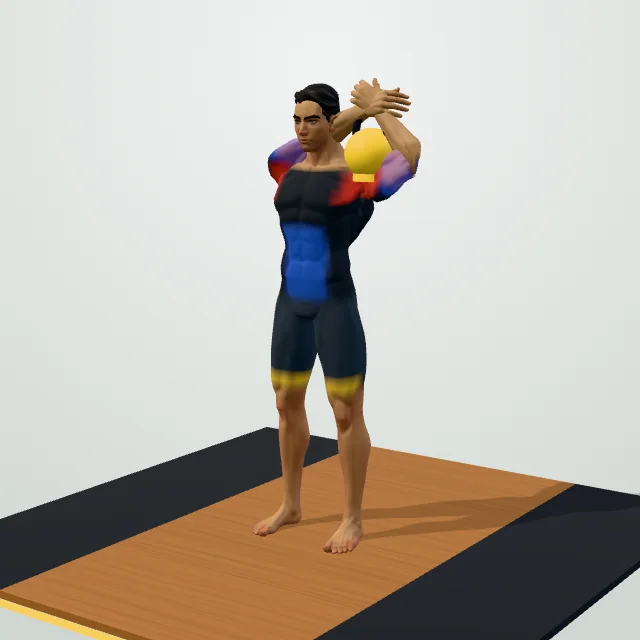
How to do it
- Hold a light kettlebell upside down by the horns at your chest.
- Brace your core and keep your hips still.
- Circle the kettlebell around your head, staying close to your skull.
- Pass it behind your neck without shrugging your shoulders.
- Complete the circle back to the front and reverse direction.
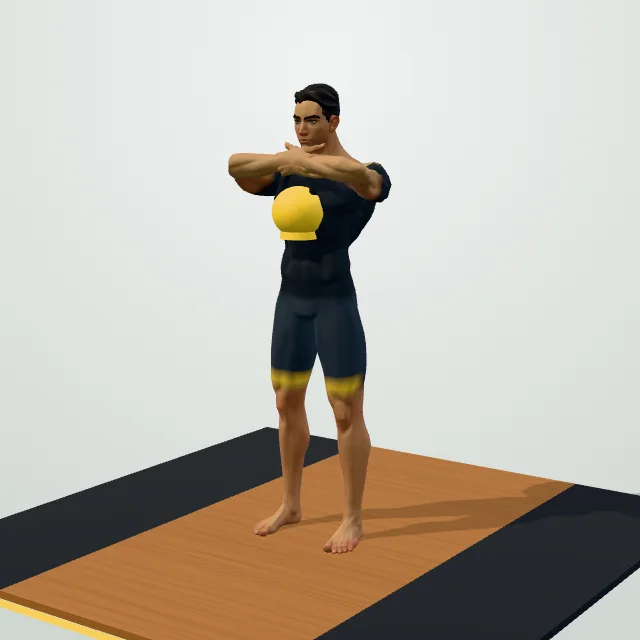
Coach cues
- Hold the horns, kettlebell upside down at chest height.
- Circle it around your head, close to your skull.
- Keep your ribs down, hips still.
- Reverse direction each set.
Breathing: Breathe normally and continuously throughout the circles.
Common mistakes
Make it easier / Make it harder
The kettlebell halo holds a light kettlebell upside down by the horns and circles it slowly around your head, passing it from your chest, around behind your neck, and back to the front. It is a mobility and warm-up movement rather than a strength lift, which is why it works so well before pressing or overhead work.
What muscles does the kettlebell halo work
The front and side delts control the kettlebell as it circles, with your upper back and triceps assisting as it passes behind your head. Your abs and lower back work isometrically the whole time, resisting the urge to arch as the weight moves overhead and behind you, which is what makes the halo a genuine core and shoulder mobility drill rather than just an arm exercise.
Benefits of the kettlebell halo
- Warms up the shoulders through a full range of motion before heavier pressing or overhead work.
- Builds shoulder control and awareness of keeping your ribs down under a moving load.
- Trains anti-extension core strength, since your torso must resist arching as the kettlebell passes overhead.
- Needs very little weight or space, making it an easy addition to any warm-up.
How to do the kettlebell halo with proper form
Setup
Hold a light kettlebell upside down by the horns at chest height, feet shoulder-width apart, core braced and hips still.
The circle
Circle the kettlebell around your head, keeping it close to your skull rather than letting it drift out and creating a long lever. Pass it behind your neck without shrugging your shoulders up, then bring it back to the front to complete one circle, and reverse direction for the next rep.
How to program the kettlebell halo
Because it is a warm-up and mobility movement rather than a strength lift, 2–3 sets of 6–8 circles in each direction, done before a pressing or overhead-focused workout, is enough to loosen up the shoulders without adding real fatigue. Keep the kettlebell light — this is not the exercise to chase heavier weight on — and see how to warm up before a workout for how it fits alongside other warm-up drills.
Variations and alternatives
You can do the same circle holding a light dumbbell or even a weight plate if you do not have a kettlebell. A kneeling kettlebell halo removes the hips from the equation and isolates the shoulders and core even further, and a halo-to-chop variation adds a diagonal chop across your body at the end of the circle for extra rotational core work. If your goal is real overhead strength rather than mobility, follow the halo with a kettlebell press or an arm circle warm-up on lighter days.
Safety and who should modify it
Arching your lower back as the kettlebell passes overhead is the main fault to avoid — keep your ribs pulled down and core braced instead of letting your spine extend. People with a current shoulder injury, shoulder impingement, or neck pain should move the kettlebell through a smaller, pain-free range or check with a physiotherapist before doing full circles. Since the load is light, this is a low-risk exercise for most healthy adults when kept slow and controlled.
Workout plans with this exercise
More exercises for shoulders
Questions people ask
What is a kettlebell halo?
What muscles does the kettlebell halo work?
Are kettlebell halos good to do?
How do I do a kettlebell halo correctly?
Can I do a halo with a dumbbell instead of a kettlebell?
How heavy should the kettlebell be for halos?
What is the difference between a halo and a kettlebell around the world?
General fitness information, not medical advice. Check with a doctor or physiotherapist before starting if you have a health condition, an injury or are pregnant. Stop if you feel chest pain, dizziness or sharp pain.