General fitness · Beginner
Kettlebell workout for beginners: master the swing and the basics
This kettlebell workout for beginners uses just one kettlebell and six exercises to train your whole body in about 30 minutes, three times a week. It deliberately builds the deadlift pattern before the swing, since the swing is a fast hip hinge, not a squat and not an arm lift.
Your week
Sessions
Kettlebell basics
| Exercise | sets | Rest | |
|---|---|---|---|
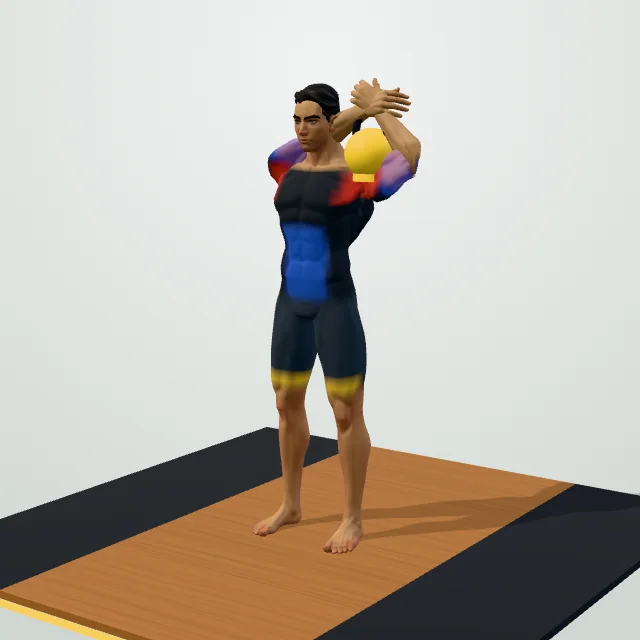
| Kettlebell Halo | 2 × 8 per side | 30 s |
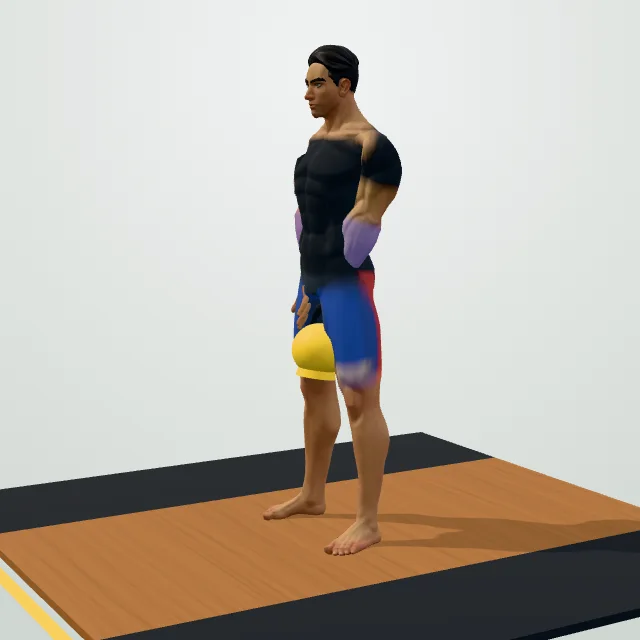 | Kettlebell Deadlift | 3 × 10-12 | 60 s |
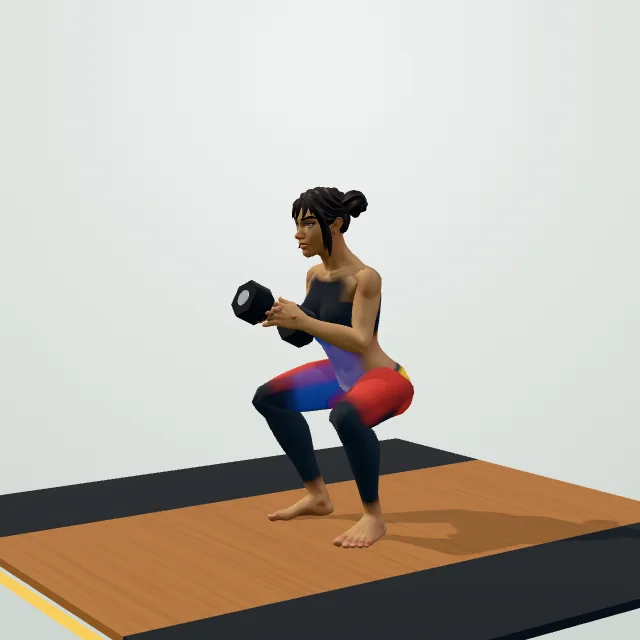 | Goblet Squat | 3 × 10 | 60 s |
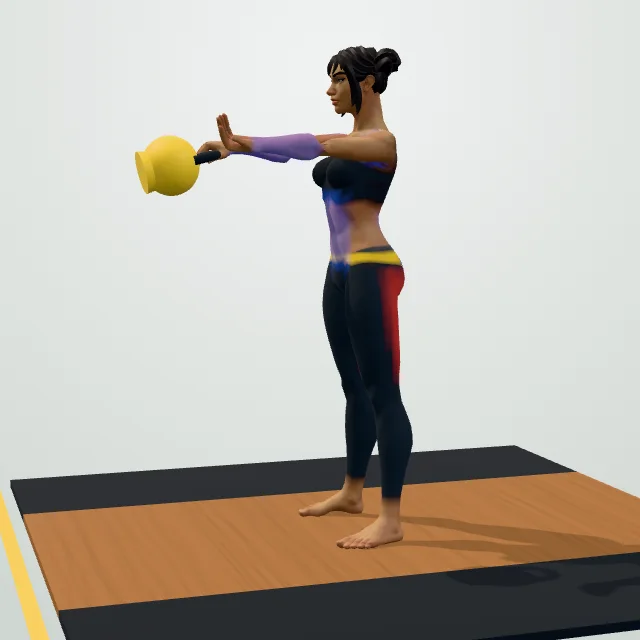 | Kettlebell Swing | 4 × 15 | 60 s |
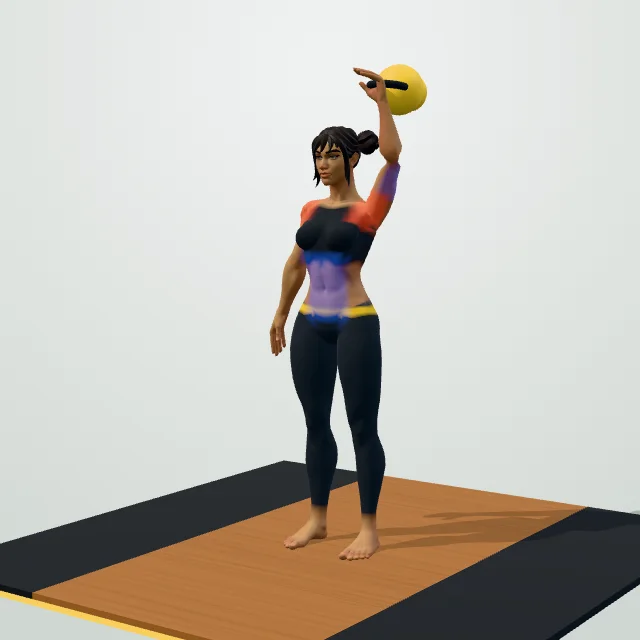 | Single-Arm Kettlebell Press | 3 × 8 per side | 60 s |
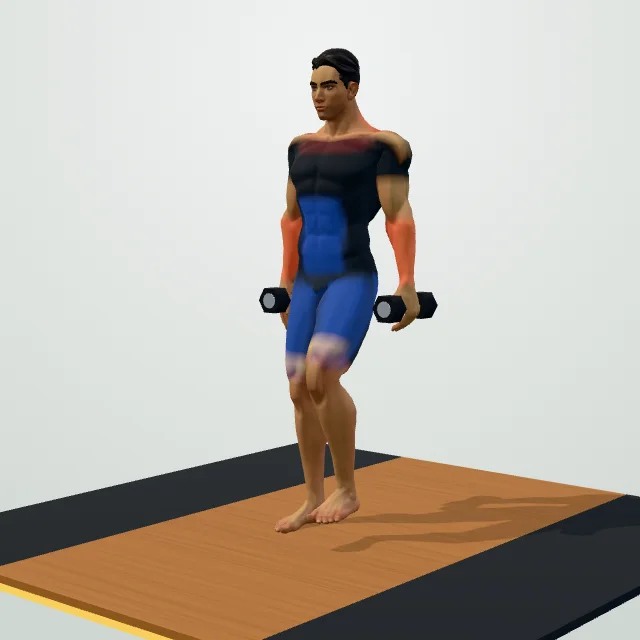 | Farmer's Walk | 3 × 30 s | 60 s |
How to progress
- Master the deadlift before the swing: the swing is a fast hip hinge, not a squat and not an arm lift.
A kettlebell workout for beginners is a practical way to train strength, hip power and grip in a single tool, because the kettlebell’s off-center weight teaches you to control momentum in a way dumbbells and machines do not. This full-body routine uses just one kettlebell and six exercises, takes about 30 minutes, and runs three times a week with the same session repeated.
Who this kettlebell workout is for
This plan is for anyone new to kettlebell training, whether you already lift weights elsewhere or are starting strength training from scratch. It works equally well at home or in a gym, and needs just one kettlebell of a moderate weight (many beginners start around 8–12 kg / 18–26 lb for women and 12–16 kg / 26–35 lb for men, though this varies a lot by individual). If you do not yet have a kettlebell, the full-body dumbbell workout trains similar movement patterns with equipment you may already own.
How to run the session
Warm up for a few minutes with bodyweight squats and arm circles, then work through the exercises strictly in this order: kettlebell halo, kettlebell deadlift, goblet squat, kettlebell swing, kettlebell press, and finish with the farmer’s walk. This order is deliberate — the halo and deadlift teach control and hip hinge technique before the swing, which is the exercise most likely to go wrong if you skip straight to it. Rest 60 seconds between sets on most exercises; the swing gets slightly more (60 seconds) since it is the most demanding move in the session for your heart rate and grip.
How hard each set should feel
Master the deadlift pattern before you ever swing the bell: the kettlebell deadlift should feel like a controlled hip hinge, with your back flat and the power coming from your glutes and hamstrings as you stand up, not from rounding your spine. Once that feels natural, the swing is the same hip-snap motion, just faster and with the bell traveling forward instead of just up and down — it is a hip hinge, not a squat, and not something you lift with your arms or shoulders. On the swing and farmer’s walk, most sets should leave you breathing hard but never straining your grip or lower back to finish; if your form breaks down before the set ends, the weight is too heavy or the reps are too many for where you are right now.
How to progress week to week
Do not rush to a heavier kettlebell before your current one feels controlled and repeatable for every set — this is one of the few exercises where technique errors compound quickly under load. Once every set of the swing and deadlift feels easy at the prescribed reps, move up to the next kettlebell size available (often a 4–6 kg / 9–13 lb jump), and expect to spend at least 2–4 weeks at each new weight relearning the same clean technique. This is a bigger jump than the 5–10% steps described in the progressive overload guide, which is normal for kettlebells since they typically come in fixed increments rather than adjustable plates.
Adapting the workout: home, missing equipment, fewer exercises
No kettlebell: a single heavy dumbbell held goblet-style can substitute for the goblet squat, and a dumbbell Romanian deadlift covers a similar hip-hinge pattern to the kettlebell deadlift, though the ballistic swing itself is hard to replace well with a dumbbell. If you only have a light kettlebell, add more reps per set instead of more weight, since higher-rep swings still build real conditioning. If you are short on time, keep the deadlift, swing and goblet squat — the three exercises that give you the most for your time — and add the halo, press and carry back in on another day.
Recovery basics
The kettlebell swing raises your heart rate significantly, so treat this as both a strength and a light conditioning session — give yourself at least a day between sessions to recover, which the built-in weekly schedule already does. Grip and lower back fatigue after your first few sessions is common as your body adapts to a new movement pattern; sharp lower back pain during or after swings is not normal and usually means the hip hinge has broken down into a squat or a back-rounding lift. Sleep and hydration matter here just as much as in any other strength program.
Common mistakes with kettlebell training
- Squatting the swing instead of hinging: bending the knees deeply and using your arms to lift the bell turns the swing into a front squat with an arm raise. Push your hips back and let the bell swing from hip power.
- Rounding the lower back on the deadlift: a rounded spine under load is a common cause of back strain. Keep a flat back and hinge from the hips, not the spine.
- Going too heavy too soon: a kettlebell that is too heavy for your current technique makes every mistake above more likely and more costly. Stay at a manageable weight until form is consistent.
- Gripping the handle too tightly on the swing: an overly tight grip fatigues your forearms fast and can throw off the bell’s natural arc. Hold it firmly but let your wrist stay relaxed.
- Skipping the halo and deadlift to get to the "fun" swing: both exercises teach control that makes the swing safer and more effective — do not skip the boring parts.
What to do next
Use the plan builder to fit this kettlebell workout around your week, or check the compound vs isolation exercises guide to understand why moves like the swing and deadlift do so much in one exercise. Once you are comfortable with all six exercises, the full-body dumbbell workout and 5×5 strength program are good next steps if you want to add barbell training alongside your kettlebell work.
Questions people ask
Are kettlebells good for beginners?
What weight kettlebell should a beginner use?
Can I do this kettlebell workout at home?
Why does the deadlift come before the swing in this plan?
Is the kettlebell swing bad for your back?
How often should beginners do kettlebell training?
Do I need more than one kettlebell?
General fitness information, not medical advice. Check with a doctor or physiotherapist before starting if you have a health condition, an injury or are pregnant. Stop if you feel chest pain, dizziness or sharp pain.