Full body · Home or gym
Kettlebell swing: master the explosive hip hinge
The kettlebell swing is a ballistic hip-hinge exercise, not a squat: power comes from snapping your hips forward while your arms stay relaxed. Here is the setup, technique and programming that keep it safe and effective.
- Primary
- GlutesHamstrings
- Secondary
- Lower backAbsFront deltsForearms
- Level
- Intermediate
- Type
- Compound · Both sides together
- Sets × reps
- 4 × 15 reps
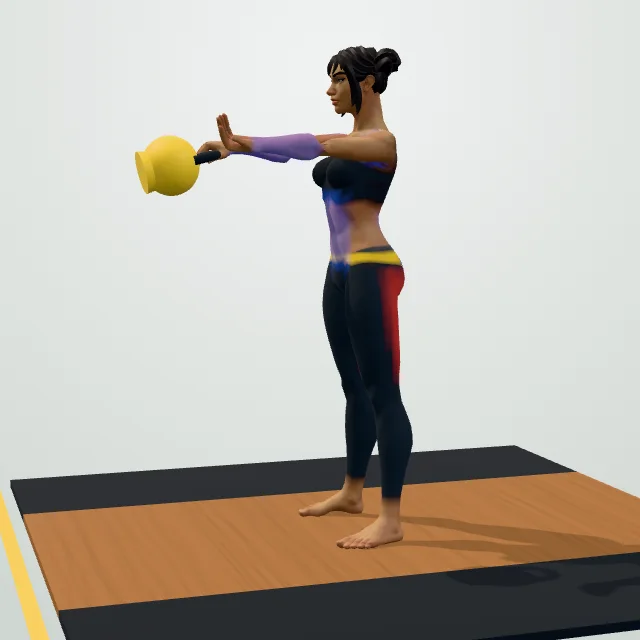
How to do it
- Stand with feet shoulder-width apart, kettlebell a foot in front of you.
- Hinge at the hips to grip the handle with both hands.
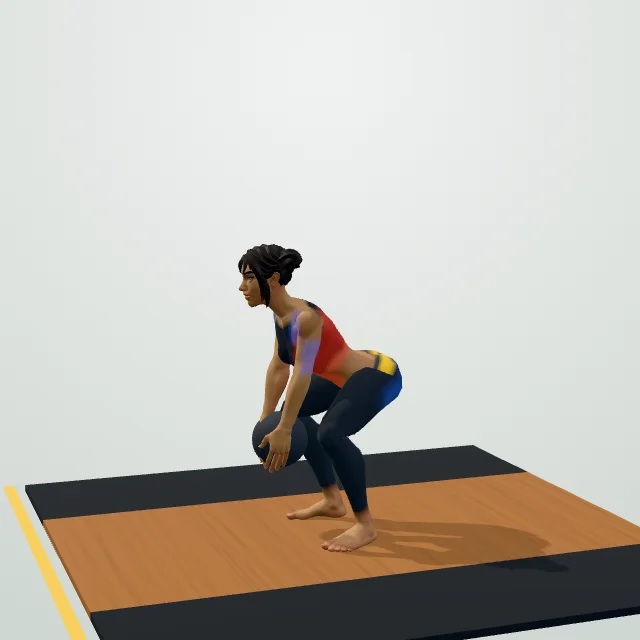
- Hike the kettlebell back between your legs like a football snap.
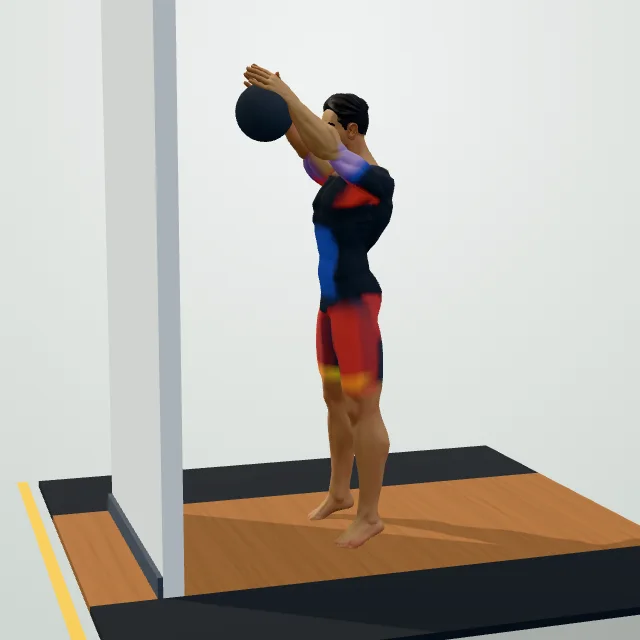
- Snap your hips forward to drive the kettlebell up to chest height.
- Let it float for a moment, then let it fall back into the hike.
- Repeat continuously, re-hinging each time, without squatting.
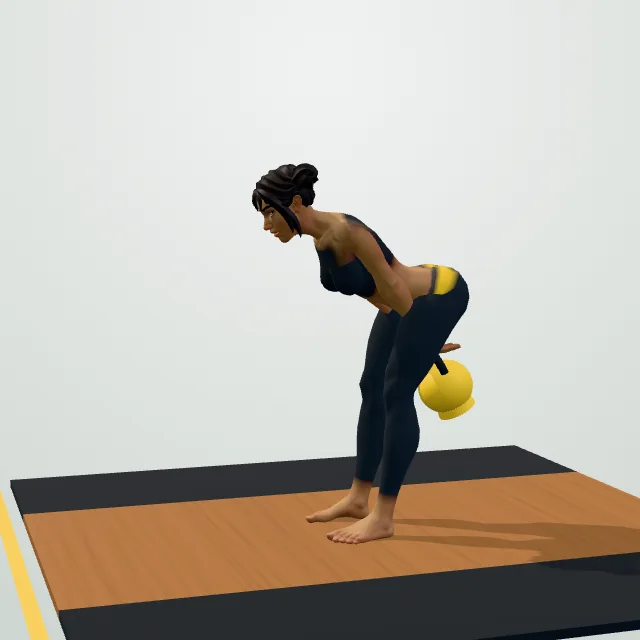
Coach cues
- Hinge at the hips, chest up, kettlebell hikes back.
- Snap your hips forward, arms stay relaxed.
- Squeeze your glutes hard at the top.
- Let it float, then hinge again as it falls.
Breathing: Exhale sharply as you snap your hips forward; inhale as the kettlebell falls back.
Common mistakes
Make it easier / Make it harder
Sets and reps by goal
| Goal | sets | reps | Rest |
|---|---|---|---|
| Strength | 3–5 | 3–6 | 2–4 min |
| Muscle growth | 3–4 | 6–12 | 90–150 s |
| Endurance | 2–3 | 15–20 | 30–60 s |
The kettlebell swing loads a single kettlebell and drives it from between your legs up to roughly chest height by snapping your hips forward, not by squatting or lifting with your arms. It is one of the most searched kettlebell moves because it packs a full hip-hinge strength pattern and a serious cardio challenge into one simple, repeatable rep.
What muscles does the kettlebell swing work
The glutes and hamstrings do almost all of the work, contracting hard to snap your hips forward on every rep. Your lower back and abs brace isometrically to keep your spine neutral through the hinge, and your front delts and forearms work to guide and control the kettlebell rather than actively lift it. This is why people ask if it is cardio or strength training — done for higher reps in sets, it is genuinely both.
Benefits of the kettlebell swing
- Trains explosive hip power that carries over to sprinting, jumping and other athletic movements.
- Builds a resilient hip hinge, the same pattern used in the deadlift, with much lower joint load per rep.
- Doubles as conditioning, since sets of 15–20 reps raise your heart rate quickly without any running or jumping.
- Needs minimal equipment, making it one of the best full-body moves for a home kettlebell workout.
How to do the kettlebell swing with proper form
Setup
Stand with feet shoulder-width apart, kettlebell about a foot in front of you. Hinge at your hips, keep your back flat, and grip the handle with both hands, arms straight.
The hike and the swing
Hike the kettlebell back between your legs like a football snap, then explosively snap your hips forward to standing. The kettlebell should float up to roughly chest height from the hip snap alone — your arms are just along for the ride, not lifting it. Let it fall back into the next hike and repeat the rhythm continuously.
American vs Russian kettlebell swing
The Russian swing stops the kettlebell at chest height, which is what most gyms and this page teach, and keeps the lower back safer for high-rep sets. The American swing continues the arc all the way overhead, turning it into more of a shoulder and full-body power move, but it demands more shoulder mobility and a stronger, more controlled hip snap to avoid arching the back at the top. Beginners should master the Russian swing first.
Kettlebell swing vs deadlift
Both train the hip hinge, but differently. The deadlift is a slow, maximal-effort pull from a dead stop on the floor, built for heavy strength. The kettlebell swing is ballistic and rhythmic, built for speed, power and conditioning with much lighter loads. Many programs use both: a heavy hinge lift for strength and swings for power and cardio.
Sets, reps and how to program kettlebell swings
For power and conditioning, 3–5 sets of 15–20 continuous reps with 60–90 seconds of rest works well, or timed sets of 20–30 seconds as part of an interval circuit — see the interval timer. Choose a kettlebell you can snap for the full set without your form breaking down; heavier is not automatically better here since the movement relies on speed, not a slow grind. Most people include swings once or twice a week, either as a warm-up primer for power or as a standalone conditioning finisher, and progressive overload still applies gradually over weeks — see progressive overload.
Variations and alternatives
The single-arm kettlebell swing adds an anti-rotation core challenge, since one arm swings while the other stays free. If you do not have a kettlebell, the cable pull-through trains a similar hip-snap pattern on a machine, and the dumbbell Romanian deadlift is a good slower-tempo alternative for the same hip-hinge muscles. See the full kettlebell exercise library for more options, or try a ready-made kettlebell workout for beginners.
Safety and who should modify it
A rounded lower back on the hike-back is the main technical error linked to swing-related back strain, so keep your chest up and back flat throughout, and stop the set if you cannot maintain that position. People with a current lower-back injury, pregnancy, or high blood pressure or heart disease should check with a doctor or physiotherapist before adding ballistic hip-hinge training, and everyone should stop for sharp back pain, dizziness or chest discomfort. Learn the hinge pattern with a light kettlebell or no weight at all before adding load or speed, and see exercise for lower back pain for more guidance.
Workout plans with this exercise
More exercises for full body
Questions people ask
Are kettlebell swings good for you?
How do you do a kettlebell swing properly?
What muscles does the kettlebell swing work?
Is the kettlebell swing cardio or strength training?
Are kettlebell swings bad for your back?
What size kettlebell should I use for swings?
What can I do instead of kettlebell swings?
General fitness information, not medical advice. Check with a doctor or physiotherapist before starting if you have a health condition, an injury or are pregnant. Stop if you feel chest pain, dizziness or sharp pain.