Full body · Home or gym
Kettlebell deadlift: a beginner-friendly hip hinge
The kettlebell deadlift lifts a single kettlebell off the floor by hinging at the hips, one controlled rep at a time. It is one of the easiest ways to learn the deadlift pattern before you add a barbell.
- Primary
- GlutesHamstrings
- Secondary
- QuadsLower backForearms
- Level
- Beginner
- Type
- Compound · Both sides together
- Sets × reps
- 3 × 10-12 reps
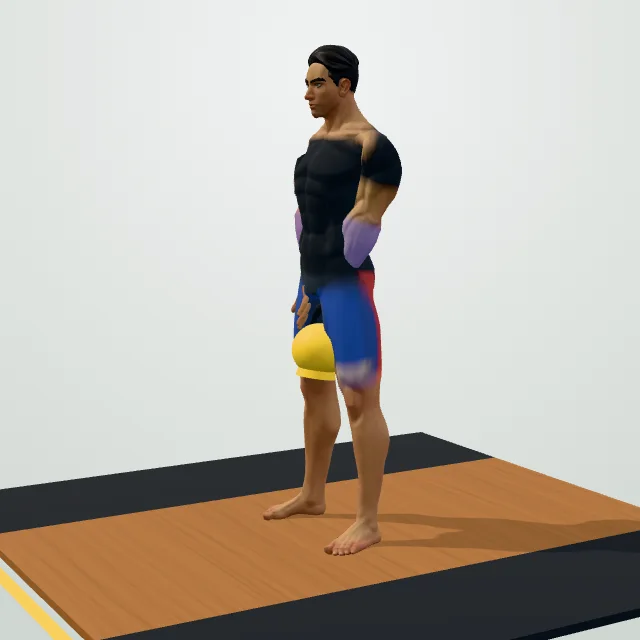
How to do it
- Stand over the kettlebell, feet hip-width, kettlebell between your feet.
- Hinge at the hips and bend your knees slightly to grip the handle.
- Set your chest up and flatten your back.
- Push the floor away and stand tall, squeezing your glutes.
- Hinge your hips back to lower the kettlebell to the floor.
- Reset your grip and repeat each rep from a dead stop.
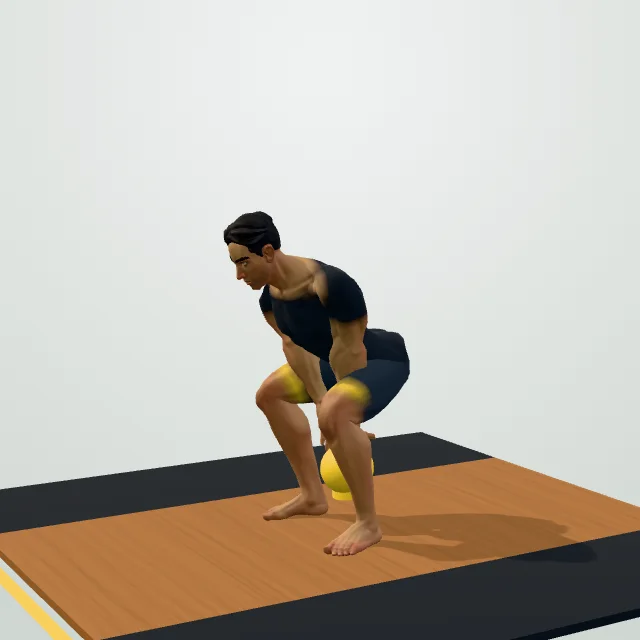
Coach cues
- Feet hip-width, kettlebell between your feet.
- Hinge and grip, chest up, back flat.
- Push the floor away, stand up tall.
- Squeeze your glutes at the top.
Breathing: Breathe in and brace as you set up; breathe out as you stand up.
Common mistakes
Make it easier / Make it harder
Sets and reps by goal
| Goal | sets | reps | Rest |
|---|---|---|---|
| Strength | 3–5 | 3–6 | 2–4 min |
| Muscle growth | 3–4 | 6–12 | 90–150 s |
| Endurance | 2–3 | 15–20 | 30–60 s |
The kettlebell deadlift stands over a single kettlebell, hinges at the hips to grip it, and stands back up, one deliberate rep at a time. Unlike its more explosive cousin the kettlebell swing, it is a slow, controlled strength lift, which makes it one of the most common ways coaches teach beginners the hip-hinge pattern before moving on to a barbell.
What muscles does the kettlebell deadlift work
The glutes and hamstrings drive the lift by extending your hips, with your quads assisting to straighten your knees. Your lower back and forearms work isometrically to keep your spine braced and hold the grip, which is why the exercise builds real hip-hinge strength and grip endurance at the same time, without needing much weight to feel challenging.
Benefits of the kettlebell deadlift
- Teaches the hip hinge safely, since a single kettlebell between your feet is far more forgiving to learn on than a loaded barbell.
- Works well at home, needing only one kettlebell and almost no space.
- Builds a foundation for heavier hinge lifts like the barbell deadlift, Romanian deadlift and kettlebell swing.
- Low technical demand, so beginners and older adults can add real hip and back strength with low injury risk.
Kettlebell deadlift vs kettlebell swing
Both are hip-hinge exercises with the same kettlebell, but they train different qualities. The kettlebell deadlift is slow and controlled, each rep starting and stopping on the floor, which makes it a strength-building lift. The kettlebell swing is ballistic — the kettlebell keeps moving and you snap your hips to send it upward — which trains power and conditioning instead. Many beginners start with the deadlift to groove the hinge, then progress to swings once the pattern feels automatic.
How to do the kettlebell deadlift with proper form
Setup
Stand with feet hip-width apart, kettlebell on the floor between your feet. Hinge at your hips and bend your knees slightly to grip the handle with both hands, keeping your chest up and back flat.
The lift
Push the floor away with your legs and stand up tall, squeezing your glutes at the top rather than leaning back. Reverse the movement by hinging your hips back first to lower the kettlebell to the floor under control, resetting your grip before the next rep.
Sets, reps and how to program it
For learning the pattern or building general strength, 3 sets of 10–12 reps with 60–90 seconds of rest works well, using a kettlebell you can lift with a flat back for every rep. As the movement feels easier, add a heavier kettlebell in small steps rather than rushing the load, and see progressive overload and how many sets and reps for more detail. It fits well early in a workout, before more fatiguing lower-body work, or inside a beginner-friendly plan such as a kettlebell workout for beginners.
Variations and alternatives
The single-leg kettlebell deadlift adds a balance and stability challenge for one side at a time, and a wider, sumo-style stance shifts a little more work onto your inner thighs. A kettlebell deadlift to high pull adds an upright row at the top for more upper-back work. If you would rather use dumbbells, the dumbbell Romanian deadlift trains a very similar pattern, and once the hinge feels solid, progressing to a barbell deadlift is the natural next step.
Safety and who should modify it
A rounded lower back as you reach for the handle is the main fault to watch for — hinge your hips back further before bending your knees, rather than reaching down with a curved spine. People with a current back injury, pregnancy, or high blood pressure or heart disease should check with a doctor or physiotherapist before starting hip-hinge training, and everyone should stop for sharp back pain, dizziness or chest discomfort. See exercise for lower back pain for more guidance on training safely with a sensitive back.
Workout plans with this exercise
More exercises for full body
Questions people ask
What is a kettlebell deadlift?
Can you do deadlifts with kettlebells?
What muscles does the kettlebell deadlift work?
Is the kettlebell deadlift effective?
Kettlebell deadlift vs barbell deadlift: what is the difference?
How do I make the kettlebell deadlift harder?
Is the kettlebell deadlift good for beginners?
General fitness information, not medical advice. Check with a doctor or physiotherapist before starting if you have a health condition, an injury or are pregnant. Stop if you feel chest pain, dizziness or sharp pain.