Legs · Home or gym
Goblet squat: the easiest way to learn squat depth
The goblet squat holds one dumbbell or kettlebell at your chest while you squat, which makes it the simplest way to learn good depth and bracing before you ever touch a barbell. It works well as a beginner exercise, a home workout staple, or a light day between heavier squat sessions.
- Secondary
- AbsInner thighs
- Level
- Beginner
- Type
- Compound · Both sides together
- Sets × reps
- 3 × 10-12 reps
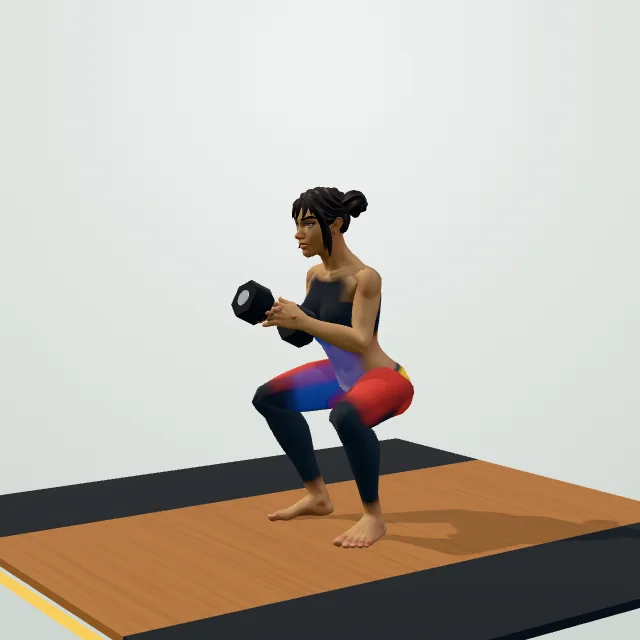
How to do it
- Pick up a dumbbell or kettlebell and hold it close to your chest.
- Set your feet a little wider than shoulder width, toes turned out slightly.
- Brace your core.
- Sit back and down, letting your elbows brush your inner knees.
- Drive up through your whole foot to standing.
- Reset your grip on the weight between reps if needed.
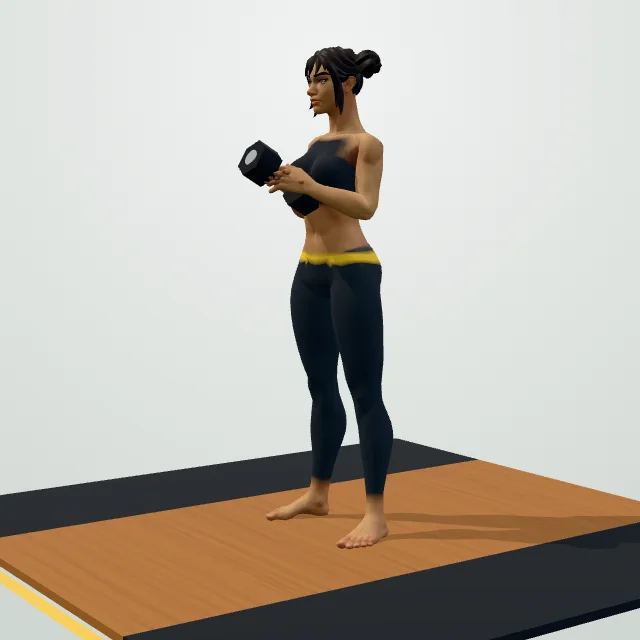
Coach cues
- Hold the weight close to your chest.
- Sit back and down, chest tall.
- Elbows brush your inner knees.
- Drive up through your whole foot.
Breathing: Take a breath and brace before you sit down, then breathe out as you stand back up.
Common mistakes
Make it easier / Make it harder
Sets and reps by goal
| Goal | sets | reps | Rest |
|---|---|---|---|
| Strength | 3–5 | 3–6 | 2–4 min |
| Muscle growth | 3–4 | 6–12 | 90–150 s |
| Endurance | 2–3 | 15–20 | 30–60 s |
The goblet squat holds a single dumbbell or kettlebell against your chest while you squat, and it is usually the first squat pattern any beginner should learn — the weight in front counterbalances your torso, which makes it far easier to sit down between your knees and keep your chest up than a bodyweight or barbell squat.
Goblet squat muscles worked and how the counterbalance helps
Holding the weight at your chest acts as a natural counterbalance, so your quads and glutes can focus on driving you up and down through a full range rather than fighting to keep your torso from falling forward. Your abs and the muscles of your inner thigh (adductors) work to keep your torso upright and your knees tracking correctly, and your forearms and upper back get some isometric work just from holding the weight steady against your chest for the whole set.
Benefits
Because the counterbalance makes good depth and posture so much easier to find, the goblet squat is widely used to teach the squat pattern to complete beginners, and to reinforce it for more experienced lifters who need a technique refresher. As a goblet squat for beginners option it needs almost no equipment and no rack, which makes it one of the best squat choices for a home gym or a small space, and it is light enough on the joints to use as a warm-up, a deload, or a squat variation on days your back needs a break from heavier barbell work.
How to hold the weight and set up
Good goblet squat form starts with how you hold the weight. Hold a dumbbell vertically, cupping one end close to your chest with both hands, or hold a kettlebell by the horns at chest height — either way, keep the weight close to your body rather than letting it drift forward. Stand with your feet a little wider than shoulder width, toes turned out slightly, then sit back and down, letting your elbows brush the inside of your knees near the bottom of the rep. Keep your chest up and your weight through your whole foot, then drive back up to standing. The elbows-inside-knees position is a built-in depth check: if you cannot get there yet, squat only as low as you can control and build depth over time.
Sets, reps and how to progress
Most lifters do 3 sets of 10–15 reps with 60–90 seconds of rest, since the goblet squat is limited more by grip and the front-loaded position than by leg strength. Once you can complete all your reps with your chest up and full depth, add weight in small steps — a heavier dumbbell or kettlebell — rather than adding a lot at once, in line with progressive overload. It fits well as a main lower-body lift for beginners, a warm-up before heavier squats, or an accessory on a leg day built around another main lift.
A good option for home and no-rack training
Because it needs only one dumbbell or kettlebell and no rack, spotter, or bench, the goblet squat is one of the most practical squat options for training at home or in a small hotel-room gym. As a goblet squat exercise it is also a sensible choice if your gym's squat racks are always busy — you can get a full, heavy-enough squat session done with just a single available dumbbell.
When to progress to a barbell squat
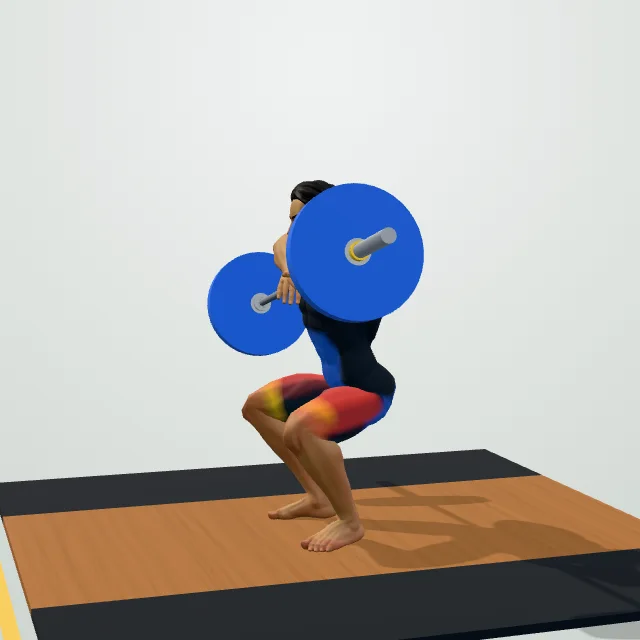
The goblet squat is usually the first stop before the barbell back squat or front squat. Once you can hold a heavy goblet squat for reps with good depth and no rounding, you have most of the movement pattern needed for a loaded barbell squat, and moving to a bar is really just a question of adding a rack and more weight than you can hold at your chest. It is also a sensible regression if you do not have access to a rack, are returning from injury, or simply prefer training with dumbbells and kettlebells.
Safety notes
The goblet squat is one of the gentler squat variations, but if you feel sharp pain inside or at the front of the knee rather than normal muscle effort, reduce your depth or weight and check with a physiotherapist if it continues. Because the weight sits in front, avoid rounding your upper back to compensate for a heavy load — if you cannot keep your chest up, the weight is too heavy for now. If you are pregnant or returning from an injury or surgery, check with your doctor or physiotherapist before adding load to any squat pattern.
Workout plans with this exercise
General fitness · Beginner
Beginner Full-Body Gym Workout
Build muscle · Beginner
Full-Body Dumbbell Workout Plan
Fat loss · Beginner
4-Week Fat-Loss Workout Plan
General fitness · Beginner
Beginner Gym Workout Plan for Women
General fitness · Beginner
Kettlebell Workout for Beginners
More exercises for legs
Questions people ask
What is a goblet squat good for?
Is a goblet squat enough, or do I need to squat with a barbell too?
Should I use a dumbbell or a kettlebell for goblet squats?
How much weight should I use for a goblet squat?
Can I do goblet squats if I have knee pain?
What muscles does the goblet squat work?
General fitness information, not medical advice. Check with a doctor or physiotherapist before starting if you have a health condition, an injury or are pregnant. Stop if you feel chest pain, dizziness or sharp pain.