Shoulders · Home or gym
Single-arm kettlebell press: overhead strength, one side at a time
The single-arm kettlebell press strict-presses one kettlebell overhead from the rack position, training each shoulder independently and forcing your core to resist the sideways pull of the load.
- Primary
- Front deltsSide delts
- Level
- Intermediate
- Type
- Compound · One side, then the other
- Sets × reps
- 3 × 6-10 reps per side
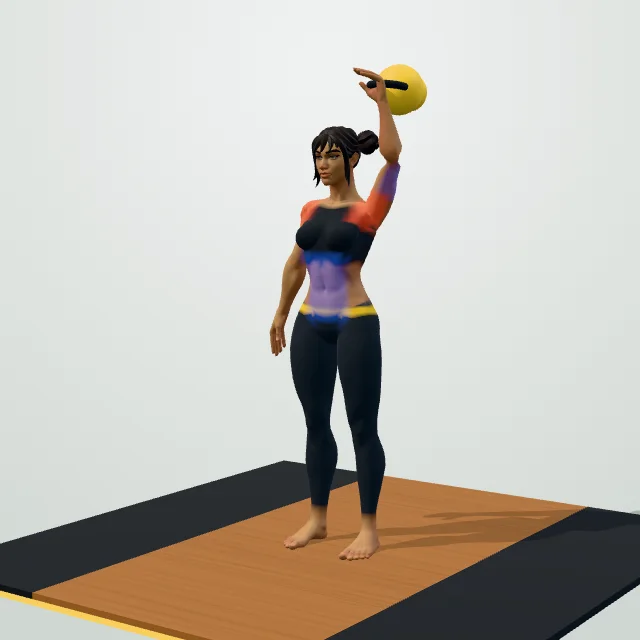
How to do it
- Clean the kettlebell to your shoulder, or start from the rack.
- Stand tall, forearm vertical, elbow tucked near your ribs.
- Brace your core and squeeze your glutes.
- Press the kettlebell straight overhead, rotating your palm slightly forward.
- Lock out with your bicep near your ear, ribs down.
- Lower back to the rack under control and repeat.
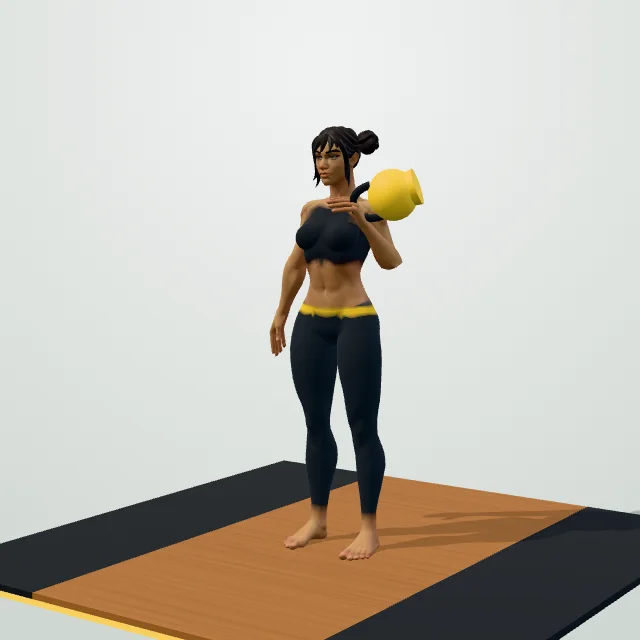
Coach cues
- Rack position, elbow tucked, core braced.
- Press straight up, past the side of your head.
- Lock out with your bicep by your ear.
- Lower back to the rack under control.
Breathing: Brace and hold your breath during the press, then exhale at lockout.
Common mistakes
Make it easier / Make it harder
Sets and reps by goal
| Goal | sets | reps | Rest |
|---|---|---|---|
| Strength | 3–5 | 3–6 | 2–4 min |
| Muscle growth | 3–4 | 6–12 | 90–150 s |
| Endurance | 2–3 | 15–20 | 30–60 s |
The single-arm kettlebell press starts with a kettlebell resting in the rack position at your shoulder and finishes with your arm locked out overhead. Because only one side loads at a time, it is one of the best ways to build strict overhead strength while also challenging your core to resist being pulled sideways by the offset weight.
What muscles does the kettlebell press work
Your front and side delts drive the press, with your triceps locking out the elbow at the top. Because the load sits on only one side, your abs and obliques work hard isometrically to keep your torso upright instead of leaning away from the kettlebell — a demand a barbell or two-arm dumbbell press does not create in the same way.
Benefits of the single-arm kettlebell press
- Builds overhead strength unilaterally, which helps even out strength differences between your two sides.
- Trains anti-lateral-flexion core strength as a side effect of resisting the offset load.
- Needs only one kettlebell, making it a practical shoulder builder for home training.
- Teaches good pressing mechanics that carry over to barbell and dumbbell overhead pressing.
How to do the kettlebell press with proper form
Rack position
Clean the kettlebell to your shoulder or start from a dead-clean setup, forearm roughly vertical and the elbow tucked close to your ribs, not flared out to the side.
The press
Brace your core and squeeze your glutes, then press the kettlebell straight up, letting your palm rotate slightly forward as it passes your head so the bell travels close to your ear rather than out in front. Lock out with your bicep near your ear and your ribs pulled down, then lower it back to the rack under control.
Sets, reps and how to program it
For strength, 3–4 sets of 6–10 reps per side with 90 seconds to 2 minutes of rest works well, using a kettlebell that lets you keep your ribs down and torso upright for every rep — leaning away from the weight is a sign it is too heavy for now. Because each side works separately, train both arms in a session rather than skipping one, and increase weight in small steps once the current kettlebell feels controlled. See progressive overload and how many sets and reps for more programming detail, or add it to a plan with the plan builder.
Variations and alternatives
A bottoms-up kettlebell press, holding the kettlebell upside down, forces an even tighter grip and more shoulder stability, and a kettlebell push press adds a small leg drive to help move heavier loads overhead. If you would rather train both sides at once, the dumbbell shoulder press is a close alternative, and the landmine press offers a shoulder-friendlier pressing angle for those with limited overhead mobility.
Safety and who should modify it
Leaning back to help the kettlebell up is the main fault linked to lower-back strain on this lift, so brace your core and press in as straight a line as your shoulder mobility allows, rather than arching to compensate. People with shoulder impingement, a current shoulder injury, or high blood pressure or heart disease should check with a doctor or physiotherapist before heavy overhead pressing, and everyone should stop for sharp shoulder pain, dizziness or chest discomfort. Start with a kettlebell you can control comfortably before chasing heavier weight.
Workout plans with this exercise
More exercises for shoulders
Questions people ask
What muscles does the kettlebell press work?
How do I do a single-arm kettlebell press correctly?
What kettlebell weight should I use for pressing?
Is the single-arm kettlebell press effective?
What is a kettlebell push press?
What is a kettlebell floor press?
Why are kettlebells considered effective for shoulder training?
General fitness information, not medical advice. Check with a doctor or physiotherapist before starting if you have a health condition, an injury or are pregnant. Stop if you feel chest pain, dizziness or sharp pain.