Build muscle · Beginner
Dumbbell workout plan: a full-body routine, no bench needed
This dumbbell workout plan trains your whole body three times a week using only a set of dumbbells, rotating through three different sessions so you never repeat the same workout twice in a row.
Your week
Sessions
Full body A
| Exercise | sets | Rest | |
|---|---|---|---|
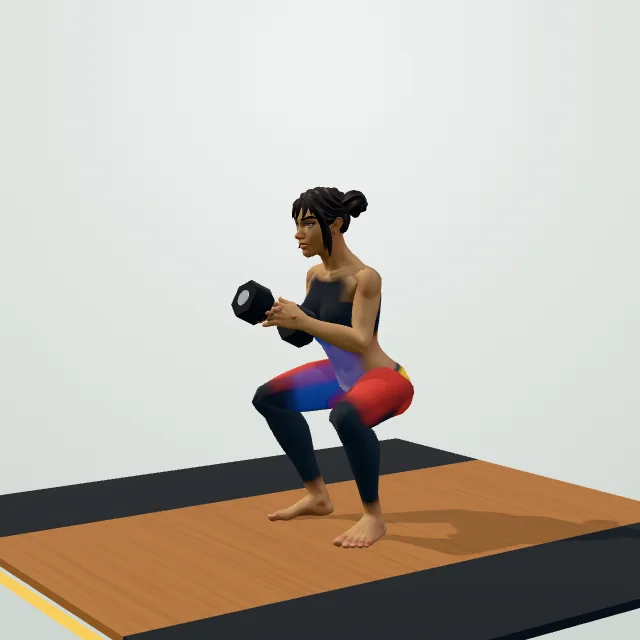
| Goblet Squat | 3 × 10-12 | 90 s |
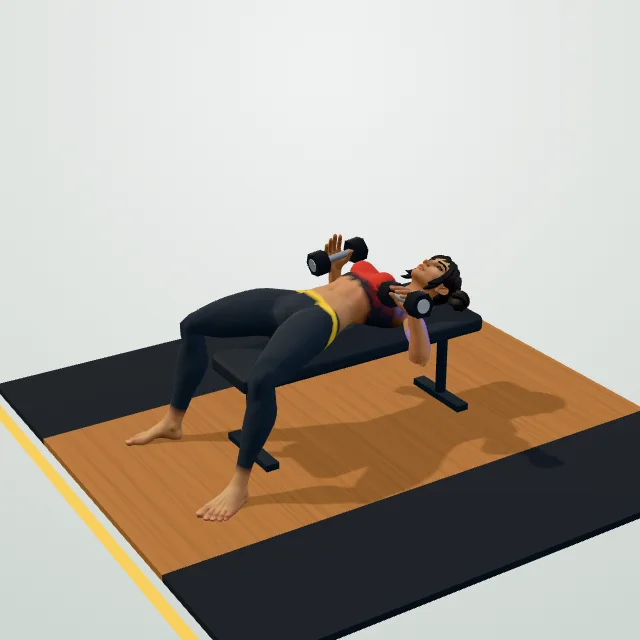 | Dumbbell Bench Press | 3 × 8-12 | 90 s |
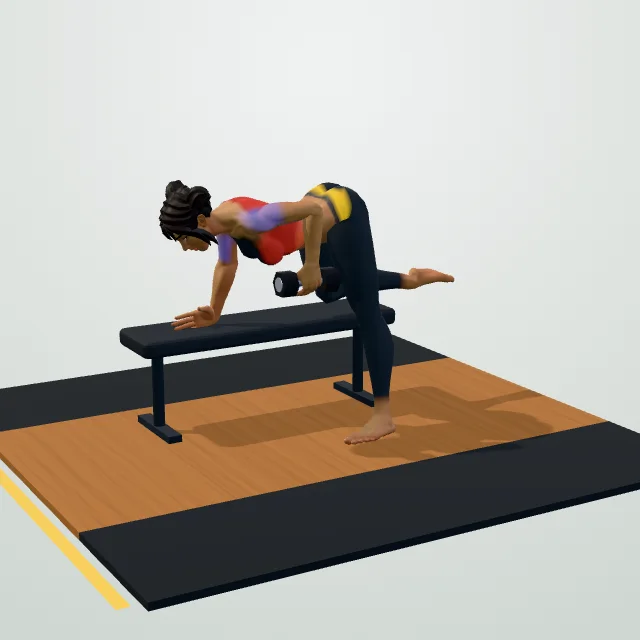 | One-Arm Dumbbell Row | 3 × 10 per side | 60 s |
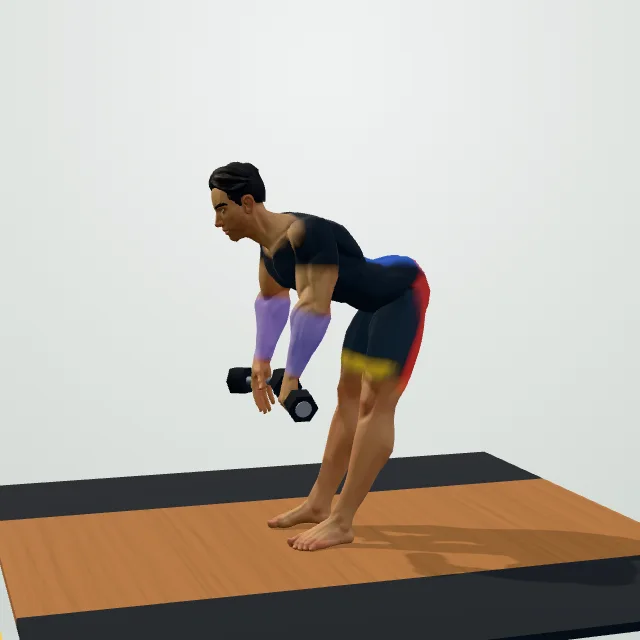 | Dumbbell Romanian Deadlift | 3 × 10-12 | 90 s |
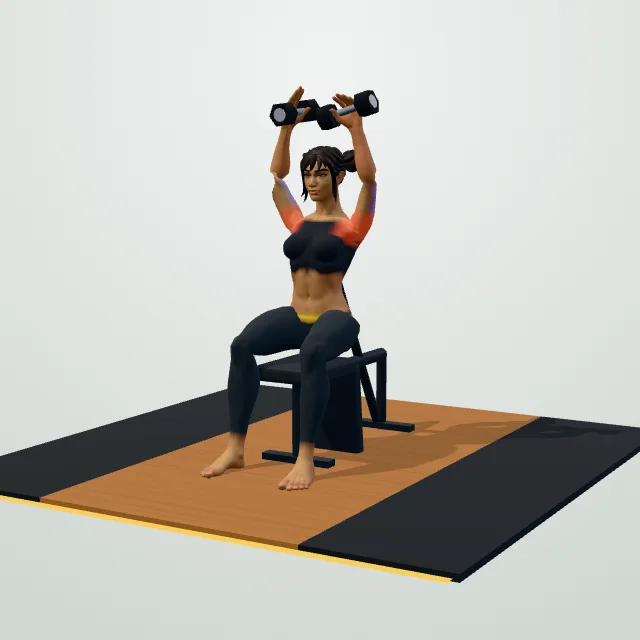 | Dumbbell Shoulder Press | 3 × 10 | 60 s |
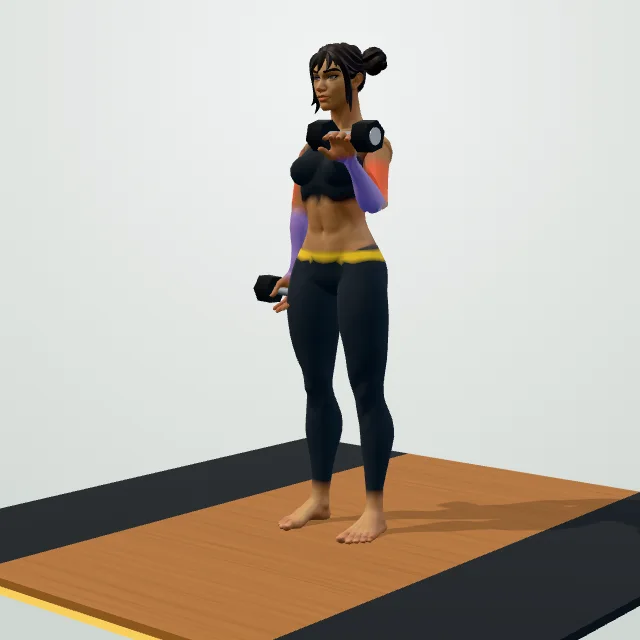 | Dumbbell Bicep Curl | 2 × 12 per side | 45 s |
Full body B
| Exercise | sets | Rest | |
|---|---|---|---|
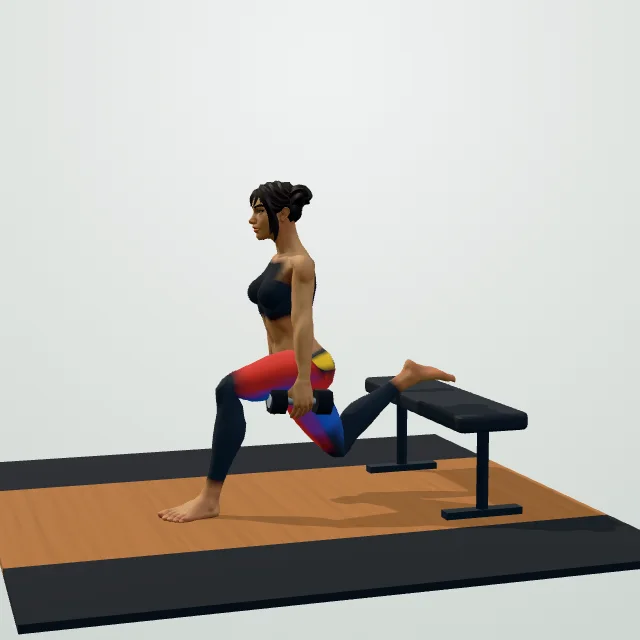 | Bulgarian Split Squat | 3 × 8 per side | 90 s |
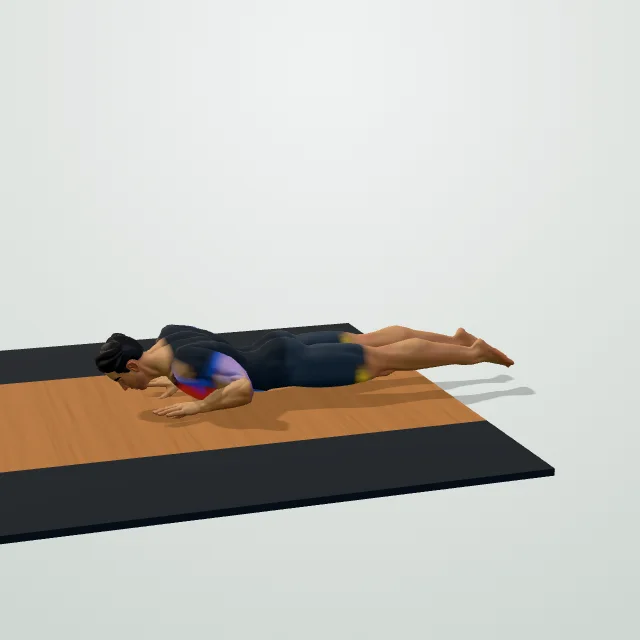 | Push-Up | 3 × 10-15 | 60 s |
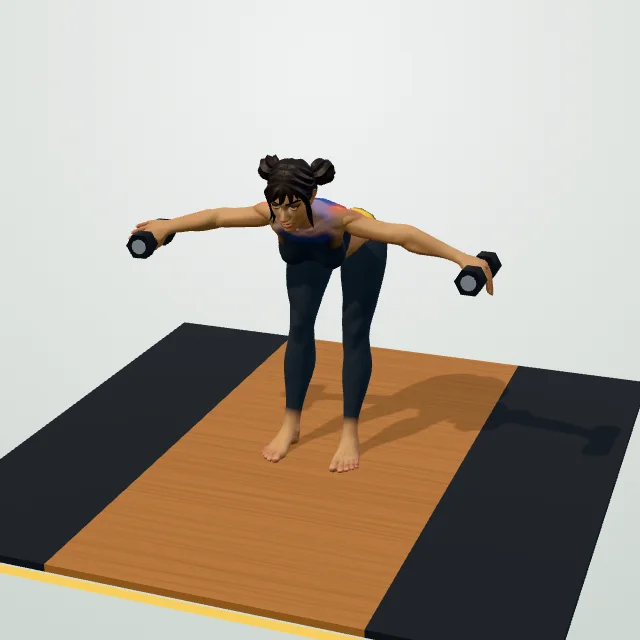 | Bent-Over Rear Delt Fly | 3 × 12-15 | 45 s |
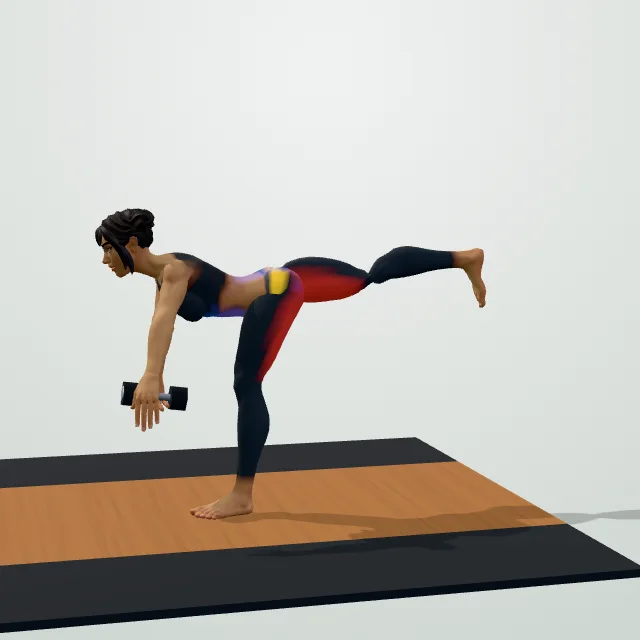 | Single-Leg Romanian Deadlift | 3 × 8 per side | 60 s |
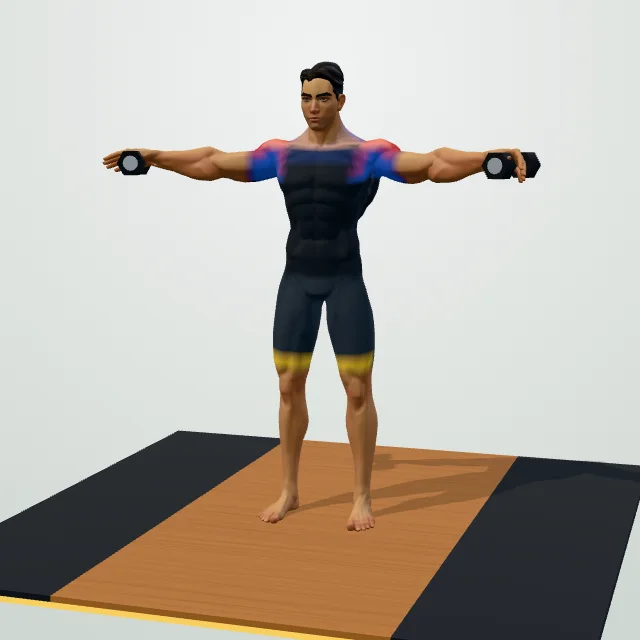 | Dumbbell Lateral Raise | 3 × 12-15 | 45 s |
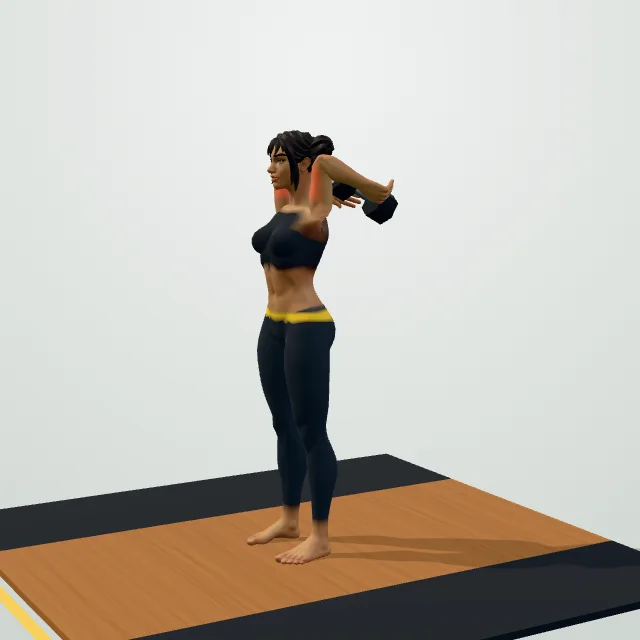 | Overhead Triceps Extension | 2 × 12 | 45 s |
Full body C
| Exercise | sets | Rest | |
|---|---|---|---|
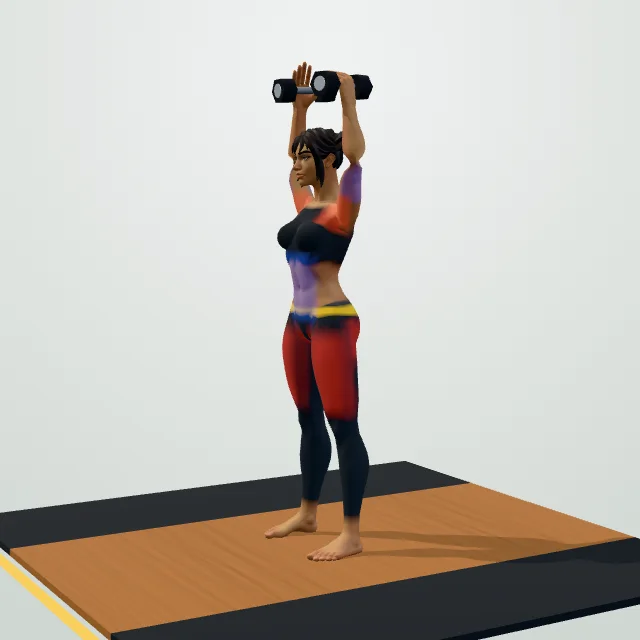 | Dumbbell Thruster | 3 × 10 | 90 s |
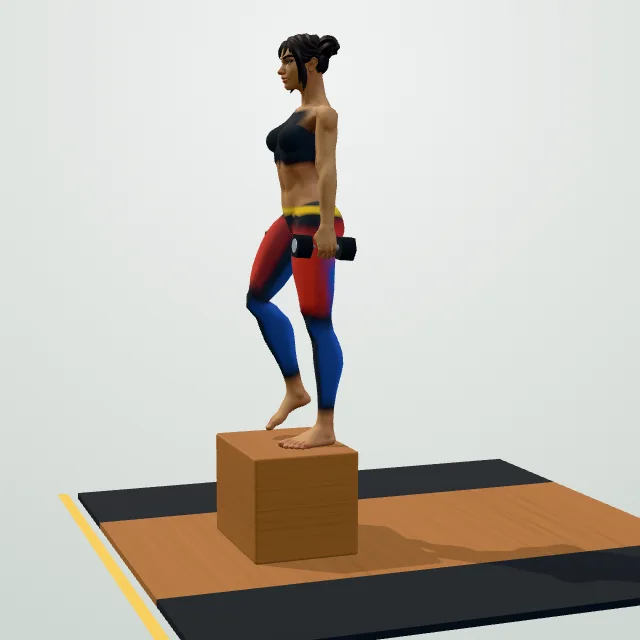 | Dumbbell Step-Up | 3 × 8 per side | 60 s |
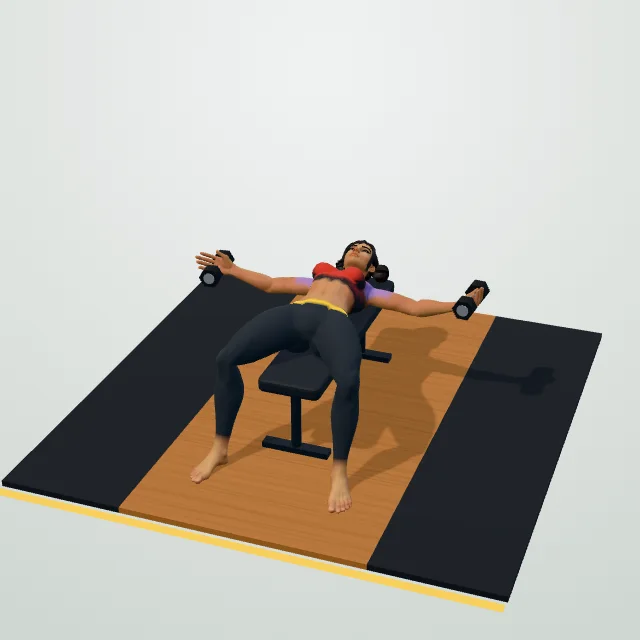 | Dumbbell Fly | 3 × 12 | 60 s |
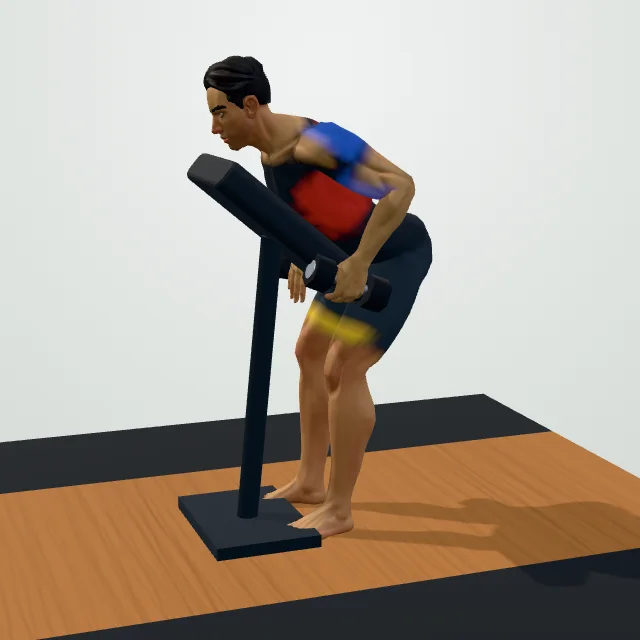 | Chest-Supported Dumbbell Row | 3 × 12 | 60 s |
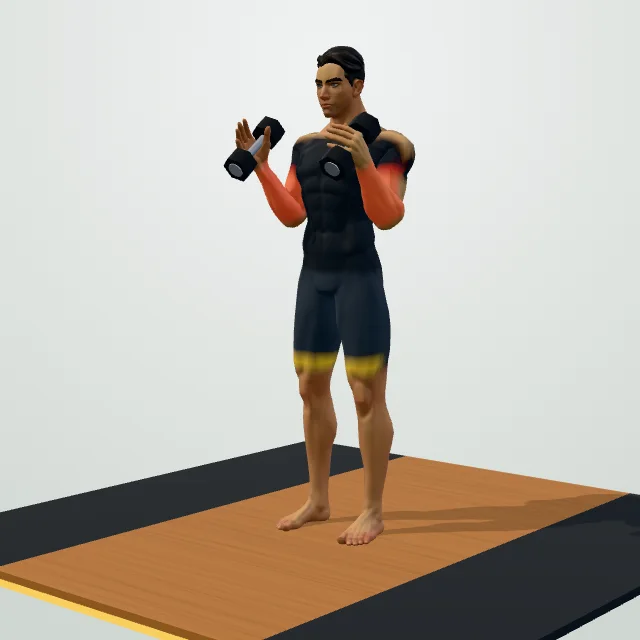 | Hammer Curl | 2 × 12 | 45 s |
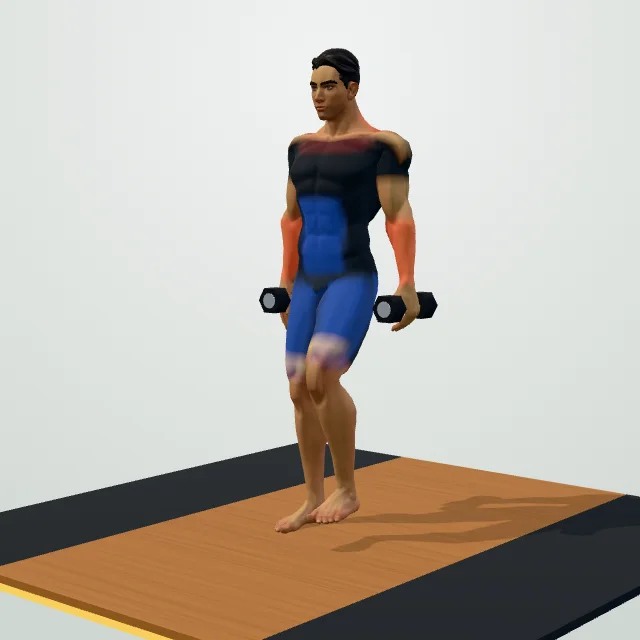 | Farmer's Walk | 3 × 30 s | 60 s |
How to progress
- Adjustable dumbbells make progress easy: add 1–2 kg per hand when all sets reach the top of the range.
A dumbbell workout plan lets you build real muscle and strength with a single piece of equipment, and this full-body routine proves it: three different sessions, six exercises each, that between them cover squats, presses, rows, hinges and curls without needing a bench, a barbell or a rack.
Who this dumbbell workout plan is for
This suits anyone training at home with just a pair of dumbbells (adjustable dumbbells work especially well here since you can add small weight increments), or anyone at a gym who prefers dumbbells to barbells for their main lifts. It is a good fit for beginners and early intermediates who want to build muscle without learning barbell technique first. If you also have a bench and a barbell available, the beginner full-body gym workout and upper/lower split use those tools for slightly heavier compound lifts. If you have no equipment at all yet, the 30-day home workout plan covers the same idea with bodyweight only.
How to run the sessions
Warm up 5–8 minutes before every session — Forma's dynamic warm-up works well — then take 1 light warm-up set before your heaviest exercise of the day. Work through each session's exercises in the order shown: the biggest movements (goblet squat, thruster, Bulgarian split squat) lead while you are freshest, and smaller isolation moves (curls, triceps extensions) finish the session. Rotate A, B, C, A, B, C… across your training days rather than repeating the same session twice before moving to the next, so all three variations get equal attention over time. Finish with a few minutes of the cool-down stretch.
How to choose your starting weight
Pick a dumbbell weight per exercise that leaves 2–4 reps in reserve on your first working sets in week one — this plan rewards patience since you will be adding small amounts of weight often. Two-handed exercises (goblet squat, dumbbell bench press) can usually start heavier relative to your bodyweight than single-arm or single-leg moves (one-arm dumbbell row, Bulgarian split squat, single-leg RDL), which demand more balance and control before you add load. The RPE and RIR guide explains how to judge reps in reserve if it is a new idea to you.
Week-to-week progression, with numbers
Adjustable dumbbells make progress simple: once every set on an exercise reaches the top of its rep range with good form, add 1–2 kg per hand the next time you do that session. This small, steady increase is standard progressive overload — dumbbells just give you finer control over the jump size than many barbells or machines. If you only have fixed dumbbells rather than an adjustable set, add reps first (moving from, say, 3×10 to 3×12) before jumping to the next fixed weight, since fixed dumbbells often skip several kilograms between sizes.
Adapting the plan: fewer days, lighter dumbbells, more equipment
Only free two days a week: run two of the three sessions one week and rotate in the third the following week, rather than skipping a session type altogether. Dumbbells too light for lower-body moves like the goblet squat or thruster: slow the tempo down (a 3-second lowering phase) or add extra reps within a longer set to keep the challenge appropriate until you can access heavier dumbbells. If you later get access to a bench, adding the flat dumbbell bench press in place of session C's floor-based pressing gives you a fuller range of motion on chest work. Once dumbbell weight becomes the limiting factor for lower-body progress, a gym-based plan like the beginner full-body workout or upper/lower split lets you keep progressing with barbells and machines.
Recovery, sleep and nutrition basics
Three full-body sessions a week with rest days between them gives each muscle roughly 48 hours to recover, which is enough for most people at this training frequency. Sleep 7–9 hours a night, since that is when most of the actual strength and muscle adaptation happens. Eat roughly 1.6 g of protein per kg of body weight a day if building muscle is your priority; if fat loss matters more right now, pair this plan with a modest calorie deficit rather than a crash diet — the how to lose fat with exercise guide covers this balance in more detail. Expect some muscle soreness in the first couple of weeks, especially from single-leg and single-arm moves that are new to you; see the muscle soreness guide for what is normal.
Common mistakes on a dumbbell-only plan
- Rushing single-leg exercises like the Bulgarian split squat: going too heavy before you have balance and control on these moves is a common way to strain an ankle or knee. Master the movement with lighter dumbbells first.
- Using momentum on curls and shoulder presses: swinging the weight up shifts work off the target muscle and onto your lower back. Slow the lift and keep your torso still.
- Sticking with the same weight indefinitely: dumbbells make small weight jumps easy, so there is little reason not to add 1–2 kg per hand once every set hits the top of the rep range.
- Skipping the hinge pattern (dumbbell Romanian deadlift, single-leg RDL): these are the main hamstring and lower-back exercises in this plan — cutting them leaves a real gap in your training.
- Doing every session at maximum weight: leaving some reps in reserve, especially in week one, lets you learn the movement patterns before you start pushing hard.
What to do next
Use the plan builder to add a fourth session or adjust the exercises, and the one-rep max calculator once you want to plan working weights more precisely. If you later gain access to a gym, the upper/lower split and 4-day muscle-building plan build on the same muscle groups with barbells and machines added in.
Questions people ask
Can you build muscle with dumbbells only?
Do I need a bench for a dumbbell workout plan?
Can I do a dumbbell full-body workout every day?
What weight of dumbbells do I need for this plan?
Is this dumbbell workout plan good for weight loss?
How is this different from the beginner full-body gym workout?
How much weight should I add on dumbbell exercises?
General fitness information, not medical advice. Check with a doctor or physiotherapist before starting if you have a health condition, an injury or are pregnant. Stop if you feel chest pain, dizziness or sharp pain.