Plyo box exercises: step and jump training explained
How to choose a safe box height, the best plyo box and step exercises, and how to program explosive lower-body training.
Workout plans
Build muscle · Intermediate
Push Pull Legs Split (6 Days)
Strength · Intermediate
Upper/Lower Split (4 Days)
Build muscle · Intermediate
4-Day Muscle-Building Workout Plan
Build muscle · Intermediate
5-Day Body-Part Split (Bro Split)
Build muscle · Beginner
Full-Body Dumbbell Workout Plan
Build muscle · Intermediate
Leg Day Workout (Gym)
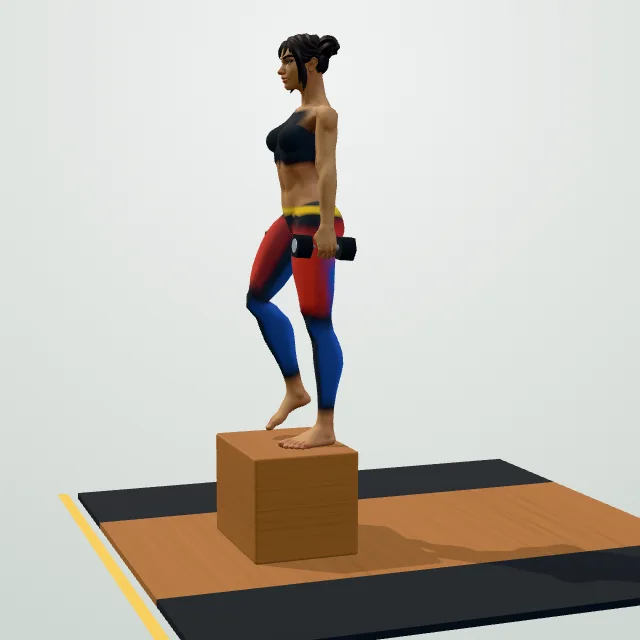
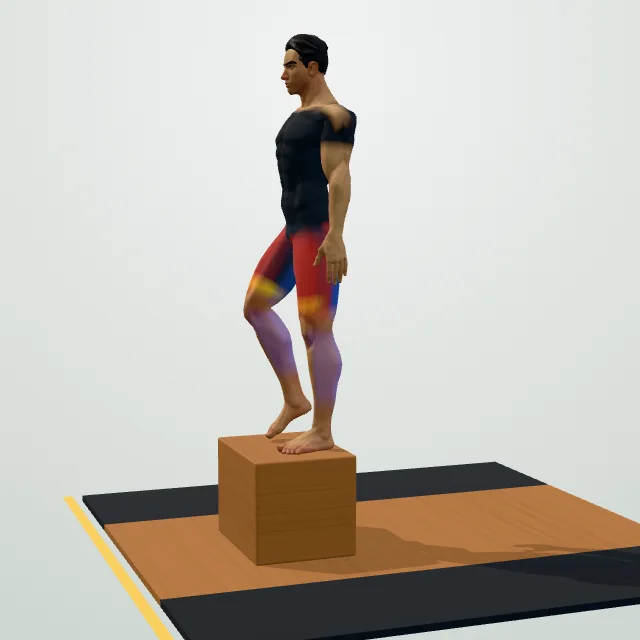
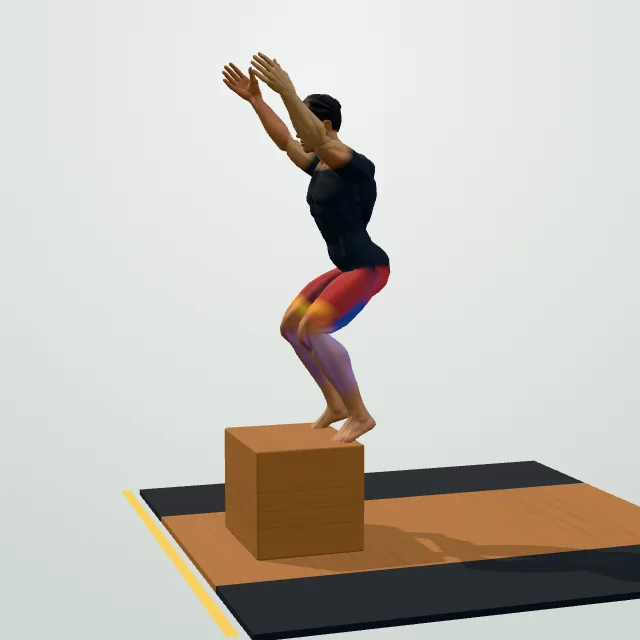
A plyo box is a sturdy platform used for two very different kinds of training: controlled, strength-building step exercises like step-ups, and explosive plyo box exercises like box jumps that build power. The two shouldn't be confused when picking a height — a step-up box should let you keep good knee alignment through a full range, while a jump box only needs to be high enough to challenge hip and knee power without inviting a scary landing. The 3D coach shows setup for the step-up, dumbbell step-up and box jump.
Choosing a box height
For step-ups, pick a height where your knee reaches roughly hip height at the top without excessive forward lean — often 30–45 cm (12–18 in) for most adults, lower for beginners or anyone with knee sensitivity. For box jumps, start lower than you'd guess (30 cm / 12 in is plenty to learn the pattern) and increase height only once your landing is quiet and controlled, since jump height is far less important for training effect than a clean, safe landing.
Safety and setup
Use a box with a non-slip top and stable base — a wobbly box under a jump landing is a genuine injury risk. Warm up the ankles, knees and hips with a few bodyweight squats and light hops before your first jump of the session, since cold joints and tendons are more prone to a hard landing going wrong. Step down off the box rather than jumping down on the landing side, since the impact of jumping down provides little training benefit and adds unnecessary joint stress. If you have knee, ankle or hip pain, stick to step exercises rather than jump exercises, or ask a physiotherapist before adding plyometrics.
Best box and step exercises
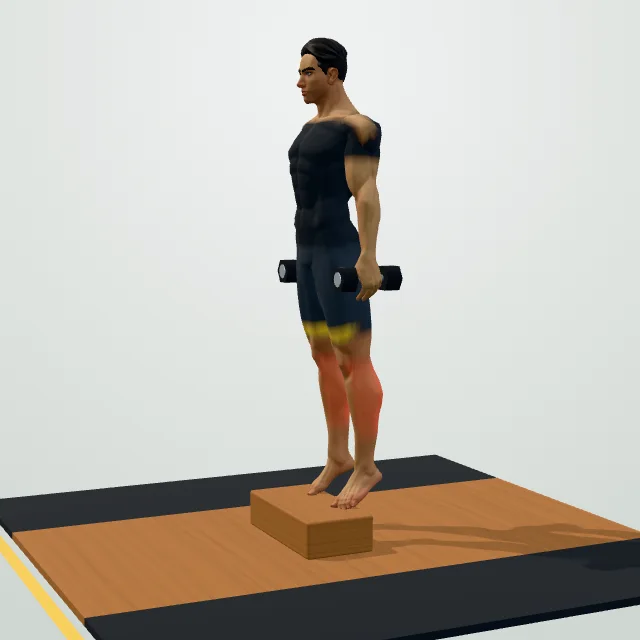
The step-up and dumbbell step-up build single-leg quad and glute strength through a controlled range, useful for beginners and for runners working on unilateral strength. The box jump builds explosive power for anyone training for sport or general athleticism — land softly, knees tracking over toes, and reset between reps rather than bouncing continuously. The standing calf raise can also use box or step edge to add range of motion at the bottom of the movement.
Sample box and step workout
| Exercise | Sets × reps | Rest |
|---|---|---|
| Step-up | 3 × 10 per side | 60 s |
| Dumbbell step-up | 3 × 8 per side | 75 s |
| Box jump (if cleared for jumping) | 3 × 5 | 90 s |
How to program box and step training
Step-ups fit well into a regular strength session at 3 sets of 8–12 reps per side. Box jumps are neurologically demanding despite being low-rep, so keep sets short (3–5 reps) with full rest (60–90+ seconds) between sets so each jump is close to your best effort, and place them early in a session before you're fatigued. Beginners and anyone with knee concerns should master the step-up before adding jumping, and can build the same lower-body power more gently through step exercises alone.
Breathing and bracing on the box
On step-ups, breathe out as you drive up onto the box and in as you lower back down, keeping the core braced through the whole rep so your torso stays upright rather than leaning forward to compensate for weight. On box jumps, a short exhale on takeoff and a reset breath after landing helps keep each rep controlled rather than rushed.
Box training for runners, athletes and general fitness
Runners and field-sport athletes often add step-ups and box jumps to build the single-leg power and hip drive that carry over to sprinting and change of direction. For general fitness rather than sport, step exercises alone deliver most of the benefit — better balance, stronger glutes and quads, and knee-friendly loading — without needing the higher-skill, higher-impact box jump at all. There's no requirement to jump if your goals are general health and strength; step-ups done consistently over months build real single-leg strength on their own.
Workout plans that use a plyo box
Step and box exercises appear in the leg day workout and glute workout plan. If you don't own a box, a sturdy staircase step or a low, stable chair can substitute for step-ups. Build your own plan with the plan builder, choosing your level so box jumps are only included once you've indicated the intermediate or advanced level.