Legs · Home, no equipment
How to do step ups with good form
The step-up trains one leg at a time by stepping fully onto a box, bench or sturdy chair. It needs almost no setup and scales from a low step for beginners to a tall box for advanced work.
- Secondary
- HamstringsCalves
- Level
- Beginner
- Type
- Compound · One side, then the other
- Sets × reps
- 3 × 10-12 reps per side
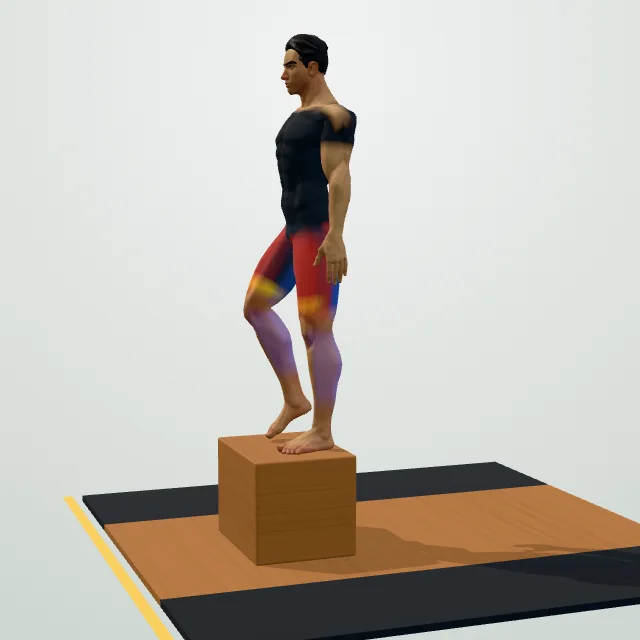
How to do it
- Stand facing a stable box, bench or sturdy chair.
- Place your whole foot flat on top of the step.
- Drive through that heel and midfoot to stand fully upright.
- Let your trailing leg follow up naturally, without pushing off the floor.
- Pause briefly at the top with your hips level.
- Lower back down under control and repeat.
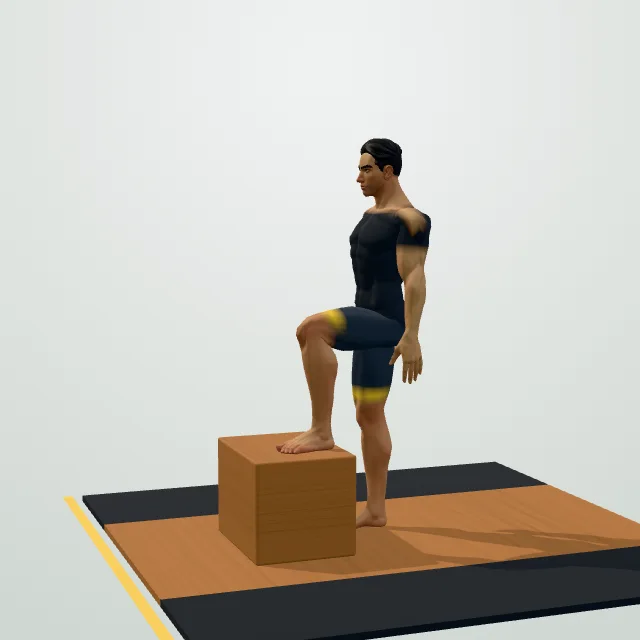
Coach cues
- Whole foot flat on the step.
- Drive through your heel to stand tall.
- Knee tracks over your toes.
- Lower back down under control.
Breathing: Breathe in as you lower down, breathe out as you drive up onto the step.
Common mistakes
Make it easier / Make it harder
Sets and reps by goal
| Goal | sets | reps | Rest |
|---|---|---|---|
| Strength | 3–5 | 3–6 | 2–4 min |
| Muscle growth | 3–4 | 6–12 | 90–150 s |
| Endurance | 2–3 | 15–20 | 30–60 s |
Step ups are a single-leg exercise where you step fully onto a box, bench or sturdy chair, driving through one leg to lift your whole body, then step back down under control. They train the quads and glutes hard with a simple setup, which is why step ups appear in almost every leg-focused home and gym program.
What muscles do step ups work?
The working leg's quads and glutes — two of the main muscles covered in our leg exercises hub — do almost all the lifting as you push up onto the step, with the hamstrings and calves assisting to stabilize the knee and ankle. Because your whole body weight moves through one leg at a time, step ups build more single-leg quad and glute strength per rep than a two-leg squat of similar difficulty, and they also demand hip and core control to keep your pelvis level as you rise.
Step up exercise benefits
- Single-leg strength. Training one leg at a time closes strength gaps that squats can hide.
- Minimal equipment. A sturdy chair, bench or box is all you need, making it an easy exercise at home.
- Adjustable difficulty. Step height, tempo and added weight all let you scale the challenge without changing the movement.
- Carries over to daily movement. Stepping up onto a curb, stair or ledge is a pattern people use every day, which makes step ups a practical strength choice for beginners and older adults alike.
Step-up proper form
Place your whole foot flat on top of a plyo box, bench or sturdy chair that will not slide, at a height where your knee bends to roughly 90 degrees when your foot lands. Drive through that foot — heel and midfoot, not just your toes — to stand fully upright on the step, letting the trailing leg follow up naturally rather than pushing off the floor. Pause briefly at the top with your hips level, then lower back down under control, tapping your trailing foot lightly on the floor before the next rep. Keep your torso upright and your working knee tracking in line with your toes throughout, rather than letting it cave inward.
For more glute emphasis, place your foot slightly further back on the step so your torso leans forward a little more from the hips; for more quad emphasis, place your foot closer to the front edge and keep your torso upright.
How to program step ups
| Goal | Sets | Reps (each leg) | Rest |
|---|---|---|---|
| Strength | 3-4 | 8-10 | 60-90 sec |
| Muscle | 3 | 10-12 | 45-60 sec |
| Endurance / cardio-style | 2-3 | 15-20 | 30-45 sec |
Start with bodyweight step ups and a lower step until your balance and knee tracking are solid, then add a step height or a pair of dumbbells before adding more reps. Step ups work well as an accessory after your main squat or lunge in a leg day workout, two to three times a week with a day of rest between sessions for the same muscles.
Step-up variations and progressions
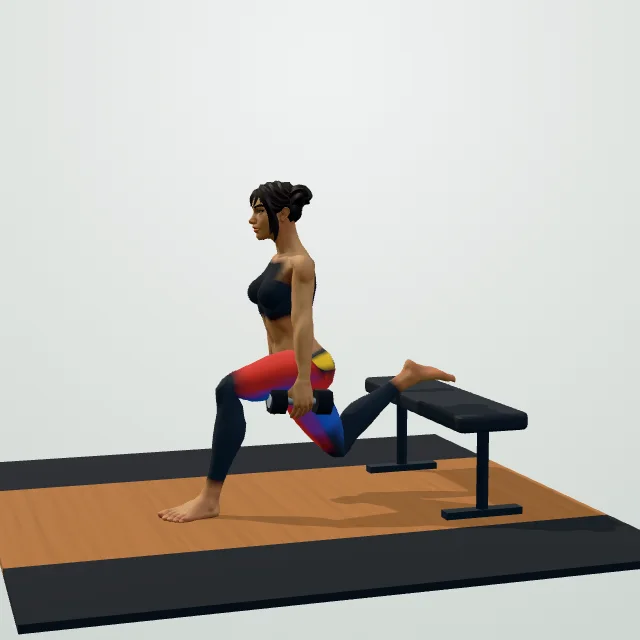
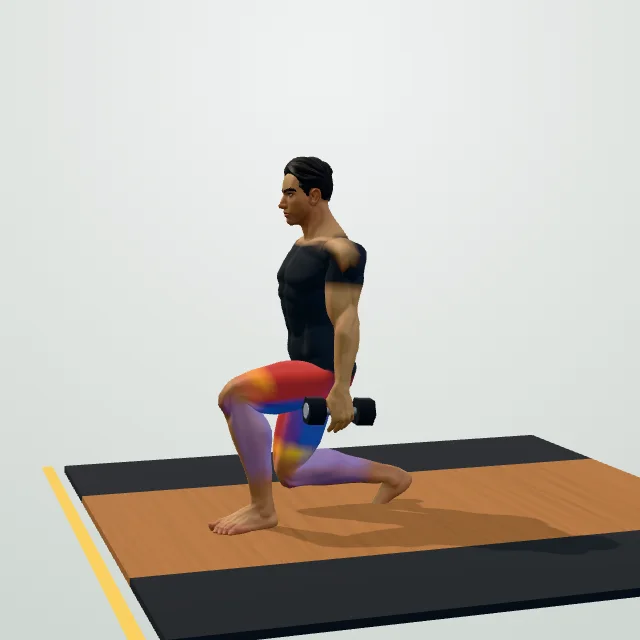
Add a pair of light dumbbells at your sides for weighted step ups once bodyweight reps feel easy, or slow the lowering phase to build more control and muscle time under tension. A lower step or chair reduces the demand for beginners or anyone easing back into training, while a taller box increases the range and challenge for more advanced lifters. If a step or box is not available, a forward lunge trains a similar single-leg quad-and-glute pattern.
Safety and who should modify it
Use a step, box or chair that is completely stable and will not slip or tip. Choose a height that lets your knee bend to about 90 degrees, not deeper.
If you have knee pain, start with a lower step and check that your knee tracks over your toes rather than caving in, since a step that is too high often forces poor knee alignment. People with balance issues or recent lower-body injuries should hold a rail or wall for support and confirm with a doctor or physiotherapist that stepping exercises are appropriate for their recovery stage.
More exercises for legs
Questions people ask
How do you do step ups properly?
What muscles do step ups work?
Are step ups a good exercise?
Are step ups bad for your knees?
What is a good step up height?
Can you do step ups without a bench?
How many step ups should I do?
General fitness information, not medical advice. Check with a doctor or physiotherapist before starting if you have a health condition, an injury or are pregnant. Stop if you feel chest pain, dizziness or sharp pain.