Legs · Home or gym
How to do the dumbbell step-up with good form
The dumbbell step-up trains one leg at a time by stepping fully onto a box or bench while holding weight. Here is how to pick a box height, the technique, and how to program it.
- Secondary
- HamstringsCalves
- Level
- Beginner
- Type
- Compound · One side, then the other
- Sets × reps
- 3 × 8-10 reps per side
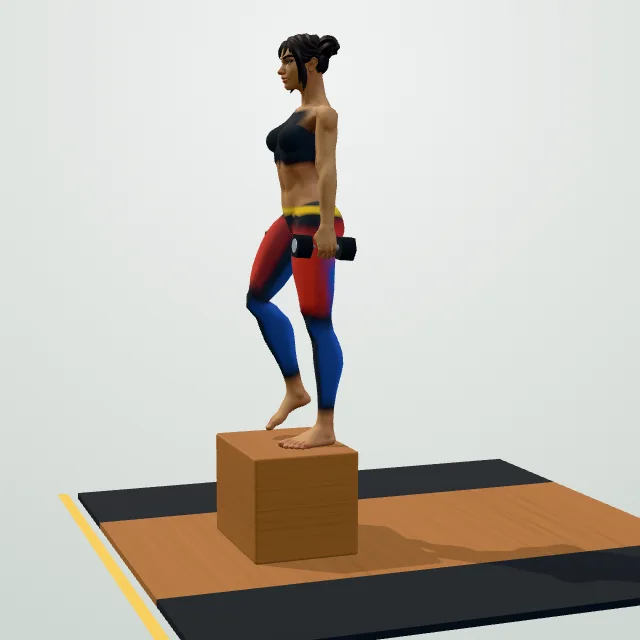
How to do it
- Stand facing a box or bench at roughly knee height, a dumbbell in each hand.
- Place one whole foot flat on top of the box.
- Drive through that planted foot to stand up onto the box.
- Let your trailing leg follow up lightly, without pushing off it.
- Stand tall on top of the box for a moment.
- Step back down under control and repeat all reps on that side.
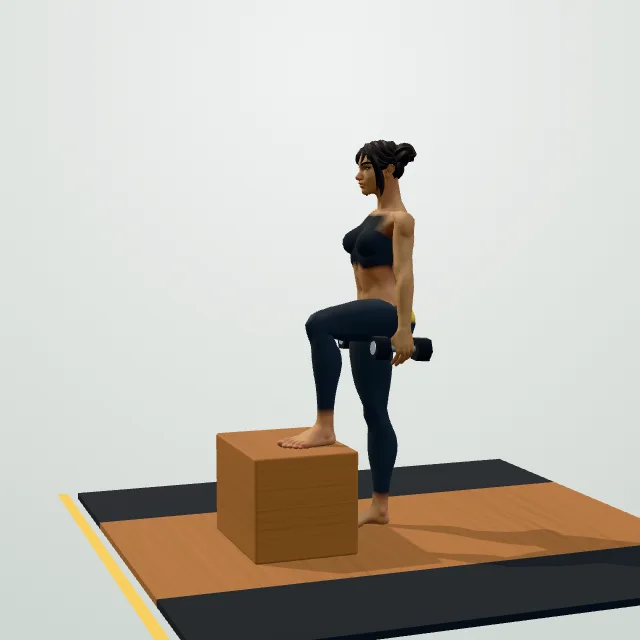
Coach cues
- Whole foot flat on the box.
- Drive up through your planted heel and foot.
- Let the back leg follow, don’t push off it.
- Step down under control, don’t drop.
Breathing: Breathe in as you set your foot on the box, and breathe out as you drive up to standing.
Common mistakes
Make it easier / Make it harder
Sets and reps by goal
| Goal | sets | reps | Rest |
|---|---|---|---|
| Strength | 3–5 | 3–6 | 2–4 min |
| Muscle growth | 3–4 | 6–12 | 90–150 s |
| Endurance | 2–3 | 15–20 | 30–60 s |
The dumbbell step-up trains one leg at a time by stepping fully onto a raised box or bench while holding a dumbbell in each hand. Because the working leg does nearly all of the lifting, it builds unilateral strength, balance and hip stability that a two-legged squat or leg press cannot isolate as directly.
What muscles does the dumbbell step-up work?
The quads and glutes of the leg on the box drive almost the entire rep, extending the knee and hip to lift your body weight plus the dumbbells up onto the platform. The hamstrings assist the hip extension and help control the step down, and the calves stabilize your ankle on the box. Your standing-side hip and core also work hard isometrically to keep your pelvis level, since nothing else is holding you upright the way a barbell squat's stance does. See the full leg and glute muscle groups this exercise trains.
Dumbbell step-up benefits
- Unilateral leg strength. Training one leg at a time exposes and corrects a weaker side that bilateral exercises can mask.
- Balance and stability. Stepping onto a raised surface without support challenges balance more than a floor-based lunge.
- Carryover to sport and running. The single-leg push pattern closely matches sprinting, climbing and change-of-direction demands.
- Knee-friendly loading. Because you control the tempo and box height, step-ups let you load the quads and glutes without the deep, fast eccentric of a jump.
Choosing a box height for step-ups
A box or bench at roughly knee height is the standard starting point: high enough to load the leg meaningfully, low enough that you can drive up without leaning on momentum. Raising the box height increases the range of motion and shifts more of the work onto the glutes, since your hip has to flex and extend further; a lower box keeps more of the load on the quads. Pick a height you can step onto with your whole foot flat on the platform before you push up, not just your toes.
Dumbbell step-up technique
Place your whole foot flat on the box, then drive through the entire planted foot — heel and forefoot together — to stand up onto the platform, rather than pushing off your trailing foot for a hop. The trailing leg should stay light and mostly passive, just following you up; if you feel your back leg doing a lot of the work, the box is too high or you are using momentum instead of strength. Keep your torso upright as you rise, and control the step back down instead of dropping — the lowering phase is where a lot of the knee-stability benefit of this exercise comes from.
How to program dumbbell step-ups
| Goal | Sets | Reps per side | Rest |
|---|---|---|---|
| Strength | 3-4 | 6-8 | 90 sec |
| Muscle / hypertrophy | 3 | 8-12 | 60-75 sec |
| Endurance / balance | 2-3 | 12-15 | 45-60 sec |
Complete all reps on one leg before switching sides, since re-setting your stance every rep is part of what builds the balance benefit. Choose a dumbbell weight that lets you finish the last couple of reps per side with clean, controlled form and no push off the trailing leg — roughly two reps in reserve. Two sessions a week is plenty as an accessory after your main squat, lunge or hinge movement; see progressive overload for how to add weight over time.
Dumbbell step-up at home without a gym box
A sturdy staircase step or a stable, non-wobbling chair works as a substitute for a gym box, as long as it will not slide or tip under your body weight. Check that the surface is flat and grippy before loading it with dumbbells, and start with bodyweight reps to confirm the height and stability feel right before adding weight.
Dumbbell step-up vs lunge vs Bulgarian split squat
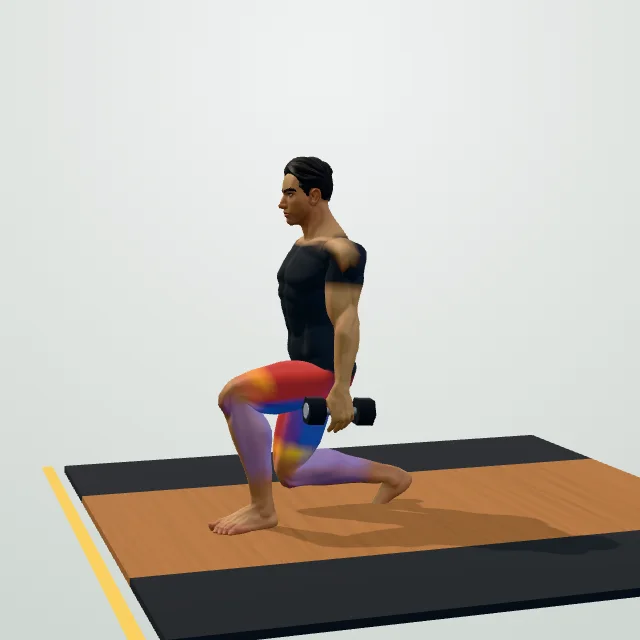
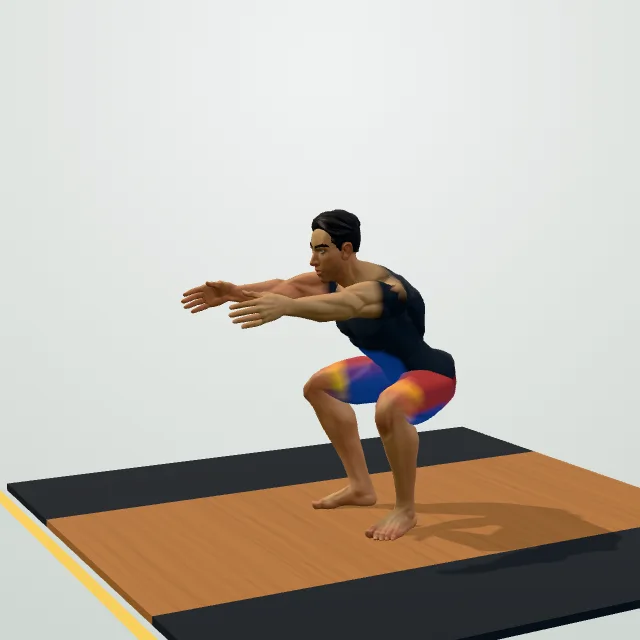
A bodyweight step-up is the same movement without added load, a good starting point for beginners. A walking lunge moves you across the floor and adds a conditioning element the step-up does not have, while a Bulgarian split squat elevates the back foot instead of the front, letting you load one leg more heavily since there is less of a balance challenge. A box jump uses a similar box but trades controlled strength work for explosive power — useful once step-ups feel easy, not a direct replacement for them.
Safety and who should modify it
Confirm your box or bench is stable and will not slide before adding dumbbells, and start with a lower box while you learn the balance.
If you have knee, hip or ankle pain, or a history of falls or balance problems, check with a doctor or physiotherapist before loading step-ups, and consider holding a wall or rail for support at first. Stop for sharp joint pain, dizziness or chest pain, and choose a lower box or lighter dumbbells if your standing leg wobbles through the rep — normal muscle fatigue is fine, an unstable joint is not.
Workout plans with this exercise
More exercises for legs
Questions people ask
What is a dumbbell step-up?
What muscles do dumbbell step-ups work?
How high should the box be for step-ups?
Are dumbbell step-ups effective?
What can I use instead of a step-up box at home?
Dumbbell step-up vs lunge: which is better?
How many step-ups should I do per side?
General fitness information, not medical advice. Check with a doctor or physiotherapist before starting if you have a health condition, an injury or are pregnant. Stop if you feel chest pain, dizziness or sharp pain.