Build muscle · Intermediate
Leg day workout: a complete gym leg routine
This leg day workout hits every part of your legs in one session — quads, hamstrings, glutes and calves — using seven exercises from the back squat down to the standing calf raise, in about 60 minutes.
Your week
Sessions
Leg day
| Exercise | sets | Rest | |
|---|---|---|---|
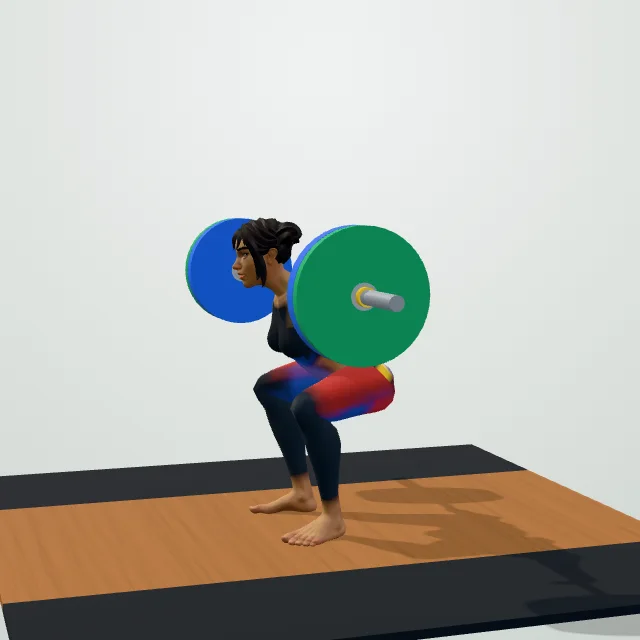
| Barbell Back Squat | 4 × 6-8 | 180 s |
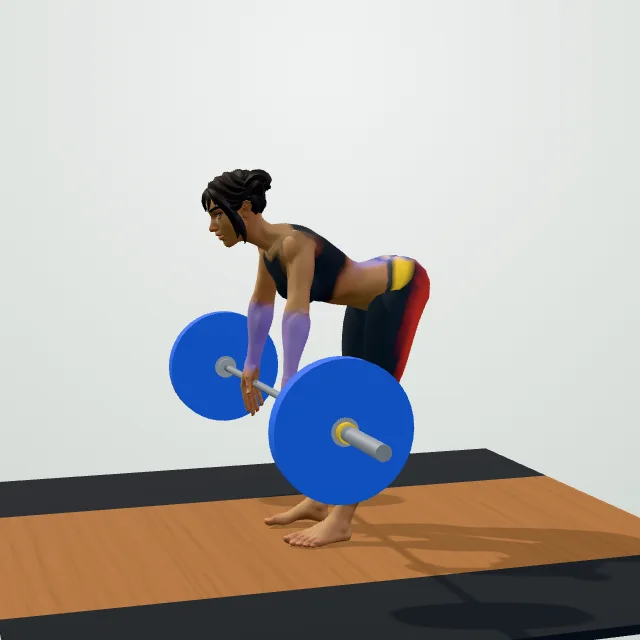 | Romanian Deadlift | 3 × 8-10 | 120 s |
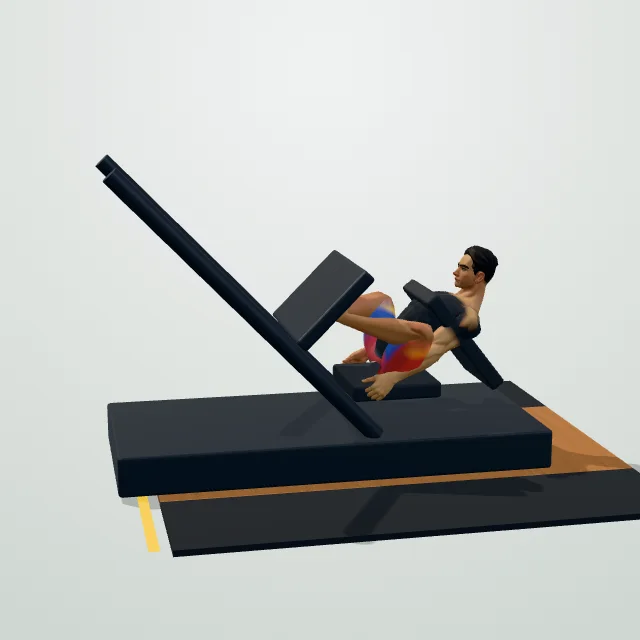 | Leg Press | 3 × 10-12 | 90 s |
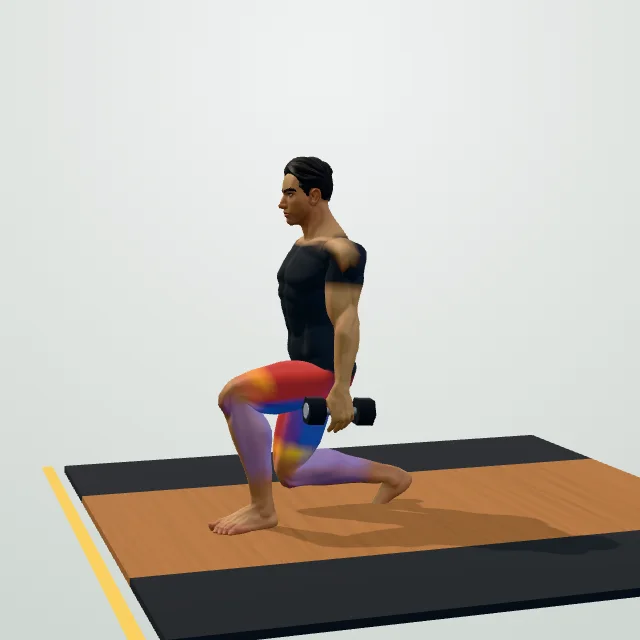 | Dumbbell Walking Lunge | 3 × 10 per side | 90 s |
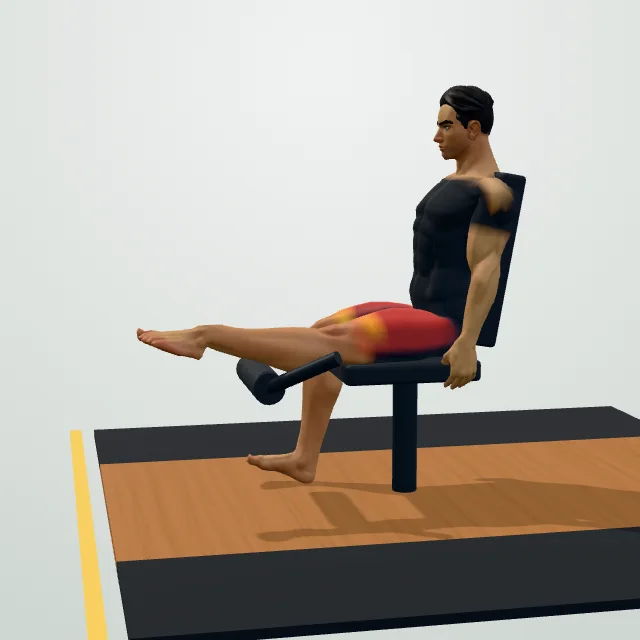 | Leg Extension | 3 × 12-15 | 60 s |
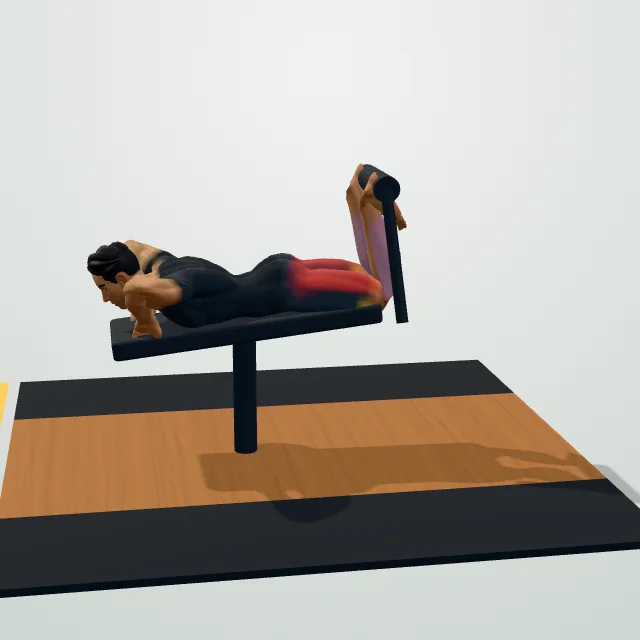 | Lying Leg Curl | 3 × 12 | 60 s |
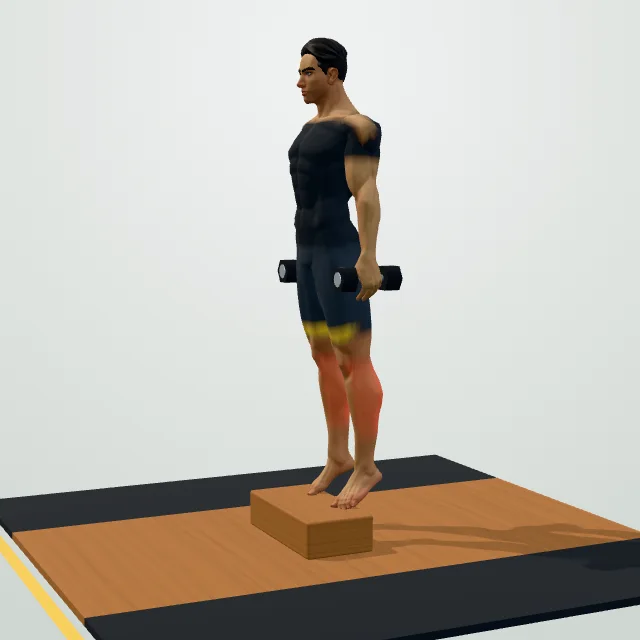 | Standing Calf Raise | 4 × 12-15 | 45 s |
How to progress
- Train legs twice a week for faster progress: repeat this session with lighter squats (3×10) later in the week.
A leg day workout has to cover more ground than most other single sessions, since "legs" really means four separate muscle groups — quads, hamstrings, glutes and calves — and this routine handles all four with a squat and hinge pattern, machine work for isolation, and a calf finisher, in about 60 minutes.
Who this leg day workout is for
This is an intermediate-level, gym-based session that assumes access to a barbell, a leg press and leg extension/curl machines, so it suits lifters who already know how to squat and hinge with reasonable technique and want a dedicated, once-a-week leg session — commonly as part of a 5-day body-part split alongside the chest and triceps workout and back and biceps workout. If you are newer to lifting, build squat and hinge technique first with the beginner full-body workout before taking on this much leg volume in one sitting. If you want legs trained twice a week instead of once, the push pull legs split or upper/lower split spread leg volume across two sessions.
How to run the session
Warm up 5–8 minutes, then take 2–3 progressively heavier warm-up sets before your first working set of back squats — a cold heavy squat is one of the more common ways lifters strain a hip or lower back. Work through the exercises in order: the back squat leads as the heaviest compound lift while you are freshest, the Romanian deadlift follows to hit the hamstrings and glutes through a hinge pattern the squat does not fully cover, then leg press and walking lunges add more quad and glute volume, leg extension and lying leg curl isolate quads and hamstrings directly, and standing calf raises finish the session. Rest the full time shown between sets — 3 minutes on the back squat lets you keep bar speed and form consistent set to set.
How to choose your weight for each exercise
On the back squat and Romanian deadlift, pick a weight that leaves 2–3 reps in reserve at the bottom of the rep range and close to 0–1 in reserve on your last set — these are the session's heaviest, most technical lifts. On the leg press and walking lunge, you can push slightly closer to failure since the joint stress and technical demand are lower. On leg extension, lying leg curl and calf raises, prioritize a full range of motion and control over the number on the weight stack — these machines isolate the target muscle well precisely because you cannot cheat the movement with momentum as easily as on a free-weight lift.
How to progress week to week
Use double progression on every exercise: once all working sets reach the top of the rep range with good form (for example, 4×8 on the back squat or 4×15 on standing calf raises), add the smallest available weight jump next time — typically 5 kg (10 lb) on the back squat and Romanian deadlift, and smaller increments on machine exercises. Because this plan trains legs only once a week, push each exercise reasonably close to your effort limit (1–2 reps in reserve on most sets) to make the most of that single weekly session. If once-a-week leg training stops producing progress after a few months, train legs twice a week instead: repeat this session later in the week with lighter squats (3×10 rather than 4×6-8) to add frequency without doubling the total fatigue.
Adapting the workout: home, missing equipment, fewer exercises
No barbell or squat rack: replace the back squat with the goblet squat for the same sets and reps. No leg press machine: add an extra set of goblet squats or Bulgarian split squats in its place. No leg extension or leg curl machines: the walking lunge already in this session covers quads well, and the single-leg Romanian deadlift is a good hamstring substitute using just dumbbells. Training at home entirely: the full-body dumbbell workout covers similar leg muscles with equipment you can own outright. If you are short on time, keep the back squat, Romanian deadlift and calf raises as the priority exercises and add the rest back in when you have a full session.
Recovery basics
Your legs need roughly 48–72 hours before you load them this hard again, so leave at least two days between this session and any other heavy squatting or running-based leg work. Soreness in your quads, hamstrings and glutes for a day or two afterward is normal, especially if you are new to this volume — see the muscle soreness guide for what is expected versus what is not. Sleep and protein (roughly 1.6 g per kg of body weight a day) support recovery from a session this demanding more than any single exercise choice.
Common mistakes on leg day
- Skipping leg day more often than other sessions: legs are a large muscle group that responds to consistent training just like any other — regularly skipping this session is one of the most common reasons for imbalanced overall development.
- Cutting squat depth short: a partial-depth squat trains less of the quads and glutes through their full range of motion. Squat to at least parallel with good form rather than chasing more weight at a shallower depth.
- Rounding the lower back on Romanian deadlifts: a rounded spine under load is a common way this exercise causes discomfort. Hinge from the hips, keep a flat back, and stop the descent once you feel a stretch in your hamstrings.
- Rushing calf raises: bouncing through calf raises without a pause at the top and bottom trains momentum more than the calf muscle itself. Slow the tempo and pause briefly at full contraction.
- Doing leg day right after a hard run or sports session: stacking heavy squats on already-fatigued legs increases injury risk and reduces the quality of your training.
What to do next
Use the plan builder to slot this in alongside a push and pull day, or check the workout split guide if you are not sure which structure fits your schedule. The glute workout plan is a good add-on if you want extra glute-specific volume beyond this session, and the one-rep max calculator can help you plan working weights on the back squat once you know your numbers.
Questions people ask
Why is leg day important?
How long should a leg day workout be?
Can I do a leg day workout at home?
How often should I do leg day?
What is the best leg exercise for building muscle?
Can I do leg day if I have bad knees?
How much weight should I use for the back squat?
General fitness information, not medical advice. Check with a doctor or physiotherapist before starting if you have a health condition, an injury or are pregnant. Stop if you feel chest pain, dizziness or sharp pain.