Wall exercises: a wall workout for posture and strength
How to use a plain wall for a full workout: the best wall exercises for legs, shoulders and posture, and a sample routine.
Workout plans
General fitness · Beginner
30-Day Home Workout Plan (No Equipment)
General fitness · Beginner
Low-Impact Workout for Seniors and Beginners
General fitness · Beginner
The 7-Minute Workout
Mobility · Beginner
Post-Workout Stretching Routine
Strength · Beginner
Push-Up Progression (0 to 30 Push-Ups)
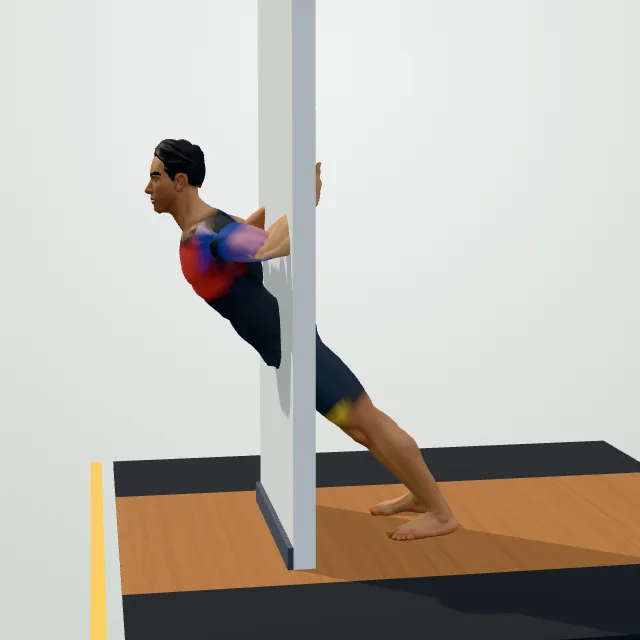
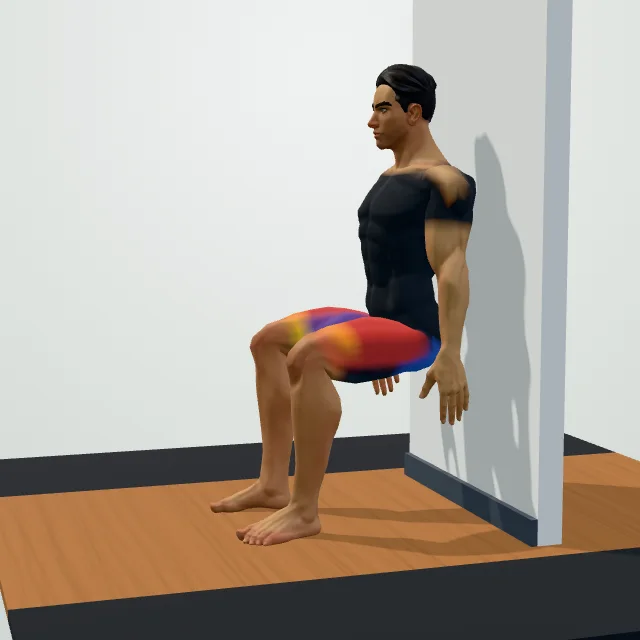
A plain wall supports more wall exercises than most people expect — from the isometric burn of a wall sit to posture-focused stretches and the increasingly popular wall pilates exercises trend, which mostly repackages wall-supported holds and controlled leg lifts. What makes the wall useful is stability: it gives beginners, seniors and anyone rebuilding strength a fixed surface to push against or brace on without needing any equipment at all. The 3D coach shows setup for the wall sit and wall push-up.
Safety and setup
Use a clear, flat wall section without light switches, artwork or vents in the way, and wear shoes or grippy socks so your feet don't slide during pushing exercises. For the wall sit, keep knees at roughly a 90-degree angle rather than sliding too low, which increases knee strain without adding much benefit. Stop any hold or stretch that causes joint pain rather than muscle fatigue.
Best wall exercises
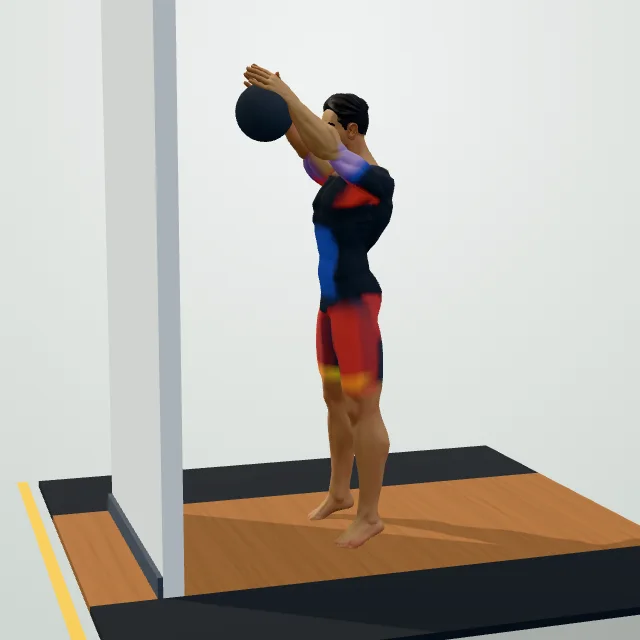
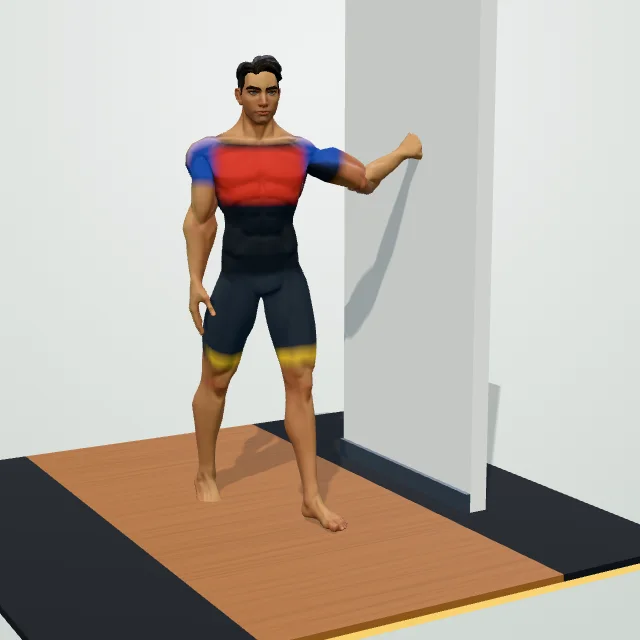
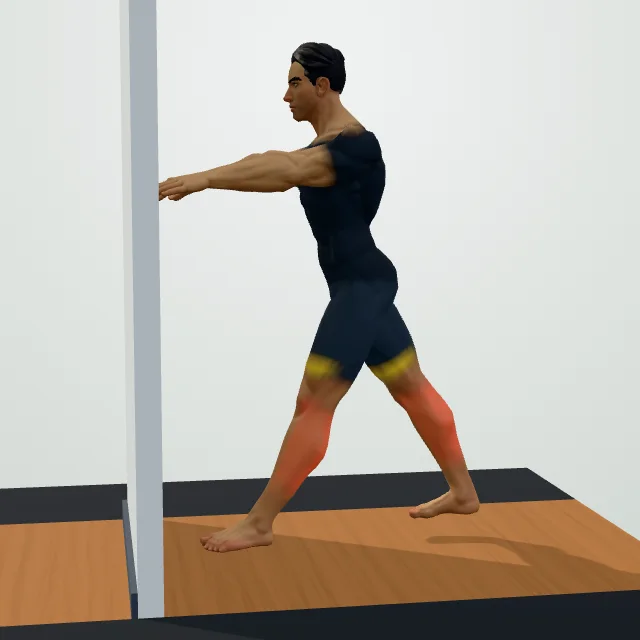
The wall sit is a classic isometric leg exercise — sliding down the wall to a seated position and holding it builds quad endurance without any equipment, and is a common accessible strength test. The wall push-up is the gentlest push-up regression, ideal for absolute beginners or anyone with wrist or shoulder limitations building toward a full floor push-up. For posture and shoulder health, the doorway chest stretch (using a door frame or wall edge) opens up rounded shoulders from desk work. The wall calf stretch is a standard mobility move using the wall for support and leverage. The wall ball shot (with a medicine ball) uses the wall as a target for a combined squat-and-throw power exercise.
Sample wall workout
| Exercise | Sets × reps or time | Rest |
|---|---|---|
| Wall sit | 3 × 20–40 s hold | 45 s |
| Wall push-up | 2 × 10–15 | 45 s |
| Doorway chest stretch | 2 × 20–30 s hold per side | — |
| Wall calf stretch | 2 × 20–30 s hold per side | — |
How to program wall-based training
Wall sits and push-ups can be trained 3–4 times a week as a beginner strength foundation, increasing hold time or reps gradually as they get easier. Stretches like the chest and calf stretch are useful daily, especially after long periods of sitting, and take only a minute or two each. Because wall exercises are generally low-intensity, they pair well as a warm-up, a beginner's entry point into training, or active recovery between harder sessions.
Wall exercises for men and women
Every exercise on this page trains the same muscles regardless of gender, and there's no meaningfully different "men's" or "women's" version of a wall sit or wall push-up — the difference in search terms mostly reflects who's searching, not a different exercise. Progress the same way regardless of who you are: longer holds or more reps first, then a harder variation once the current version feels comfortably manageable across every set.
What is "wall pilates", and is it worth doing?
"Wall pilates" is a popular name for a routine of wall-supported holds, leg lifts and controlled stretches inspired by pilates principles — core control, slow controlled movement, and posture. It can be a reasonable low-impact entry point to regular movement, particularly for beginners, but it is not a substitute for progressive resistance training if building muscle or significant strength is your goal; think of it as a gentle addition or starting point rather than a complete program.
Wall handstand push-up and advanced wall work
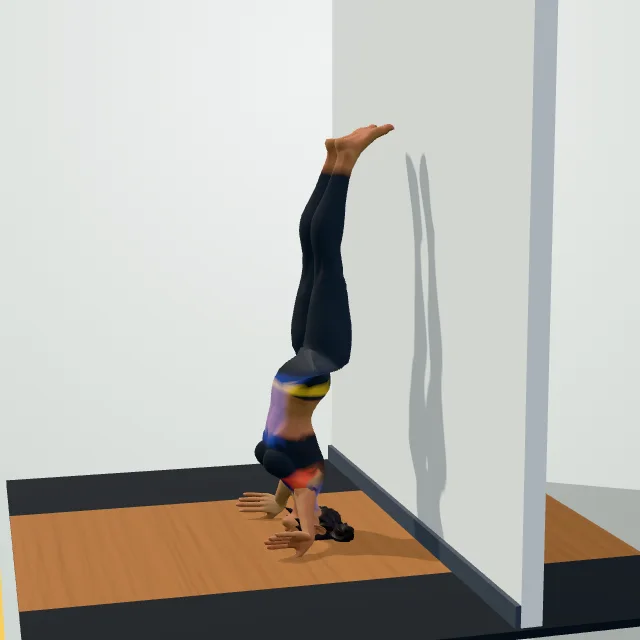
Once a full standard push-up feels easy, the wall can also support a much harder progression: the wall handstand push-up, which uses an inverted position against the wall to load the shoulders with far more of your bodyweight than a standard press. This is an advanced move that needs solid shoulder strength and stability first — build up through the standard push-up and dumbbell shoulder press before attempting it, and always keep your head clear of the floor with a controlled range of motion.
Where wall exercises fit into your training
Wall exercises are used throughout the low-impact workout for seniors and beginners and as warm-up stretches in the 6-minute dynamic warm-up and post-workout stretching routine. Use the plan builder to build a gentle plan around wall and bodyweight exercises.