Mobility and stretching · Home, no equipment
Doorway chest stretch: opening up rounded shoulders
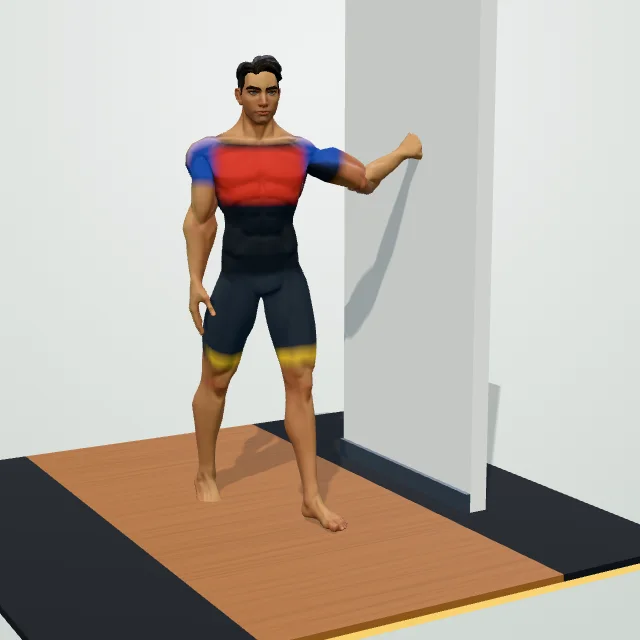
Pressing your forearm into a doorframe and stepping through stretches the chest and front shoulder — a quick fix for the rounded-forward feeling from a day at a desk.
- Primary
- Chest
- Secondary
- Front delts
- Level
- Beginner
- Type
- Isolation · One side, then the other
- Sets × reps
- 1 × 30 s hold per side
How to do it
- Stand in a doorway and place your forearm against the frame.
- Bend your elbow to roughly 90 degrees against the frame.
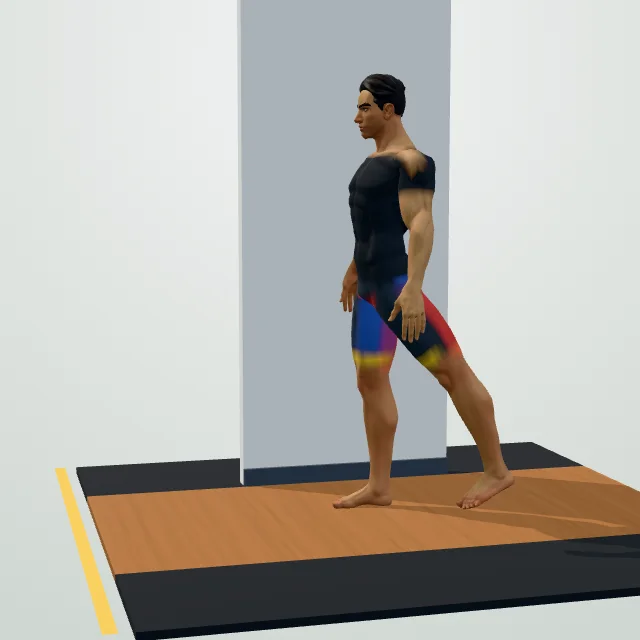
- Step one foot through the doorway, leaning your body forward.
- Keep your arm fixed against the frame as you lean.
- Stop once you feel a stretch across your chest and front shoulder.
- Hold, breathing steadily, then step back.
- Adjust arm height and repeat, then switch sides.
Coach cues
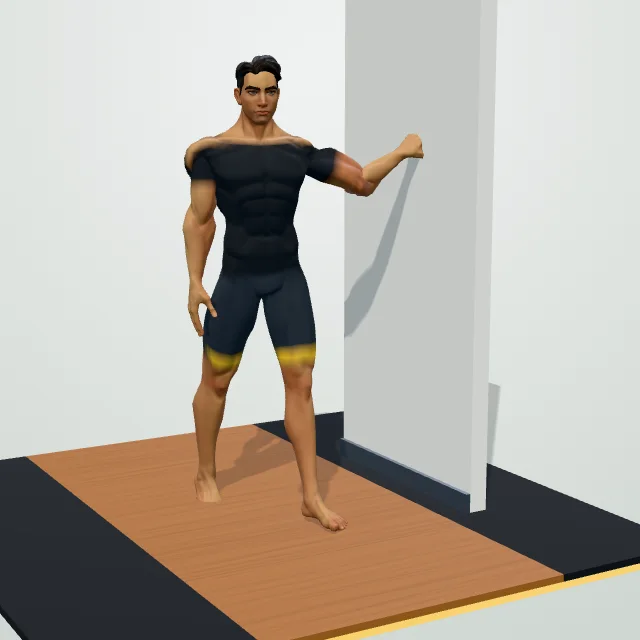
- Forearm flat against the frame.
- Step through slowly, lean forward gently.
- Try a different arm height each round.
- Breathe steady through the hold.
Breathing: Breathe steadily throughout the hold; do not hold your breath.
Common mistakes
Make it easier / Make it harder
The doorway chest stretch uses a doorframe to press your chest and front shoulder open, giving one of the deepest and easiest stretches you can get without any equipment. It is a common fix for the tight, rounded-forward feeling that builds up from hours of typing, driving, or bench pressing without ever stretching the chest back out.
Muscles worked and why the chest gets tight
This stretch lengthens the chest muscles, mainly the pectoralis major and minor, with the front of the shoulder (front delt) sharing part of the stretch since it sits right next to the chest and rotates along with it. Pushing exercises like the bench press and long stretches spent hunched over a desk or a phone both pull your shoulders and chest into a shortened, rounded position, and this stretch reverses that by opening the arm out and back through the doorframe.
Benefits
Regularly opening up the chest can help counter the forward, rounded-shoulder posture that comes from sitting and pushing-dominant training, and many people notice it eases tightness across the front of the shoulder after a chest workout. It is also one of the fastest stretches to fit into a day since it needs nothing more than an open doorway, making it easy to do several times a day if your chest tends to tighten up quickly.
Technique: arm height changes what you feel
Stand in a doorway and place your forearm against the frame, elbow bent to roughly 90 degrees. Step one foot through the doorway, letting your body lean forward while your arm stays fixed against the frame, until you feel a stretch across your chest and the front of your shoulder. The height of your arm on the frame changes which part of the chest you feel it in: arm at shoulder height stretches the mid chest, arm raised higher targets the lower chest fibers, and arm lower down shifts the stretch toward the upper chest and front shoulder. Try all three heights over a session rather than only one.
Dynamic vs. static: when to use it
The doorway stretch is a static stretch — a still hold rather than a moving one — which fits best after a chest or push workout, or any time during the day when your chest feels tight from sitting. Hold for 20–60 seconds per arm height, breathing steadily. Before a chest workout, a few dynamic arm circles or light band pull-aparts are a better warm-up than a long static chest stretch, which can temporarily reduce pushing power right before a heavy set.
How to program it
Hold each arm height for 20–30 seconds per side, and repeat through 2–3 heights if you want a fuller stretch, ideally as part of your post-workout stretching routine after chest or shoulder training. Desk workers often benefit from doing a short set once or twice during the workday as well as after training, since the stretch counters the same rounded-forward position that builds up from sitting.
Variations: single arm and thoracic rotation
A single-arm version, using one side of a doorframe or a wall corner, lets you control the exact angle more precisely than stretching both sides at once. Pairing this stretch with thread the needle addresses the upper back stiffness that often comes along with a tight chest, since a rounded chest and a stiff upper back tend to develop together from the same posture.
Safety notes
Lean into the stretch gradually rather than stepping through quickly, and stop at a firm but comfortable pull rather than a sharp pinch at the front of the shoulder. If you have a shoulder impingement, a recent shoulder injury, or ongoing shoulder instability, check with a doctor or physiotherapist before adding this stretch, since pressing the arm back can aggravate some shoulder conditions. Ease off immediately if you feel a pinching or catching sensation rather than a general stretch across the chest.
Workout plans with this exercise
More exercises for mobility and stretching
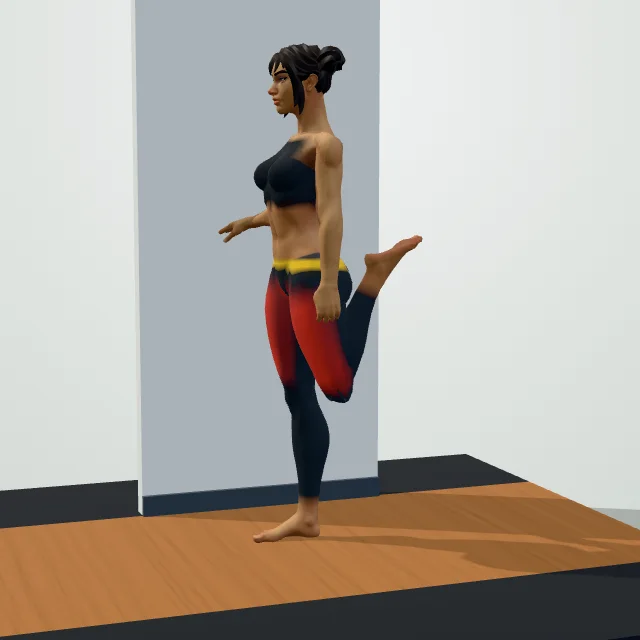
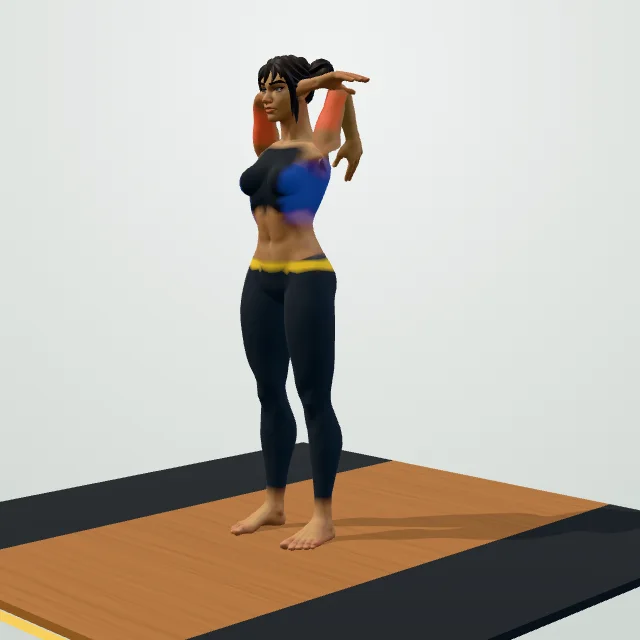
Questions people ask
How long should you hold the doorway chest stretch?
What muscles does the doorway chest stretch work?
Where should I place my arm on the doorframe?
Should I stretch my chest before or after a workout?
Can the doorway stretch help with rounded shoulders?
Is the doorway chest stretch safe for shoulder pain?
What is a good chest stretch alternative?
General fitness information, not medical advice. Check with a doctor or physiotherapist before starting if you have a health condition, an injury or are pregnant. Stop if you feel chest pain, dizziness or sharp pain.