Mobility and stretching · Home, no equipment
Wall calf stretch: keep the heel down, not the knee locked
Leaning into a wall with your back leg straight and heel flat on the floor is the simplest way to stretch a tight calf, and a small change in knee bend lets you target either half of the muscle.
- Primary
- Calves
- Level
- Beginner
- Type
- Isolation · One side, then the other
- Sets × reps
- 1 × 30 s hold per side
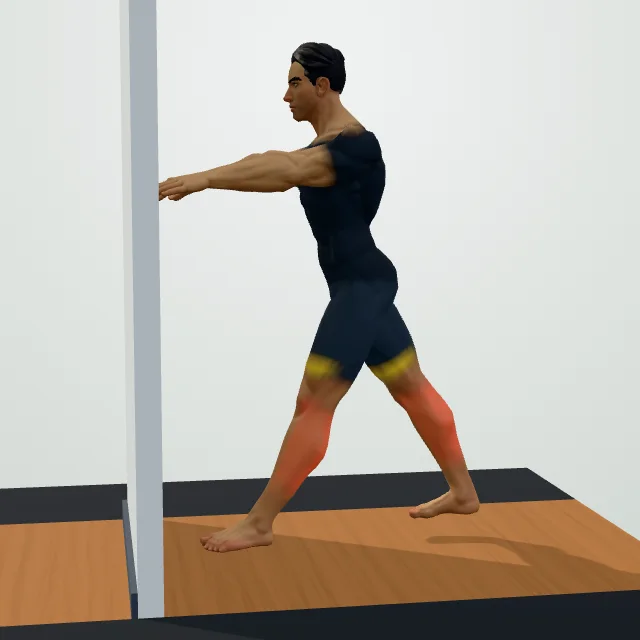
How to do it
- Stand facing a wall and step one foot back.
- Press both heels flat into the floor.
- Lean your hips toward the wall.
- Keep the back leg straight, with a soft, unlocked knee.
- Stop once you feel a stretch in your calf.
- Hold, breathing steadily, then switch to a bent back knee for the lower calf.
- Switch legs and repeat.
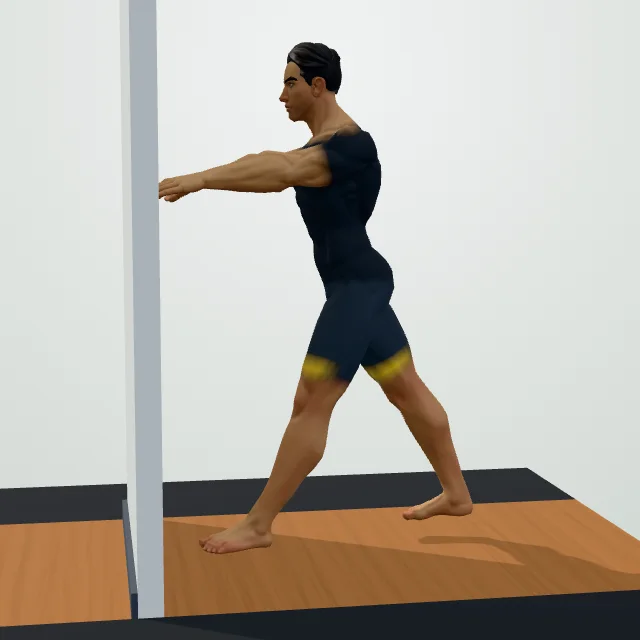
Coach cues
- Keep the back heel flat on the floor.
- Toes point forward, not out to the side.
- Lean in slowly, no bouncing.
- Breathe steady throughout the hold.
Breathing: Breathe steadily throughout the hold; do not hold your breath or bounce into the wall.
Common mistakes
Make it easier / Make it harder
The wall calf stretch leans your body weight into a wall with your back leg straight and heel pressed down to lengthen a tight calf. It is one of the easiest stretches to fit anywhere, since it only needs a wall or any sturdy surface to push against.
Muscles worked and why calves get tight
This stretch lengthens the calves — mainly the gastrocnemius, the larger calf muscle that crosses the knee, when the back leg is kept straight, and the deeper soleus muscle when the back knee is bent. Calves tighten up from long periods on your feet, from running or walking in stiff shoes, and from calf-focused training like the calf raise that shortens the muscle through repeated reps without a matching stretch afterward.
Benefits
Looser calves can make walking and running feel less restricted at the ankle, and some people find it eases a tight, cramped feeling after standing all day or after a run. It is also commonly used alongside care for plantar fasciitis or shin splints, since tight calves can add strain further down the foot and shin, though a stretch alone is not a treatment for either condition.
Technique: straight leg for the upper calf, bent knee for the lower
Stand facing a wall, step one foot back, and press both heels flat into the floor while leaning your hips toward the wall. Keep the back leg straight with a soft, unlocked knee to stretch the upper calf, or bend the back knee slightly while keeping the heel down to shift the stretch deeper toward the ankle and the soleus underneath. Keep your back leg's toes pointing forward rather than turned out, and lean in only as far as the back heel stays flat on the floor.
Dynamic vs. static: when to stretch your calves
This is a static stretch — a still hold rather than a moving one — which fits best after a walk, run, or workout, once the calf is already warm. Hold for 20–60 seconds per leg, breathing steadily rather than bouncing into the wall. Before running or a lower-body workout, warm the calves up with a dynamic option such as high knees or a few minutes of easy walking instead, since a long static hold right before activity can briefly reduce how much force the muscle can produce.
How to program it
Hold each side for 20–60 seconds and repeat once or twice if the calf still feels tight, ideally as part of a post-workout stretching routine after running, walking, or leg training. It combines naturally with a standing hamstring stretch for a simple lower-leg cool-down, and doing it most days tends to give a steadier improvement than stretching only occasionally.
Variations: on a step and without a wall
Standing on the edge of a step with your heel hanging off the back lets gravity add the stretch, which can go deeper than pushing into a wall — ease into this version slowly since it is easy to overdo. If no wall is available, sit with one leg extended and loop a towel or resistance band around the ball of your foot, pulling your toes gently toward your shin for a seated version of the same stretch.
Safety notes
Lean in gradually and stop at a firm but comfortable pull rather than forcing the heel down or bouncing, which can trigger a cramp rather than release one. Anyone with a recent Achilles injury, calf strain, or sharp pain in the back of the leg should check with a doctor or physiotherapist before stretching, since pushing through an injured calf or Achilles can make it worse rather than better. Stop if you feel sharp pain, sudden tightening into a cramp, or numbness, and warm up first — see our guide to warming up for ideas.
Workout plans with this exercise
More exercises for mobility and stretching
Questions people ask
How long should you hold a calf stretch?
What muscles does the wall calf stretch work?
Should I stretch calves before or after running?
Why do my calves feel tight?
Does the calf stretch help with plantar fasciitis?
What is a good alternative to the wall calf stretch?
Is it bad to bounce during a calf stretch?
General fitness information, not medical advice. Check with a doctor or physiotherapist before starting if you have a health condition, an injury or are pregnant. Stop if you feel chest pain, dizziness or sharp pain.