Strength · Intermediate
5x5 workout program: a simple strength training plan
This 5x5 workout program runs three sessions a week, alternating two workouts built almost entirely around five sets of five reps on the squat, bench press, row, overhead press and deadlift.
Your week
Sessions
Workout A
| Exercise | sets | Rest | |
|---|---|---|---|
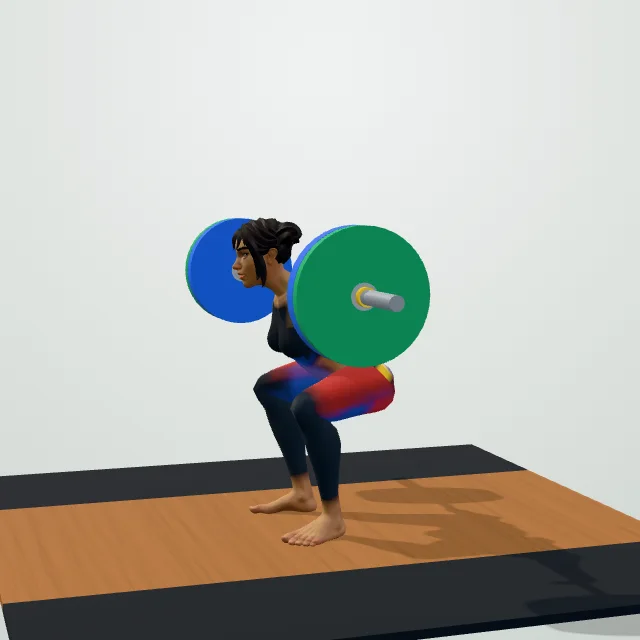
| Barbell Back Squat | 5 × 5 | 180 s |
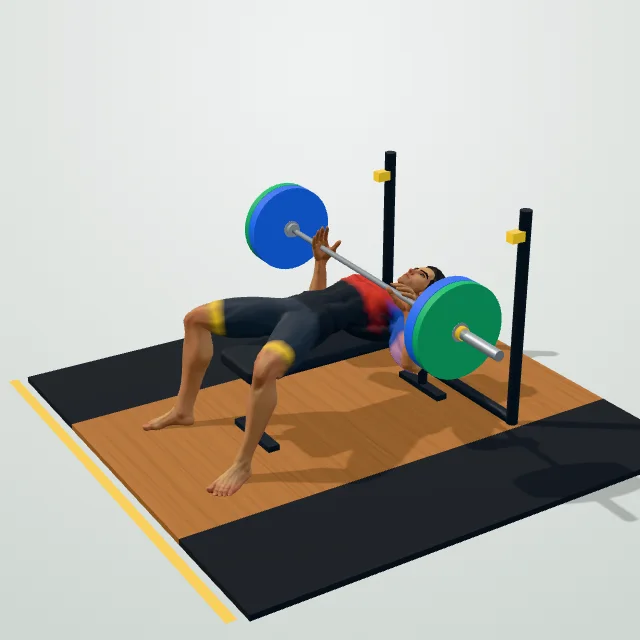 | Barbell Bench Press | 5 × 5 | 180 s |
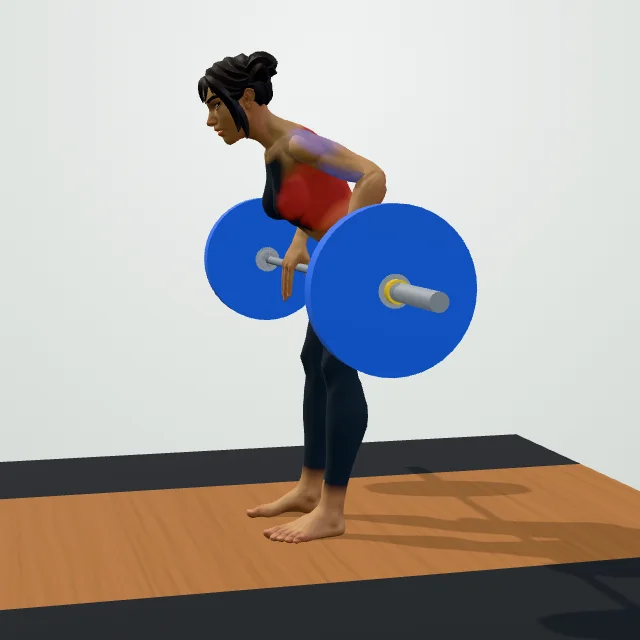 | Bent-Over Barbell Row | 5 × 5 | 150 s |
Workout B
| Exercise | sets | Rest | |
|---|---|---|---|
| Barbell Back Squat | 5 × 5 | 180 s |
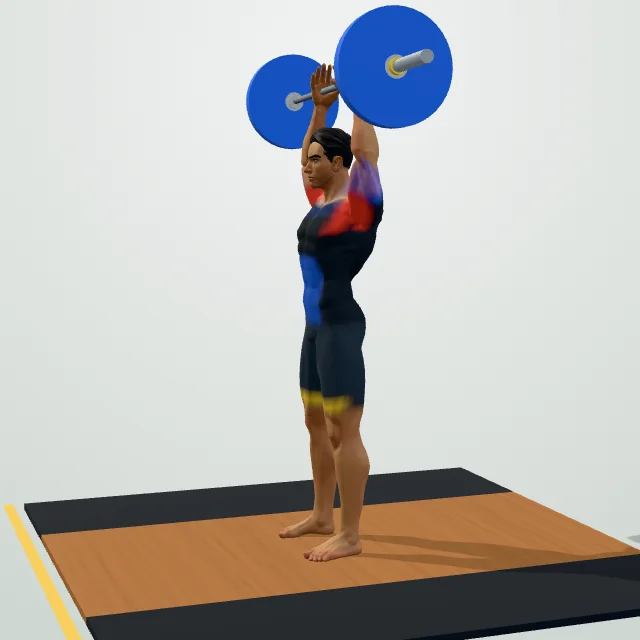 | Overhead Press | 5 × 5 | 180 s |
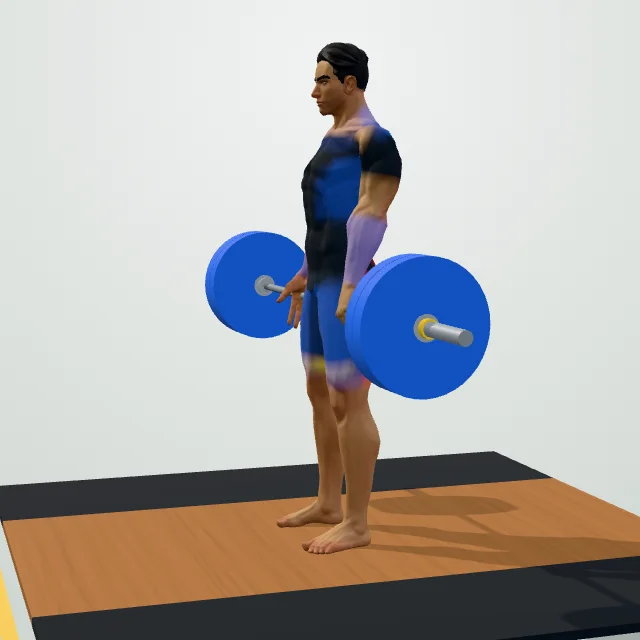 | Deadlift | 1 × 5 | 240 s |
How to progress
- Start light (about 50% of what you think you can lift). Add 2.5 kg (5 lb) each session to squat, bench, row and press, and 5 kg (10 lb) to the deadlift.
- If you miss 5×5 three sessions in a row, take 10% off and build back up.
A 5x5 workout program strips strength training down to its essentials: five sets of five reps on a handful of barbell lifts, three times a week, adding a small amount of weight almost every session — a simple, effective way for beginners and early intermediates to build real strength fast.
Who this 5x5 workout program is for
This plan suits anyone new to barbell training, or returning after a long break, who wants a straightforward strength training program without a lot of exercise variety to manage. It needs access to a barbell, a squat rack and a bench, and it assumes you can start with modest weight and add a little most sessions — which is exactly how the program is designed to work. If your main goal is muscle size rather than pure strength, the 4-day muscle-building plan uses more exercises and higher reps. If you do not have barbell access, the full-body dumbbell workout or beginner full-body workout cover similar ground with different equipment.
How to run the sessions
Warm up 5–8 minutes, then work up to your working weight with 2–3 progressively heavier warm-up sets on the squat before every session — a cold heavy squat is one of the more common ways lifters strain a hip or lower back. Do Workout A (squat, bench press, row) and Workout B (squat, overhead press, deadlift) on alternating training days, with a rest day between each session — Monday, Wednesday, Friday works well for most schedules. The squat appears in every session because it is the main strength-building lift in this program; the bench press, row, overhead press and deadlift rotate so your upper body gets a push and pull movement across the week without doing all four every session.
How to choose your starting weight
Start light — about 50% of what you think you can lift for 5 reps, even if that feels almost too easy in week one. This is deliberate: the program is built to add weight almost every session, so starting conservatively gives you weeks of straightforward progress before you reach a weight that challenges you. On the single deadlift set, use a weight you can complete for 5 clean reps with 2–3 reps in reserve, since it is one working set rather than five and does not need the same gradual ramp.
Week-to-week progression, with numbers
Add 2.5 kg (5 lb) to the squat, bench press, row and overhead press every session you complete all 5×5 with good form, and add 5 kg (10 lb) to the deadlift each time. In the early weeks this can mean adding weight three times a week on the squat alone — that is expected and is the entire point of a 5x5 program. If you miss 5×5 (fail to complete all reps on all sets) three sessions in a row on the same lift, take 10% off that lift's weight and build back up from there rather than continuing to grind a stuck weight. This linear approach is a very direct form of progressive overload — it works fastest for beginners and slows down naturally as you approach your genetic and training-age limits, at which point switching to a plan like the upper/lower split usually keeps progress going.
Adapting the plan: fewer days, home training, missing equipment
Only free two days a week: alternate Workout A and B each week (A, then B the following week) rather than skipping the program — progress will be slower but the linear approach still works at reduced frequency. No barbell at home: replace the squat with the goblet squat, the bench press with dumbbell bench press, and the deadlift with the dumbbell Romanian deadlift — progression works the same way, just in smaller dumbbell increments. No barbell row space or a rack that does not suit it: use the one-arm dumbbell row for the same sets and reps. Once your squat, bench press and deadlift plateau on straight linear progression, the how to build muscle guide and a plan with more exercise variety, like the upper/lower split, are good next steps.
Recovery, sleep and nutrition basics
Three sessions a week with a rest day between each gives enough recovery time for beginners, though the plan can feel demanding once weights get heavier — sleep 7–9 hours a night, since recovery from heavy squats and deadlifts depends heavily on sleep quality. Eat enough to support both the training and any weight gain that comes with building strength; roughly 1.6 g of protein per kg of body weight a day supports the muscle growth that comes alongside strength gains on this program. If you have high blood pressure or a heart condition, avoid holding your breath through the hardest part of heavy squats and deadlifts (the Valsalva maneuver can spike blood pressure) and speak to a doctor before starting a heavy barbell program.
Common mistakes on a 5x5 program
- Starting too heavy: beginning near your actual 5-rep max leaves no room for the weekly progression the program relies on. Start conservatively at around 50% of your estimated capability.
- Adding weight after a failed set: if you do not complete all 5 reps on all 5 sets, repeat that same weight next session rather than adding more.
- Skipping the deload after repeated misses: if a lift stalls for three sessions running, take 10% off and rebuild — continuing to fail the same weight rarely resolves itself without a reset.
- Rounding the back on the squat or deadlift: a rounded spine under a heavy bar is one of the more common causes of lower-back strain on this program. Keep a flat back and stop the set if you cannot maintain it.
- Ignoring accessory work indefinitely: a pure 5x5 program covers the big lifts but not every muscle equally — adding light accessory work for arms or core once the main lifts are established is a reasonable adjustment, not a departure from the plan.
What to do next
Use the plate calculator to figure out which plates to load for each session's weight, and the one-rep max calculator once you want to check your progress against a calculated max. When linear progression finally slows down after several months, the upper/lower split is a natural next step that keeps a strength focus while adding more exercise variety.
Questions people ask
Does the 5x5 workout program actually work?
Is 5x5 a good beginner strength program?
Does a 5x5 program build muscle as well as strength?
Is 5x5 good for women?
What if I fail a set on the 5x5 program?
Can I do 5x5 with dumbbells instead of a barbell?
How much weight should I add each session on 5x5?
General fitness information, not medical advice. Check with a doctor or physiotherapist before starting if you have a health condition, an injury or are pregnant. Stop if you feel chest pain, dizziness or sharp pain.