Full body · Home or gym
Farmer's walk: build grip and full-body strength
The farmer's walk turns simply carrying something heavy into one of the best grip and full-body strength exercises there is. Here is how to hold it, how far to walk, and how it compares to the suitcase carry.
- Level
- Beginner
- Type
- Compound · Both sides together
- Sets × reps
- 3 × 30 s
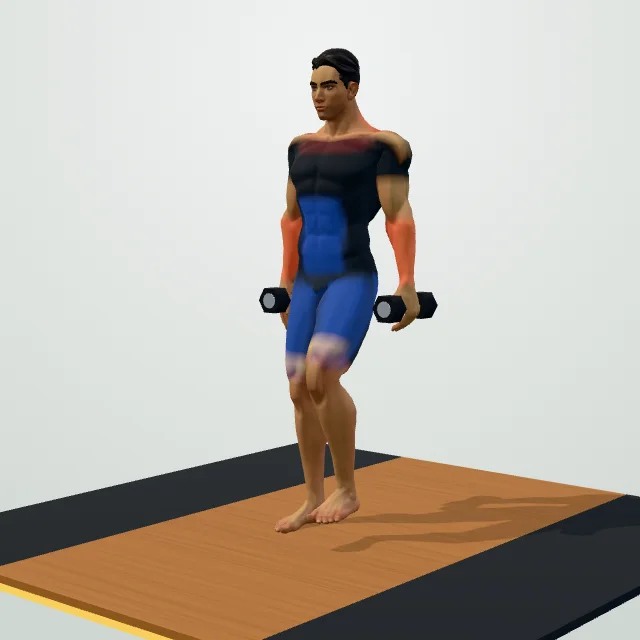
How to do it
- Stand between the weights, hips back and chest up, like setting up for a deadlift.
- Grip hard and stand up tall, shoulders packed down and back.
- Walk forward with short, quick, controlled steps.
- Keep your ribs stacked over your hips and your eyes forward.
- Reset your shoulder position if it creeps up as your grip fatigues.
- Set the weights down under control at the end of the distance.
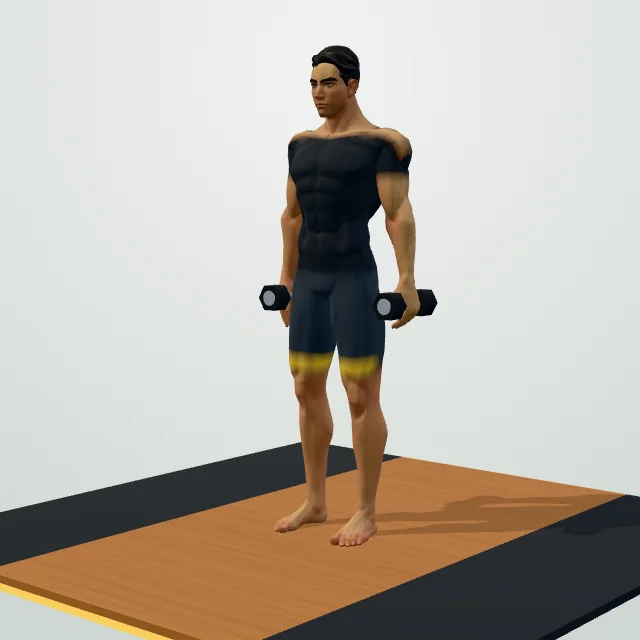
Coach cues
- Grip hard, shoulders down and back.
- Stand tall, chest up, brace your core.
- Take short, quick, controlled steps.
- Keep the load steady, no swinging.
Breathing: Take slow, steady breaths through the carry; don't hold your breath for the whole set, especially with high blood pressure.
Common mistakes
Make it easier / Make it harder
The farmer's walk (often searched as farmers walk exercise or farmer's carry) is a loaded carry: you pick up a heavy dumbbell in each hand and walk a set distance or time while holding a tall, tight posture — no barbell, no squatting, just brute grip and total-body bracing under load. It looks simple, which is exactly why so many gyms, Hyrox stations and strongman contests use it as a real test of whether your strength holds up when you're just standing and moving, not braced against a bench or a rack.
Muscles worked and why it's different from a lift
As a farmers carry exercise, the movement trains muscles differently from a squat or press: instead of moving through a big range of motion, most of the work is isometric, holding a joint position steady while you walk. Grip is the first limiter for almost everyone — the forearms keep a hard, unbroken hold on the weights for the whole set, and grip failure usually ends the set well before your legs get tired. The traps and upper back work hard isometrically to keep your shoulders pinned down rather than shrugged up around your ears, and your abs brace hard to stop your torso leaning or twisting to either side. If you search farmers walk muscles worked, grip and traps top the list every time, with the glutes and quads driving each stride underneath.
Benefits
Among the biggest farmers walk benefits is a kind of durable, real-world strength — picking up shopping bags, luggage or a heavy box with one hand stops feeling like a challenge. It is one of the most direct ways to train grip strength, which studies suggest is linked to general strength and healthy aging in older adults. The carry also trains your core to resist side-bending, a pattern that is different from — and a useful complement to — the front-to-back bracing you build in a squat or deadlift. Because it needs almost no skill to learn, it is an efficient way to add a hard, honest finisher to almost any workout.
Technique: grip, posture and the walk
Good farmer carry technique starts with the pickup: set up like a deadlift, hips back and chest up, then stand tall as you lift the weights and get your shoulders packed down and back before your first step. From there, walk with short, quick, controlled steps rather than long strides — long strides make the weights swing and pull you off balance, while short steps keep the load stable. Keep your ribs stacked over your hips and your eyes forward, and reset your shoulder position every few steps if they start creeping up toward your ears as your grip fatigues. At the end of the distance, set the weights down under control rather than dropping and twisting. If grip is what limits you, add direct grip work like a dead hang on a separate day — direct trap work like a dumbbell shrug is a better tool for building traps than shrugging under load here.
How much weight, how far, and how often
Farmers walk equipment needs are minimal — just a pair of dumbbells heavy enough to challenge your grip. Because it's a carry, program it by distance or time rather than reps: 2–4 sets of 20–40 meters, or 20–45 seconds per set, resting 60–90 seconds, is a solid starting point. Pick a weight that lets you finish with your posture intact — if your shoulders round or you have to stop partway, it's too heavy for now. As a rough guide, many lifters start around half their bodyweight per hand and build from there; competition loads are far heavier, but that's a specialized goal, not a requirement for general strength. Two carries a week, added at the end of a leg or full-body session, is enough for most people; add small jumps in weight or distance every week or two, the same gradual approach as progressive overload for any other lift.
Farmer's walk vs. suitcase carry
The question of farmer carry vs suitcase carry comes up constantly, and the difference is simple. The standard farmer's walk uses a weight in each hand, which cancels out side-to-side pull and lets you focus on grip and posture. The suitcase carry uses one weight in one hand, which forces your core to fight much harder against being pulled to one side — a stronger test of anti-lateral-flexion core strength. Many lifters use both: farmer's walk for raw grip and trap loading, suitcase carry as a single-arm progression once the two-handed version feels easy.
A staple in Hyrox, CrossFit and strongman
The farmer's walk is a standard station in Hyrox and a fixture of strongman and CrossFit competitions, because it tests grip and work capacity under load in a way few other exercises do. A trap bar (used for the trap bar deadlift) gives a wider, more stable grip for a farmer's walk carry variation, and the strong hip-hinge you use to pick the weights off the floor is the same pattern as the deadlift, just with lighter, handheld loads. If you're training for a farmers carry hyrox station specifically, practice with the exact implement and distance you'll face; for general strength, any pair of heavy dumbbells works just as well.
Safety: who should modify it
Keep your breathing steady rather than holding your breath for the whole carry, especially if you have high blood pressure or a heart condition — check with your doctor before loading this exercise heavily if either applies to you. Stop the set if you feel sharp pain in your lower back, chest pain, dizziness, or numbness or tingling in your hands, rather than pushing through it. If your grip gives out before the rest of you feels challenged, that's normal early on; build it gradually with lighter loads or shorter distances rather than jumping straight to heavy carries.
More exercises for full body
Questions people ask
What is the farmer's walk exercise?
What muscles does the farmer's walk work?
How much weight should I use for a farmer's walk?
How far or how long should I carry for?
Farmer's walk vs. suitcase carry — what's the difference?
Can I do a farmer's walk at home?
General fitness information, not medical advice. Check with a doctor or physiotherapist before starting if you have a health condition, an injury or are pregnant. Stop if you feel chest pain, dizziness or sharp pain.