Forearms and grip · Home or gym
Wrist curl: direct forearm and grip training with a dumbbell
The wrist curl isolates the forearm flexors with a small, controlled range of motion. Here is the setup, technique and how it builds a stronger grip over time.
- Primary
- Forearms
- Level
- Beginner
- Type
- Isolation · Both sides together
- Sets × reps
- 3 × 15-20 reps
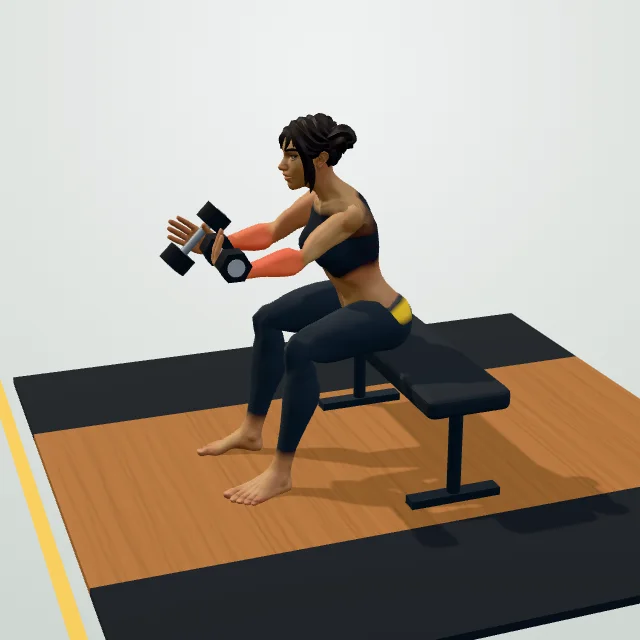
How to do it
- Sit on a bench, forearms resting on your thighs.
- Hold a dumbbell or bar with palms facing up.
- Let the weight roll down toward your fingertips.
- Curl your hands upward as far as comfortable.
- Squeeze briefly at the top of the movement.
- Lower slowly back to a full stretch.
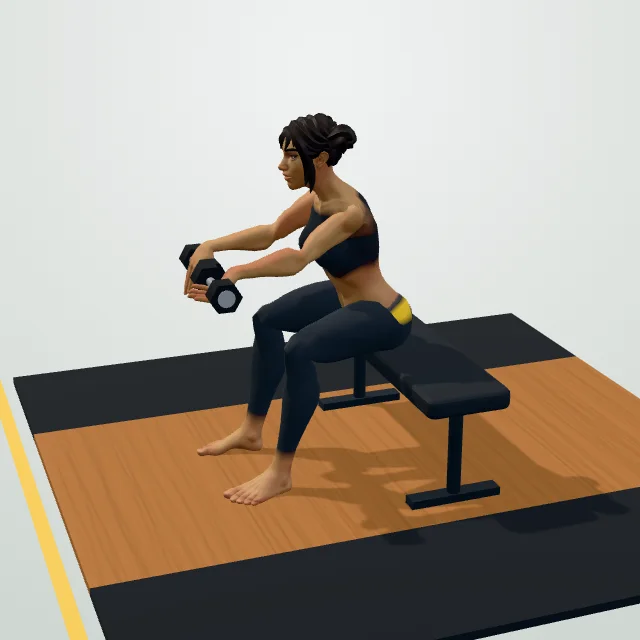
Coach cues
- Forearms rest flat on your thighs.
- Let the weight roll to your fingers.
- Curl up, squeeze at the top.
- Lower slowly for a full stretch.
Breathing: Breathe out as you curl your hands up, and breathe in as you lower them back down.
Common mistakes
Make it easier / Make it harder
Sets and reps by goal
| Goal | sets | reps | Rest |
|---|---|---|---|
| Strength | 3–5 | 6–8 | 90–120 s |
| Muscle growth | 3–4 | 10–15 | 60–90 s |
| Endurance | 2–3 | 15–20 | 30–60 s |
The wrist curl is a small-range isolation exercise where you rest your forearms on your thighs or a bench, holding a dumbbell or barbell with your palms up, and curl your hands upward using only your wrists. It looks simple, but it is one of the most direct ways to train the forearm flexors specifically, which is what makes it a favorite finishing exercise for anyone chasing bigger forearms or a stronger grip.
It pairs naturally with other forearms and grip exercises, and needs nothing more than a dumbbell, barbell, or cable.
Muscles the wrist curl works
The wrist curl isolates the wrist flexor muscles that run along the palm side of the forearm, which is a different target than exercises like the biceps curl or hammer curl, which mainly train the upper arm. Your grip muscles also work throughout the set to hold the bar or dumbbell. Because the range of motion is small — just the wrist bending — it is possible to feel a deep, localized burn in the forearm quickly, especially at higher reps.
Benefits of the wrist curl
- Direct forearm size: targets the flexor muscles that make up much of the forearm's visible bulk.
- Grip strength carryover: stronger wrist flexors support a firmer grip for deadlifts, rows and pull-ups.
- Simple to learn: a small, controlled range of motion that is easy to do correctly from the first set.
- Works with several tools: dumbbell, barbell, or cable, seated or standing.
Technique: setup, range and tempo
Sit on a bench and rest your forearms on your thighs, wrists hanging just past your knees, palms facing up. Hold a dumbbell or barbell with a light-to-moderate grip, and let it roll down toward your fingers slightly, then curl your hands upward as far as comfortable, squeezing at the top. Lower slowly back down, allowing the weight to roll back toward your fingertips for a full stretch, without letting your forearms lift off your thighs.
Keep the movement isolated to the wrist — if your forearms are rocking or your elbows are bending to help lift the weight, the load is too heavy or the range is being cut short. A slower tempo, especially on the lowering phase, makes this small-range exercise more effective.
How to program the wrist curl
| Goal | Sets | Reps | Rest |
|---|---|---|---|
| Strength | 2–3 | 12–15 | 60 seconds |
| Muscle (hypertrophy) | 3 | 15–20 | 45–60 seconds |
| Endurance | 2–3 | 20+ | 30–45 seconds |
Forearms tend to respond well to higher reps and frequent light training, since they are used isometrically in almost every pulling and gripping exercise already. Add wrist curls at the end of an arm or pull day — see the dumbbell arm workout — and progress load slowly, since small forearm muscles generally need smaller weight jumps than bigger muscle groups; the progressive overload guide covers pacing this correctly.
Variations and progressions
- Reverse wrist curl: palms facing down, targeting the wrist extensors on the back of the forearm for balanced development.
- Barbell wrist curl: loads both forearms at once with one bar.
- Cable wrist curl: keeps constant tension through the range — see cable machine exercises.
- Behind-the-back wrist curl: holding a barbell behind your body while standing, an advanced grip-specific variation.
For a more dynamic grip and forearm challenge, pair wrist curls with the farmer's walk or dead hang.
Wrist curl vs reverse curl
The wrist curl isolates the forearm through wrist flexion alone, with the elbow staying still throughout. The reverse curl moves at the elbow with an overhand grip, training the brachialis and forearm extensors together rather than isolating the wrist. Both contribute to forearm size and grip strength, and many grip-focused programs use both across a week for complete development of the flexor and extensor sides.
Safety and who should modify it
Keep the weight light to moderate and prioritize a full, controlled range of motion rather than loading up — the wrist is a small joint and responds better to gradual progress than large weight jumps. If you have wrist pain, carpal tunnel symptoms, or a history of forearm tendon issues such as golfer's or tennis elbow, start very light, keep the range comfortable, and check with a physiotherapist before progressing.
More exercises for forearms and grip
Questions people ask
What muscles does the wrist curl work?
How much weight should I use for wrist curls?
What is the difference between a wrist curl and a reverse wrist curl?
Can wrist curls help with grip strength?
How often can I train wrist curls?
Are wrist curls safe if I have elbow pain?
General fitness information, not medical advice. Check with a doctor or physiotherapist before starting if you have a health condition, an injury or are pregnant. Stop if you feel chest pain, dizziness or sharp pain.