Cable machine exercises: build a complete cable workout
How to set up a cable machine, the best cable exercises for every muscle group, and a sample cable workout to try at the gym.
Workout plans
General fitness · Beginner
Beginner Full-Body Gym Workout
Build muscle · Intermediate
Push Pull Legs Split (6 Days)
Strength · Intermediate
Upper/Lower Split (4 Days)
Build muscle · Intermediate
4-Day Muscle-Building Workout Plan
Build muscle · Intermediate
5-Day Body-Part Split (Bro Split)
Build muscle · Beginner
Glute Workout Plan (Gym and Home)
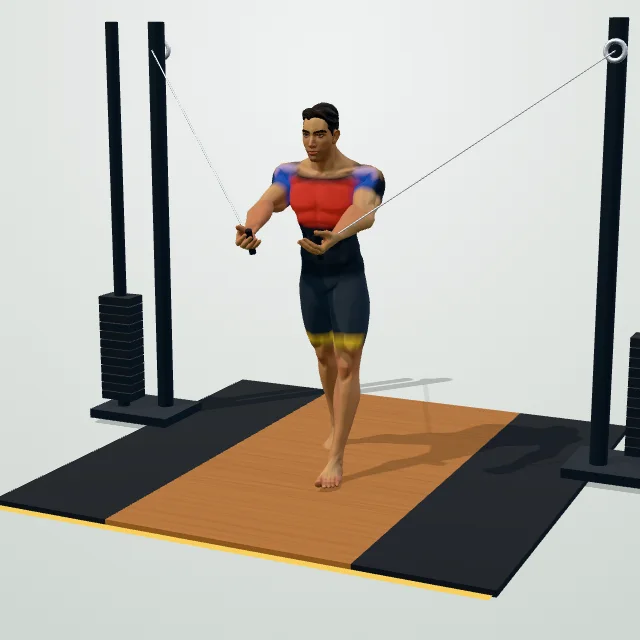
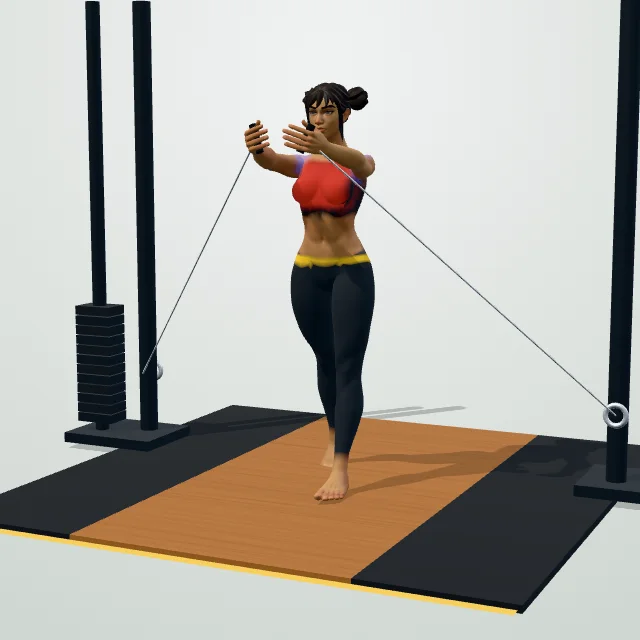
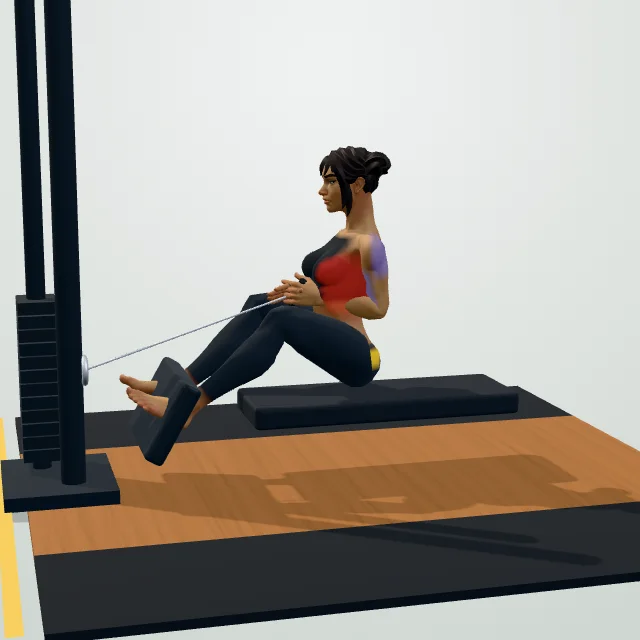
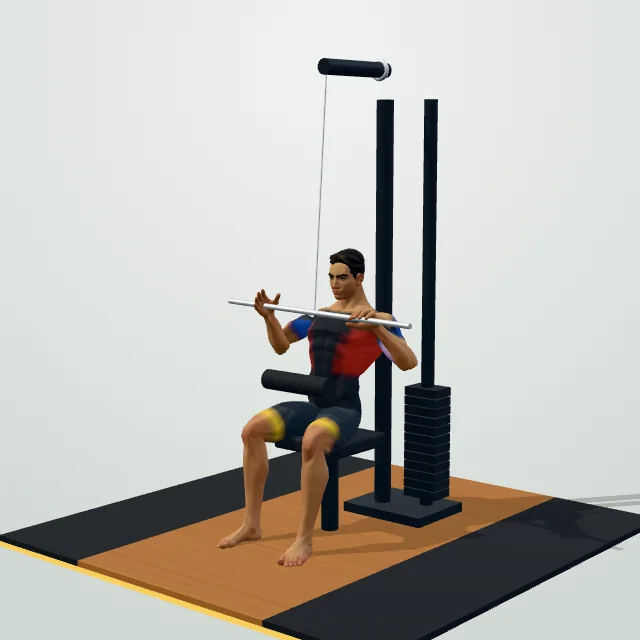
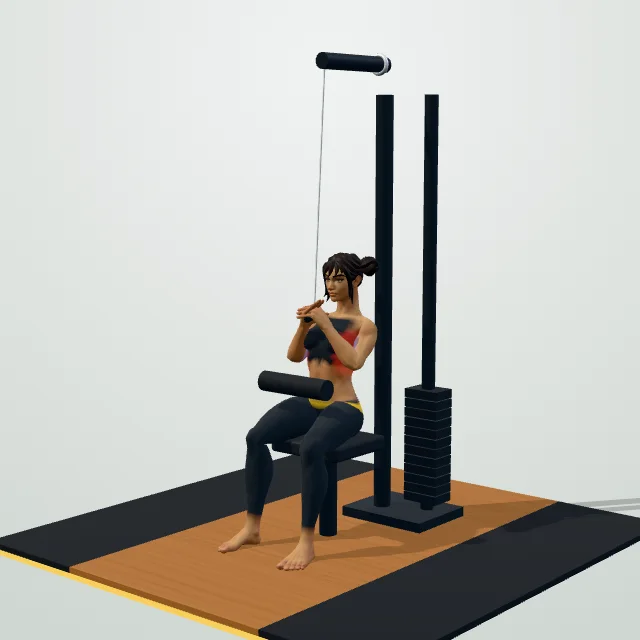
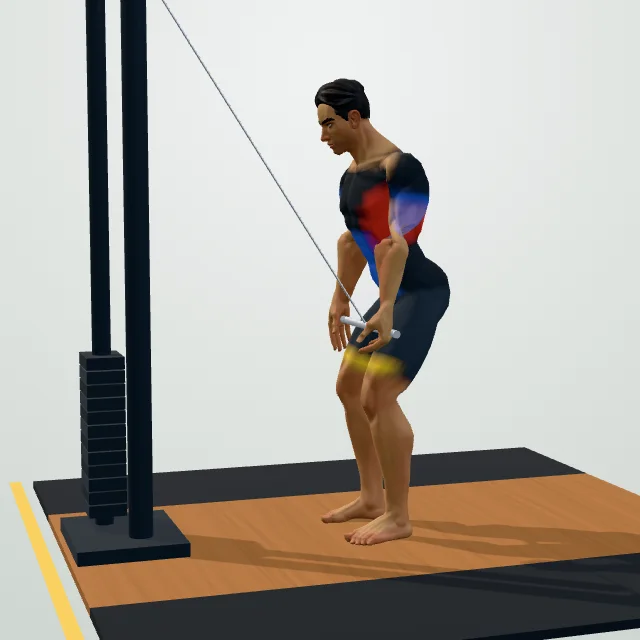
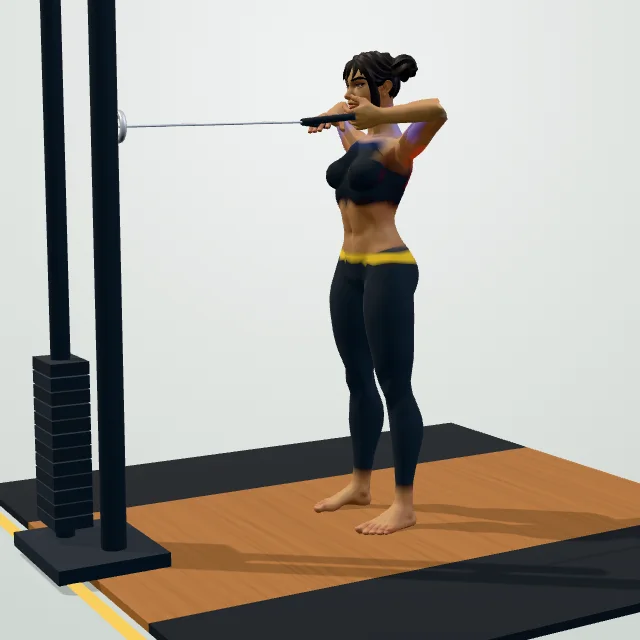
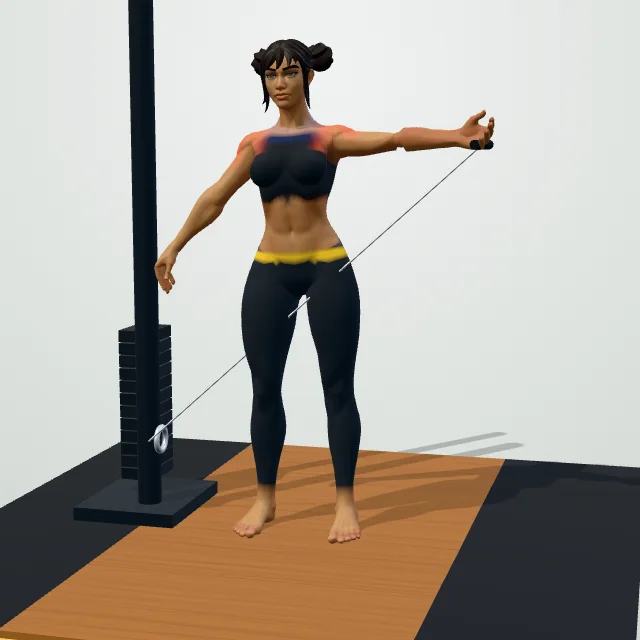
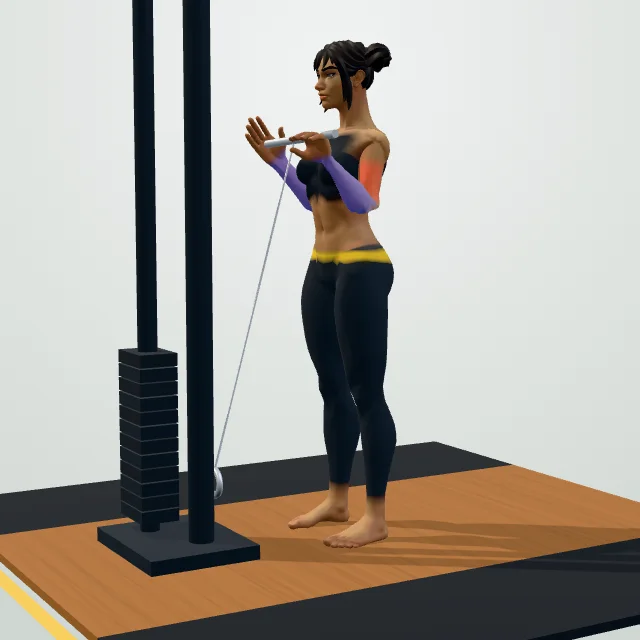
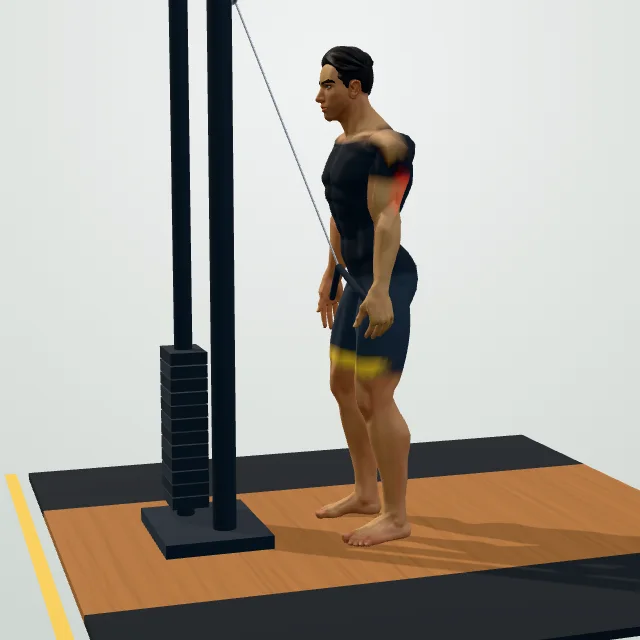
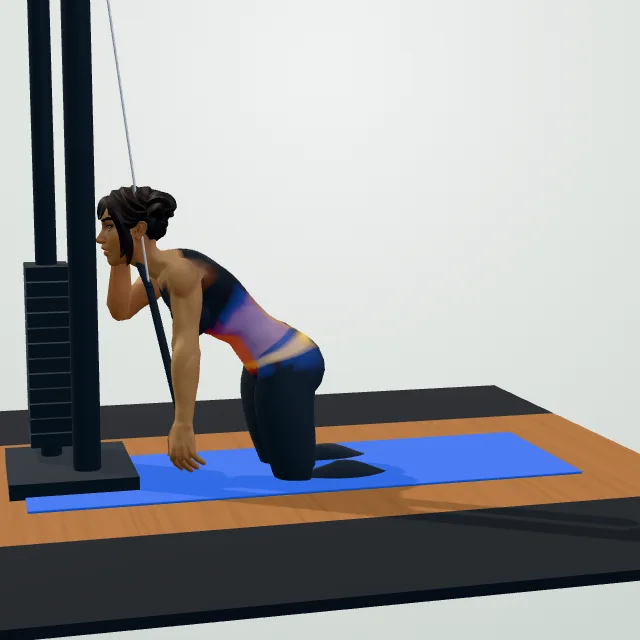
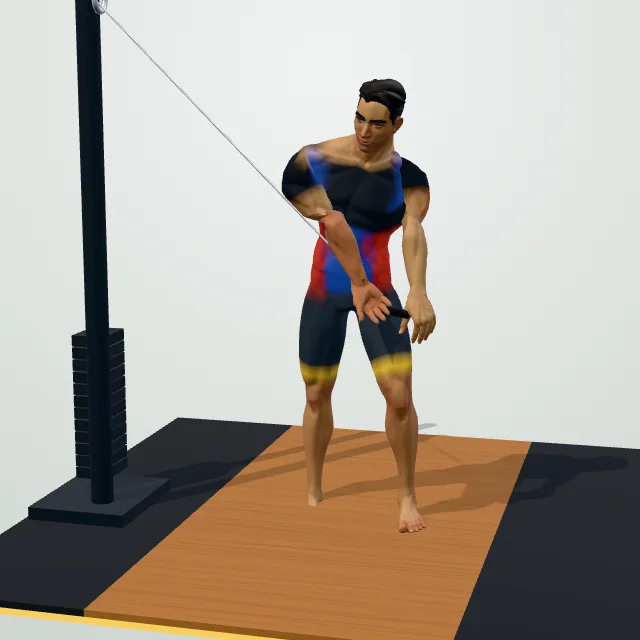
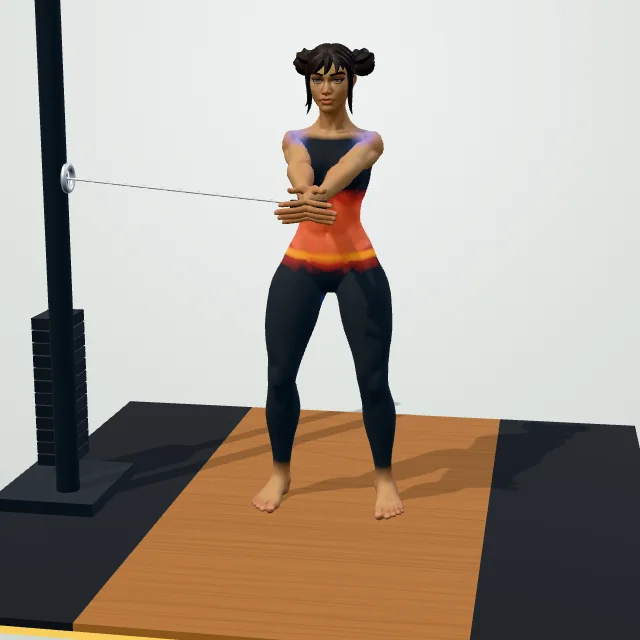
A cable machine keeps constant tension on the target muscle through the entire range of motion, which is the main reason cable exercises feel different from free weights — there's no easy point in the rep where gravity takes over. A good cable workout uses this to isolate muscles cleanly and to train movement patterns (like a crossover or a woodchop) that are awkward or unsafe with a barbell or dumbbells. The 3D coach shows the setup and path for lifts like the cable crossover, seated cable row and lat pulldown.
Choosing pulley height and attachments
Pulley height changes the angle of pull, and therefore which part of the muscle does most of the work: a high pulley works the lower chest and lats on downward pulls, a low pulley works the upper chest and lats on upward pulls, and a mid-height pulley suits rows and presses at chest level. Common attachments — straight bar, rope, single handle, D-handle — mostly change grip and wrist angle rather than the exercise itself, so pick whichever feels most comfortable on your wrists and match the attachment shown for each exercise here as a starting point.
Safety and setup
Start light on any new cable exercise since the resistance can feel different from free weights at the same numeric weight, and check the pin is fully seated in the weight stack before pulling. Keep a stable base — feet planted, knees soft — on standing exercises like the cable crossover or cable woodchop rather than letting the cable pull you off balance, and control the return each rep instead of letting the stack slam down.
Best cable machine exercises
Chest: the cable crossover and low-to-high cable fly isolate the chest through a long stretch and squeeze. Back: the seated cable row and lat pulldown are staples for building width and thickness without a pull-up bar. Shoulders: the face pull targets the rear delts and upper back, helping posture. Arms: the cable curl and triceps pushdown keep tension on the muscle throughout. Core: the cable crunch, cable woodchop and Pallof press train the abs and obliques against resistance, something free weights struggle to load directly.
Sample cable workout
| Exercise | Sets × reps | Rest |
|---|---|---|
| Lat pulldown | 3 × 10–12 | 75 s |
| Seated cable row | 3 × 10–12 | 75 s |
| Cable crossover | 3 × 12–15 | 60 s |
| Face pull | 3 × 15 | 45 s |
| Cable crunch | 3 × 12–15 | 45 s |
How to program cable training
Cable exercises work well as either the main lift for a muscle group (rows, pulldowns) or as a finisher after free-weight compounds (crossovers, pushdowns, face pulls). Use 3–4 sets of 10–15 reps with 45–75 seconds rest for most cable work, since the constant tension makes very heavy, low-rep sets less necessary than with free weights. If your gym doesn't have a cable station, resistance bands can substitute for several of these movement patterns at home.
Cable exercises for glutes and legs
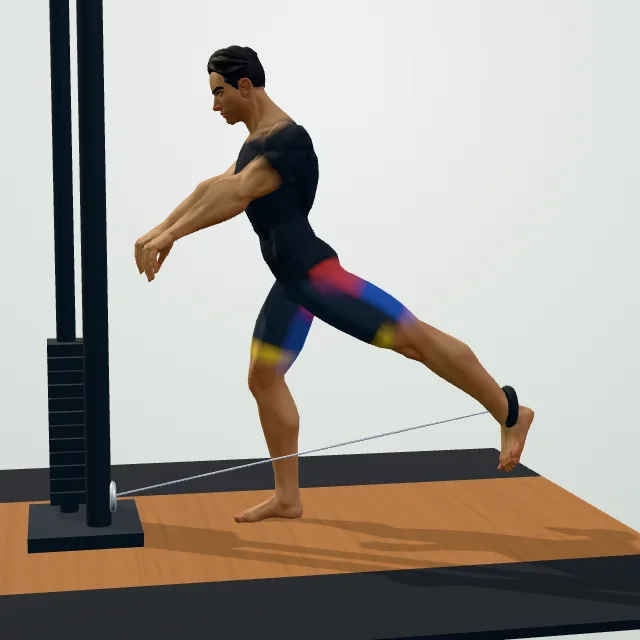
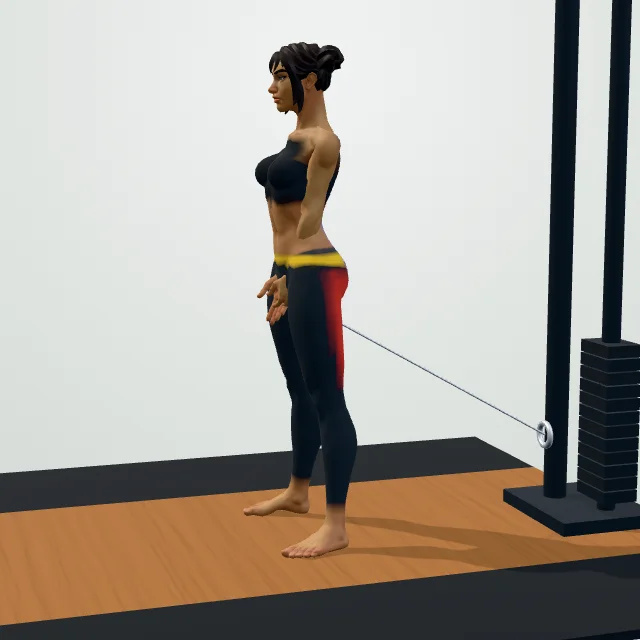
Cables aren't only for upper-body isolation — the cable glute kickback and cable pull-through load the glutes and hamstrings directly through a hip-hinge pattern that's hard to replicate with a barbell alone, especially for lifters still building confidence with a deadlift. A low-pulley kickback also keeps tension on the glute at the top of the movement, where bodyweight glute bridges tend to lose it.
Cable machines for beginners
If you've never used a cable station, start with seated or supported exercises like the lat pulldown and seated cable row before standing, single-arm variations — the fixed seat removes balance from the equation while you learn the pulling pattern. Choose a light weight on the stack for your first few sessions on any new cable exercise, since the resistance can feel unfamiliar even at a low number, and ask gym staff to show you how to adjust pulley height and swap attachments if the machine isn't self-explanatory.
Cable exercises in workout plans
Cable movements appear throughout gym-based plans like the 5-day body-part split, back and biceps workout and chest and triceps workout. Build your own around available cable equipment with the plan builder, which slots cable rows, pulldowns and isolation moves alongside compound lifts based on your goal and level.