Chest · Gym
Cable crossover: constant tension from start to finish
The cable crossover keeps the chest working through the entire rep, unlike a dumbbell fly that goes slack at the top. Here is the stance, the angle and how to pick a pulley height.
- Primary
- Chest
- Secondary
- Front delts
- Level
- Intermediate
- Type
- Isolation · Both sides together
- Sets × reps
- 3 × 12-15 reps
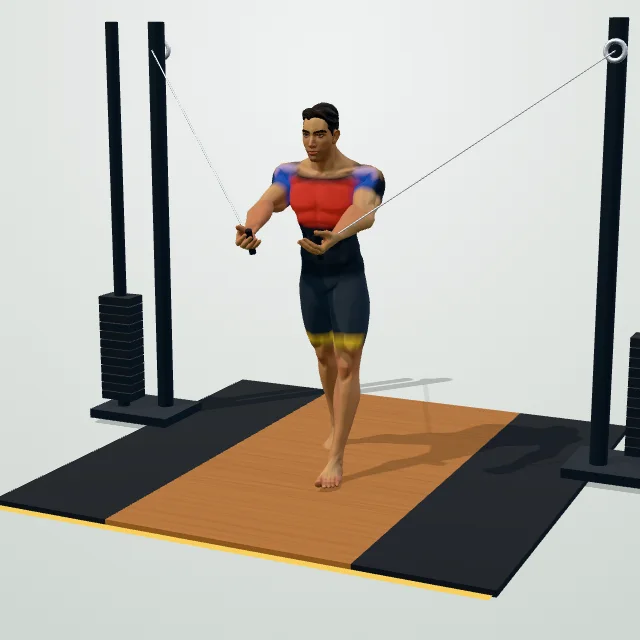
How to do it
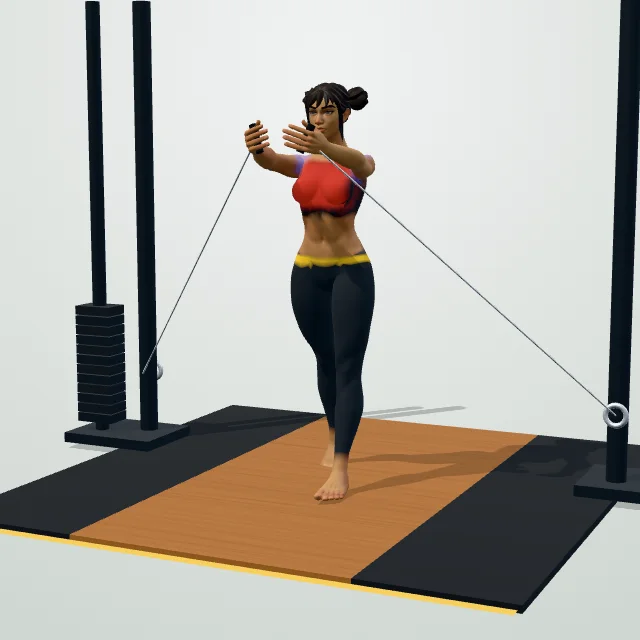
- Set both pulleys to the height you want to target.
- Stand centered between them with a slight forward lean.
- Hold a handle in each hand with a slight, fixed bend in your elbows.
- Sweep the handles down and across your body in a wide arc.
- Squeeze your chest at the crossing point.
- Let the handles return under control back to the start.
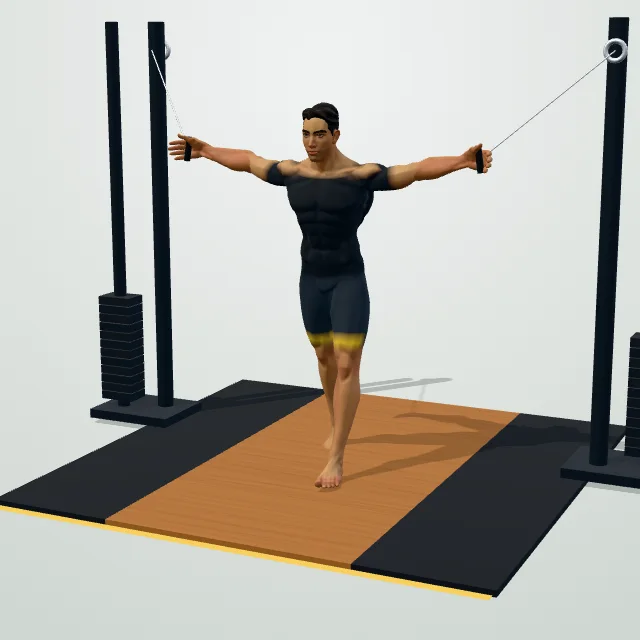
Coach cues
- Slight forward lean, soft knees.
- Fixed elbow bend throughout.
- Sweep and cross, squeeze at the finish.
- Control the return, do not let it snap back.
Breathing: Breathe out as you cross the handles together, then breathe in as you return to the start.
Common mistakes
Make it easier / Make it harder
Sets and reps by goal
| Goal | sets | reps | Rest |
|---|---|---|---|
| Strength | 3–5 | 6–8 | 90–120 s |
| Muscle growth | 3–4 | 10–15 | 60–90 s |
| Endurance | 2–3 | 15–20 | 30–60 s |
The cable crossover is a standing chest fly done at a dual-pulley cable station, crossing the handles in front of your body in a wide arc. Because the cable pulls at an angle rather than straight down like gravity on a dumbbell, the chest stays under tension through the whole rep, including at the point where a dumbbell fly usually goes slack.
Muscles worked and why
The chest is the prime mover, with the front shoulders assisting to control the arc. Where the pulleys are set changes which part of the chest feels the most work: high pulleys crossing downward emphasize the lower chest, low pulleys crossing upward (a low-to-high cable fly) emphasize the upper chest, and pulleys set at shoulder height train the middle of the chest most evenly.
Benefits
Constant cable tension is the main advantage over a dumbbell fly, which loses resistance once your arms are overhead. That means the chest works through the entire crossing motion, not just the bottom half. The adjustable pulley height also lets you target upper, middle or lower chest fibers more specifically than a fixed-bench dumbbell fly can.
Stance, pulley height and arc
Set both pulleys to the height you want to target and stand centered between them, stepping forward slightly so the cables are taut at the start. Take a small, staggered stance for balance, with a slight forward lean and a soft bend in your knees.
With a slight, fixed bend in your elbows, sweep the handles down and across your body in a wide arc, crossing them in front of your hips (for a high-to-low crossover) or bringing them together at chest height (for pulleys set level with your shoulders). Squeeze your chest at the crossing point, then let the handles return under control back to the starting position, keeping the same elbow bend the whole time rather than turning it into a press.
How to program it
Use the cable crossover as a chest finisher after your main pressing work, or as your main chest isolation move if you do not have dumbbells. 3 sets of 12–15 reps with 60–90 seconds of rest suits most chest workouts, since the constant tension makes higher reps effective here. Leave a couple of reps in reserve on most sets (the RPE and RIR guide explains this), and add small amounts of weight or reps over time, per progressive overload.
Variations and progressions
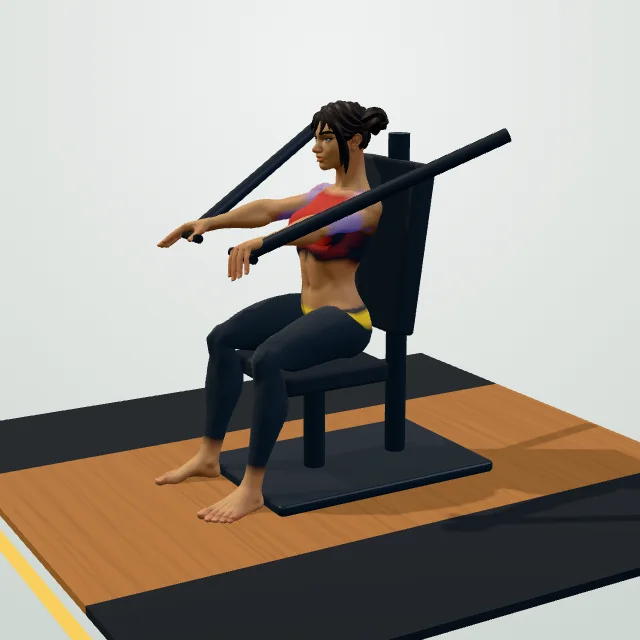
The low-to-high cable fly is the upper-chest-focused version of this same movement, using low pulleys pulled upward and across. The dumbbell fly is a good substitute without a cable machine, though it loses tension at the top. The pec deck is a guided-path machine alternative that some lifters find easier to learn the arc on before moving to free-standing cables.
Cable crossover vs dumbbell fly
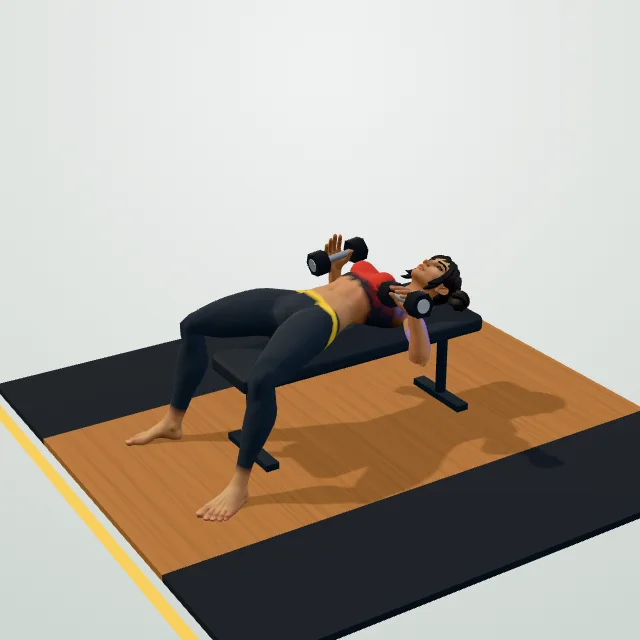
A dumbbell fly is limited by gravity — it is hardest at the bottom stretch and nearly weightless once your arms are overhead. A cable crossover keeps resistance throughout the entire arc because the cable angle, not gravity, provides the tension, which many lifters feel as a stronger chest contraction at the finish. Both train the same muscle; the cable version simply distributes the work more evenly across the full range.
Safety: who should modify it
Do not let the handles pull your arms back further than a comfortable stretch — this is where shoulder strain happens, especially with pulleys set high. Keep a slight, fixed bend in your elbows rather than locking them straight, and choose a weight light enough to control the full arc smoothly. If you feel pinching at the front of the shoulder, lower the weight or the pulley height and check with a physiotherapist if it continues.
The cable crossover ladder finisher
A common way to use the cable crossover at the end of a chest workout is a "ladder": complete a set with the pulleys high (lower chest emphasis), drop the pin down a few plates, then a set with pulleys at shoulder height (middle chest), drop the pin again, then a set with pulleys low, pulling upward (upper chest). Moving through the whole range in one short block, with minimal rest between each pulley change, is an efficient way to finish a chest session without needing much extra time, since the weight is already light and you are simply changing the angle of pull.
Questions people ask
What muscles does the cable crossover work?
How do I set the pulley height for cable crossovers?
Is cable crossover push or pull?
Cable crossover vs dumbbell fly, which is better?
How many reps should I do for cable crossovers?
Is the cable crossover good for beginners?
Can I do a cable crossover at home?
General fitness information, not medical advice. Check with a doctor or physiotherapist before starting if you have a health condition, an injury or are pregnant. Stop if you feel chest pain, dizziness or sharp pain.