Shoulders · Gym
Cable lateral raise: constant tension for side delts
Running the cable behind your body keeps your side delt loaded from the very first inch of the raise, which a dumbbell cannot do.
- Primary
- Side delts
- Secondary
- Traps
- Level
- Intermediate
- Type
- Isolation · One side, then the other
- Sets × reps
- 3 × 12-15 reps per side
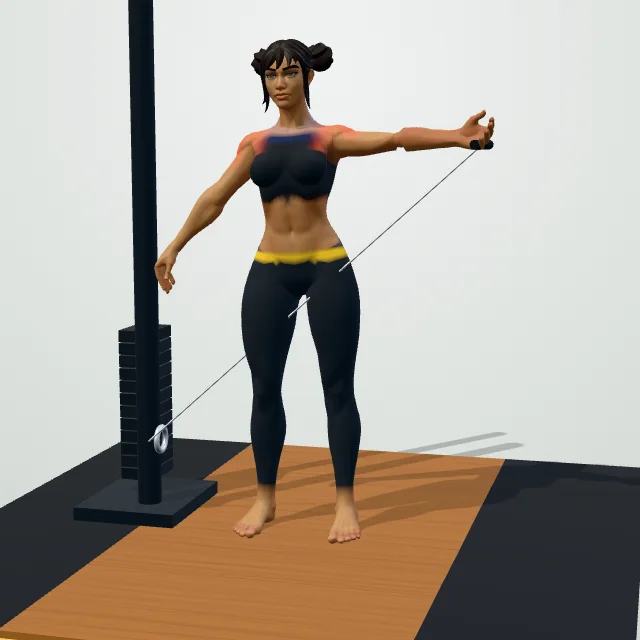
How to do it
- Set the pulley to its lowest position with a single handle attached.
- Stand side-on, holding the handle in the hand farthest from the machine.
- Keep a soft bend in your elbow and your torso upright.
- Raise your arm out to the side, leading with your elbow, to shoulder height.
- Lower with control, resisting the cable back down.
- Switch sides and match effort and reps on both arms.
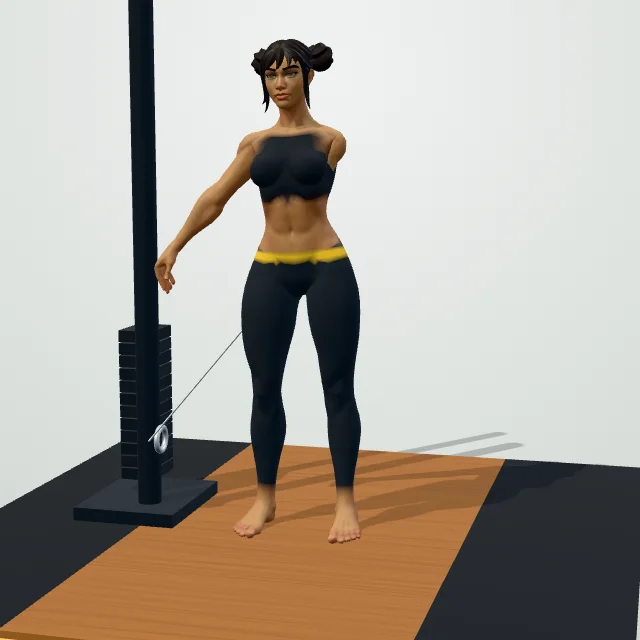
Coach cues
- Stand tall, torso still, cable crossing your body.
- Lead with your elbow, soft bend held steady.
- Raise to about shoulder height.
- Lower slowly, resist the cable back down.
Breathing: Breathe out as you raise your arm out to the side, and breathe in as you lower it back down.
Common mistakes
Make it easier / Make it harder
Sets and reps by goal
| Goal | sets | reps | Rest |
|---|---|---|---|
| Strength | 3–5 | 6–8 | 90–120 s |
| Muscle growth | 3–4 | 10–15 | 60–90 s |
| Endurance | 2–3 | 15–20 | 30–60 s |
The cable lateral raise trains the same side delt as the dumbbell version, but pulling from a low cable pulley changes the resistance curve: instead of the weight feeling heaviest in the middle of the rep and lightest at the bottom, the cable keeps steady tension on the muscle from the first inch of the raise to the top.
Muscles worked
The side delt is the prime mover, exactly as in a dumbbell lateral raise, lifting your arm out and away from your body against the cable's pull. Your traps help stabilize your shoulder blade, and your core works quietly to stop your torso from twisting toward the machine as you pull the cable away from it. Training one arm at a time also forces each side to work independently, which can expose and fix a weaker shoulder.
Benefits
- Constant tension. The cable keeps the side delt loaded even at the bottom of the rep, where a dumbbell has almost no resistance.
- Smoother strength curve. Many lifters feel the side delt working more evenly through the whole range compared with dumbbells.
- Easy to angle. Standing at different distances from the machine, or crossing the cable behind your body, lets you change the angle of pull to target the delt slightly differently.
- Good for drop sets. Adjusting the pin between sets is faster than swapping dumbbells.
Technique and setup
Set the pulley to its lowest position and attach a single handle. Stand side-on to the machine, holding the handle in the hand farthest from it, so the cable crosses in front of or behind your body. Keep a soft bend in your elbow and raise your arm out to the side in a wide arc, leading with your elbow, until it reaches roughly shoulder height.
Lower with control back down, resisting the cable rather than letting it snap your arm back to your side. Keep your torso upright and still — leaning away from the machine to help the weight up is a sign the load is too heavy. Switch sides and repeat, keeping your reps and effort matched between arms.
Sets, reps and where it fits
| Goal | Sets × reps | Rest | Load |
|---|---|---|---|
| Muscle growth | 3 × 12–15 per arm | 45–60 sec | RPE 8–9 |
| Endurance | 2–3 × 15–20 per arm | 30–45 sec | Light |
Use the cable lateral raise in place of, or alongside, the dumbbell lateral raise toward the end of a shoulder workout, once your heavier pressing is finished. Because each arm works separately, do your weaker side first and match the stronger side to it rather than the other way around.
Cable lateral raise vs dumbbell lateral raise vs upright row
Against the dumbbell lateral raise, the cable version trades convenience for a smoother, more constant load on the side delt — useful if a gym cable station is free, and worth alternating between the two over time. The upright row also raises the arms sideways but adds elbow flexion and heavier loading, working the traps and biceps more than an isolated raise does.
Getting the angle right before you load up
Spend your first set finding the distance from the machine and the amount of body lean that lets you feel the side delt working cleanly, since a slightly different foot position changes the pulling angle more than it does with dumbbells. Once the setup feels right, note it down in my workouts so you can repeat the same angle and add weight consistently next time.
Safety notes
If you feel pinching at the top of the movement, stop the raise a little below shoulder height. People with shoulder impingement or a recent injury should keep the load light and check with a physiotherapist before progressing it. Avoid twisting your torso to swing the handle up — that shifts stress onto your lower back and off the shoulder.
Because the resistance is light and the movement single-joint, the cable lateral raise is one of the safer ways to add regular side delt volume without taxing your joints.
More exercises for shoulders
Questions people ask
Is the cable lateral raise better than dumbbells?
How do you set up a cable lateral raise?
What muscles does the cable lateral raise work?
Should I do the cable lateral raise standing close or far from the machine?
Is the cable lateral raise a push or pull exercise?
Can beginners do the cable lateral raise?
How do I make the cable lateral raise easier?
General fitness information, not medical advice. Check with a doctor or physiotherapist before starting if you have a health condition, an injury or are pregnant. Stop if you feel chest pain, dizziness or sharp pain.