Glutes · Gym
Cable pull-through: learning the hip hinge safely
The cable pull-through has you face away from a low pulley, pull a rope between your legs, and stand up by driving your hips forward — one of the safest ways to learn a proper hip hinge.
- Primary
- GlutesHamstrings
- Secondary
- Lower back
- Level
- Beginner
- Type
- Compound · Both sides together
- Sets × reps
- 3 × 12-15 reps
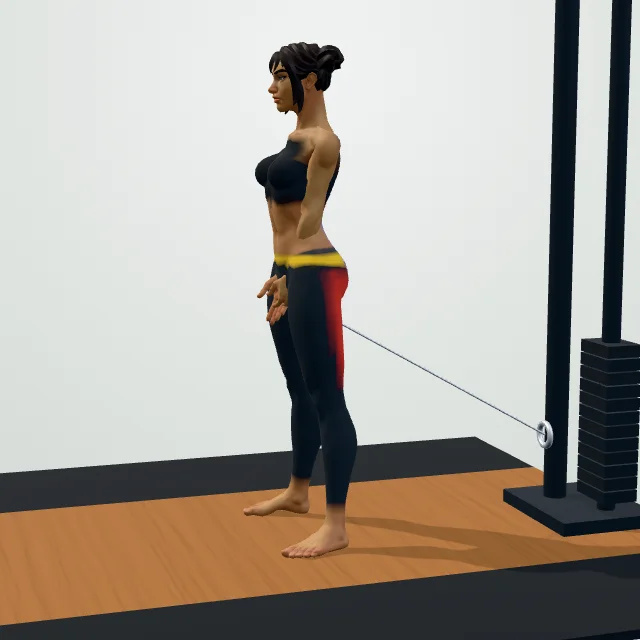
How to do it
- Attach a rope to a low pulley and face away from the machine.
- Hold the rope between your legs with both hands.
- Step forward until the cable has tension.
- Hinge at your hips, pushing them back with a flat back.
- Feel a stretch through your hamstrings at the bottom.
- Drive your hips forward and squeeze your glutes to stand tall.
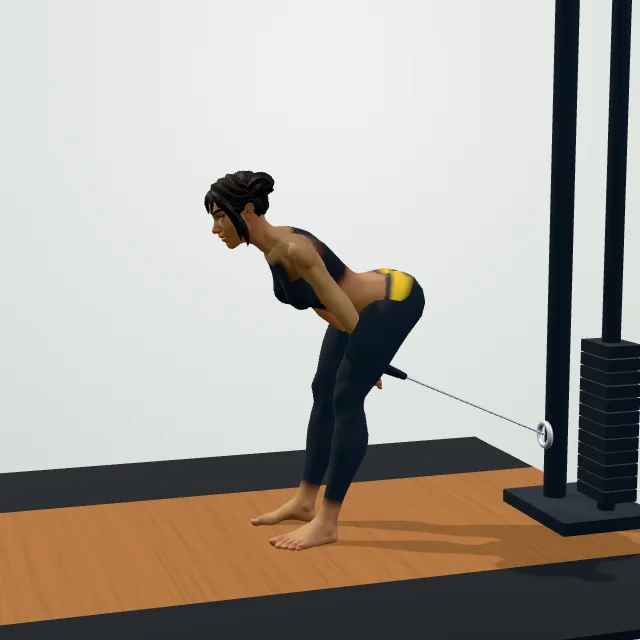
Coach cues
- Push your hips back, not down.
- Keep your back flat throughout.
- Feel the stretch, then drive forward.
- Squeeze glutes to finish standing tall.
Breathing: Breathe in as you hinge back, breathe out as you drive your hips forward to stand.
Common mistakes
Make it easier / Make it harder
Sets and reps by goal
| Goal | sets | reps | Rest |
|---|---|---|---|
| Strength | 3–5 | 3–6 | 2–4 min |
| Muscle growth | 3–4 | 6–12 | 90–150 s |
| Endurance | 2–3 | 15–20 | 30–60 s |
The cable pull-through is done facing away from a low cable pulley, pulling a rope attachment back between your legs while you hinge at the hips, then standing tall by driving your hips forward. The cable keeps a steady pull throughout, which makes the hip hinge pattern easy to feel and hard to get badly wrong.
Muscles worked and why it teaches good form
The glutes and hamstrings drive the hip extension, with the lower back working to keep your spine in a neutral position rather than rounding. Because the cable pulls from behind and below you, it naturally guides you into a hip-hinge pattern — pushing your hips back rather than squatting down — which is exactly the movement pattern that a Romanian deadlift or good morning also relies on, but with far less spinal loading here.
Benefits
The cable pull-through is one of the most beginner-friendly ways to learn the hip hinge, since the cable's constant tension and low starting position make it hard to round your back or squat the weight up instead of hinging. It builds real glute and hamstring strength while being far gentler on the spine than a loaded barbell hinge, making it useful both as a teaching tool for beginners and as an accessory for advanced lifters on a lower-back-friendly day.
Technique in detail
Attach a rope to a low pulley and stand facing away from the machine, feet shoulder-width apart, holding the rope between your legs with both hands. Step forward until there is tension on the cable, then hinge at your hips, pushing them back while keeping a soft bend in your knees and a flat back — think of reaching your hips toward the wall behind you rather than bending forward. Once you feel a stretch through your hamstrings, reverse the movement by driving your hips forward and squeezing your glutes to stand tall, letting the rope pull through between your legs as you finish upright.
How to program it
3 sets of 12–15 reps works well as an accessory exercise for hip-hinge strength, either after a squat-focused session or as a lighter alternative to a Romanian deadlift on days you want less spinal load. Keep the weight moderate and prioritize the hinge pattern — this exercise rewards clean technique over heavy loading, and it is easy to turn it into a squat by bending the knees too much, which takes work away from the hips.
Cable pull-through vs. Romanian deadlift
The Romanian deadlift loads the same hip-hinge pattern with a barbell or dumbbells, allowing much heavier loading but requiring more technical precision to keep the bar close and the back neutral. The cable pull-through is gentler and more forgiving, which is why many coaches use it to teach the hinge pattern before introducing a loaded barbell version, or as a lower-back-friendly substitute when heavy hinging is not appropriate that day.
Cable pull-through vs. hip thrust
Both train hip extension and the glutes, but the hip thrust isolates the top portion of hip extension from a supported position on a bench, while the pull-through works through a longer hinge range that also stretches the hamstrings at the bottom. Many programs use both: the hip thrust for pure glute loading, the pull-through for hip-hinge practice and hamstring length under tension.
Safety notes
Keep your back flat throughout — rounding at the bottom of the hinge is the most common technique breakdown and is usually a sign the weight is too heavy or the hamstrings are tight. Anyone with an active lower-back injury should get clearance from a physiotherapist before loading a hip-hinge pattern. Stop if you feel sharp pain in the lower back rather than a stretch and burn in the hamstrings and glutes.
Where it fits in a workout
Use it early in a session as a hinge-pattern warm-up before heavier squats or deadlifts, or later as an accessory to add extra glute and hamstring volume with less fatigue than a loaded barbell hinge. It also works well in a glute-focused workout alongside hip thrusts and lateral band walks, since it trains the same muscles from a different angle.
Workout plans with this exercise
Questions people ask
What muscles does the cable pull-through work?
How do you do a cable pull-through correctly?
Is the cable pull-through good for beginners?
Cable pull-through vs. Romanian deadlift: which is better?
Does the cable pull-through work the glutes or hamstrings more?
What is a good cable pull-through alternative?
Why does my back round during cable pull-throughs?
General fitness information, not medical advice. Check with a doctor or physiotherapist before starting if you have a health condition, an injury or are pregnant. Stop if you feel chest pain, dizziness or sharp pain.