Triceps · Gym
Triceps rope pushdown: the classic finisher for arm lockout
The rope pushdown is a cable exercise that isolates the triceps with constant tension and a joint-friendly path. Here is the setup, technique and how it compares to other attachments.
- Primary
- Triceps
- Level
- Beginner
- Type
- Isolation · Both sides together
- Sets × reps
- 3 × 10-15 reps
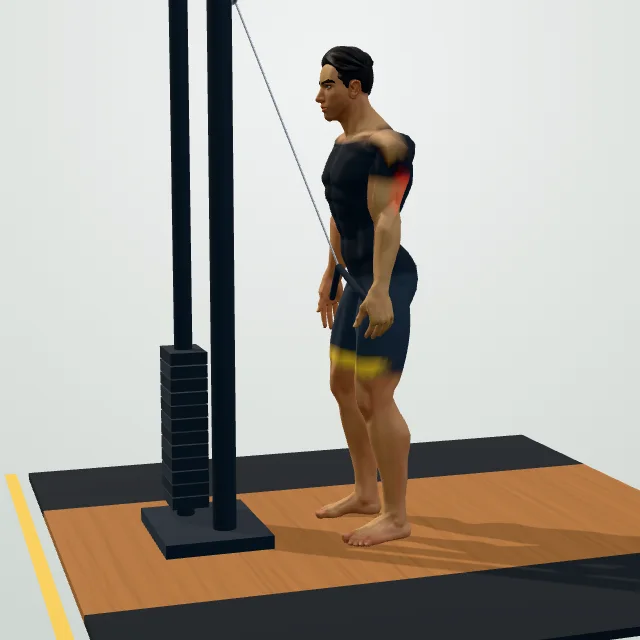
How to do it
- Set the pulley high and attach a rope.
- Stand facing the machine, elbows pinned to your sides.
- Push the rope down by straightening your elbows.
- Let your hands split apart slightly at the bottom.
- Squeeze the triceps briefly at full extension.
- Let the rope rise back under control.
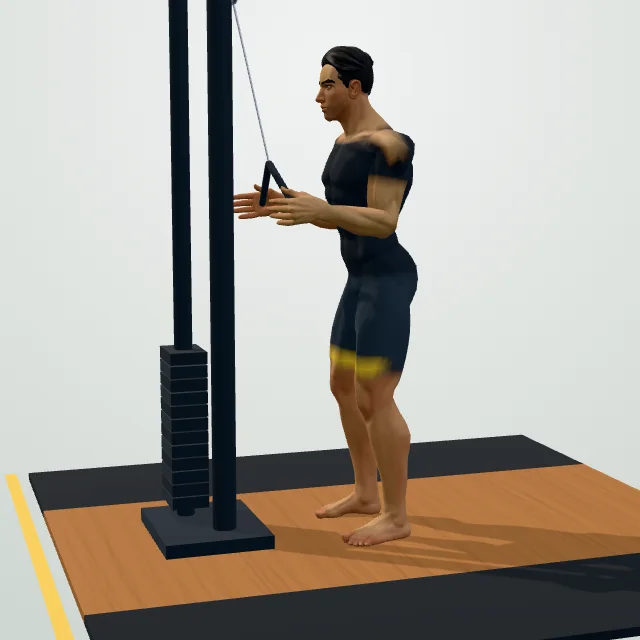
Coach cues
- Elbows stay pinned to your sides.
- Push down, straighten the elbows fully.
- Squeeze the triceps at the bottom.
- Control the rope back up.
Breathing: Breathe out as you push the rope down, and breathe in as you let it rise back up.
Common mistakes
Make it easier / Make it harder
Sets and reps by goal
| Goal | sets | reps | Rest |
|---|---|---|---|
| Strength | 3–5 | 6–8 | 90–120 s |
| Muscle growth | 3–4 | 10–15 | 60–90 s |
| Endurance | 2–3 | 15–20 | 30–60 s |
The triceps rope pushdown is a standing cable exercise where you push a rope attachment down from chest height to full arm extension, isolating the triceps with steady, joint-friendly tension. Because the cable removes the momentum you might use on a free-weight exercise, it is one of the most reliable ways to feel the triceps working on every single rep, and it is a near-universal finisher in gym triceps routines.
The rope attachment lets your hands separate and rotate slightly at the bottom, which most lifters find more comfortable on the wrists than a fixed straight bar. See the triceps hub for how it fits with other pressing and extension exercises.
Muscles the triceps pushdown works
The pushdown isolates the triceps brachii through elbow extension, working all three heads to some degree, though the lateral and medial heads generally take on the most work in this standing, elbows-at-the-sides position. Because the shoulder stays fixed and only the forearm moves, there is very little assistance from the chest or shoulders. Your forearm and grip muscles also work to hold the rope or bar throughout the set.
Benefits of the triceps pushdown
- Constant tension: the cable keeps the triceps loaded through the whole range, including the fully extended lockout.
- Joint-friendly: a smooth, controlled path that is usually gentle on the elbows compared with heavier free-weight extensions.
- Easy to isolate: keeping the elbows fixed at your sides makes it simple to feel the triceps working from the first rep.
- Flexible attachments: rope, straight bar, or single-arm handle each shift the feel slightly.
Technique: stance, elbow position and rope split
Set the pulley high and attach a rope. Stand facing the machine with a slight forward lean, elbows bent and pinned to your sides at roughly chest height — this elbow position stays fixed for the whole set. Push the rope down by straightening your elbows, letting your hands split apart and rotate slightly outward as you reach full extension, and squeeze the triceps briefly at the bottom. Let the rope rise back under control until your forearms are roughly parallel to the floor, without letting your elbows drift backward or your shoulders shrug up to help.
A common error is letting the elbows travel forward or backward as the weight gets heavier — keep them anchored at your sides throughout, since that is what isolates the triceps rather than turning the movement into a shoulder or chest press.
How to program the triceps pushdown
| Goal | Sets | Reps | Rest |
|---|---|---|---|
| Strength | 3 | 8–10 | 90 seconds |
| Muscle (hypertrophy) | 3 | 10–15 | 60 seconds |
| Endurance | 2–3 | 15–20 | 45 seconds |
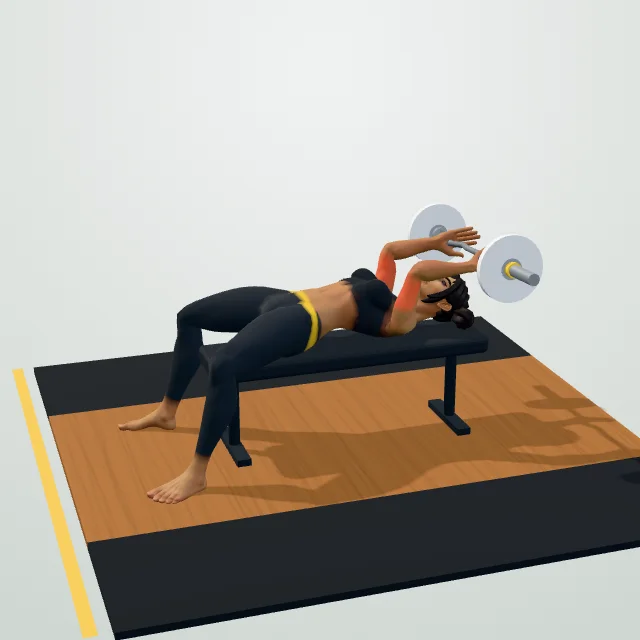
Because the cable keeps tension even at the bottom of the rep, this exercise handles higher reps and drop sets well as a finisher after heavier compound pressing. Use it after the close-grip bench press or a regular bench press in a chest and triceps workout, and add small load increases over time using the progressive overload guide.
Variations and progressions
- Straight bar pushdown: allows heavier loading but fixes the wrist angle, unlike a rope.
- Single-arm pushdown: useful for correcting a weaker side and adding a slight twist at the bottom.
- Reverse-grip pushdown: an underhand grip that shifts emphasis toward the medial head and forearm.
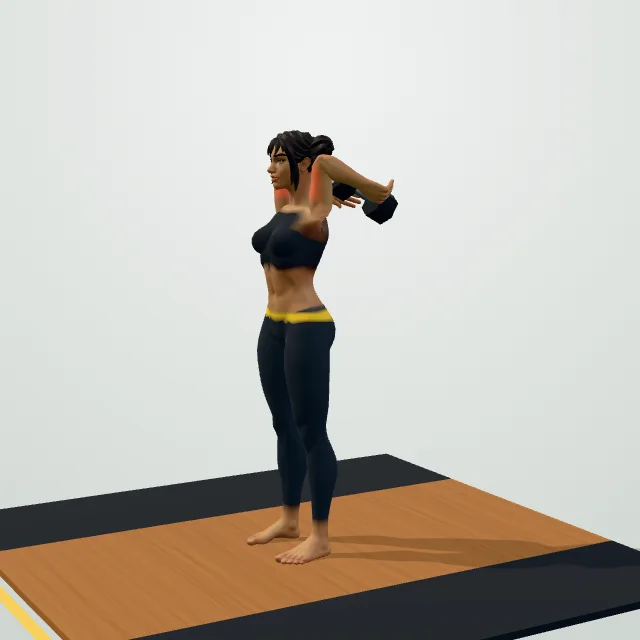
- Overhead cable extension: facing away from the machine trains the same muscle with more stretch — see the overhead triceps extension.
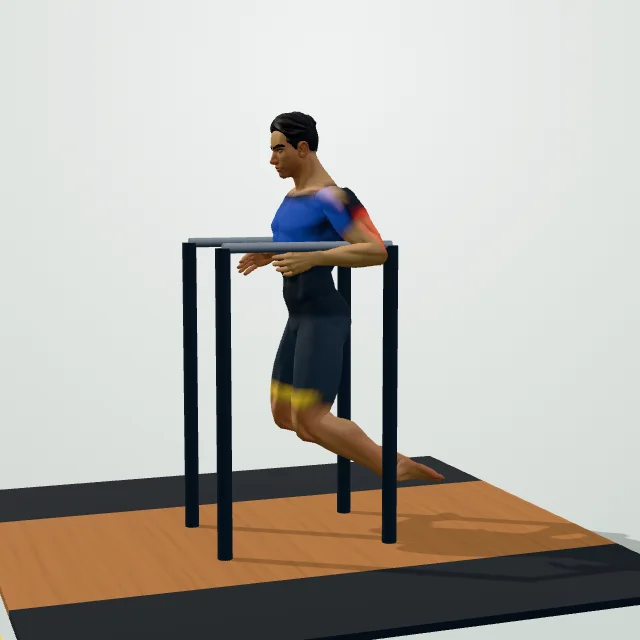
No cable machine available? The triceps kickback or bench dip train the triceps with dumbbells or bodyweight instead.
Triceps pushdown vs skull crusher
The pushdown keeps the shoulder in a neutral position throughout, which is generally gentler on the elbow than the skull crusher, which stretches the triceps into an overhead-relative position at the bottom. The skull crusher usually works the long head a little more because of that stretch, while the pushdown is easier to load progressively and push closer to failure safely. Many triceps routines include both across a week for a complete stimulus.
Safety and who should modify it
Keep your elbows fixed at your sides rather than letting them travel — using the shoulders to help push the weight down is the most common way this exercise stops training the triceps and starts straining the shoulder joint. If you feel wrist discomfort, switch from a straight bar to a rope, which allows a more natural hand position. Anyone with existing elbow tendon pain should reduce the load and keep the range of motion comfortable.
Workout plans with this exercise
Build muscle · Intermediate
Push Pull Legs Split (6 Days)
Strength · Intermediate
Upper/Lower Split (4 Days)
Build muscle · Intermediate
4-Day Muscle-Building Workout Plan
Build muscle · Intermediate
5-Day Body-Part Split (Bro Split)
Build muscle · Intermediate
Chest and Triceps Workout
General fitness · Beginner
Beginner Gym Workout Plan for Women
More exercises for triceps
Questions people ask
What muscles does the triceps pushdown work?
Rope or straight bar — which is better for pushdowns?
Why do my shoulders get tired before my triceps on pushdowns?
How heavy should triceps pushdowns be?
Can I do triceps pushdowns at home without a cable machine?
Triceps pushdown vs skull crusher — which should I choose?
General fitness information, not medical advice. Check with a doctor or physiotherapist before starting if you have a health condition, an injury or are pregnant. Stop if you feel chest pain, dizziness or sharp pain.