Back · Gym
Close-grip lat pulldown: a deeper pull for the lower lats
A lat pulldown variation using a close, neutral V-bar handle, allowing a deeper pull and more biceps involvement than a wide grip. Here is the setup and how it differs from the standard pulldown.
- Primary
- Lats
- Secondary
- BicepsUpper back
- Level
- Beginner
- Type
- Compound · Both sides together
- Sets × reps
- 3 × 10-12 reps
How to do it
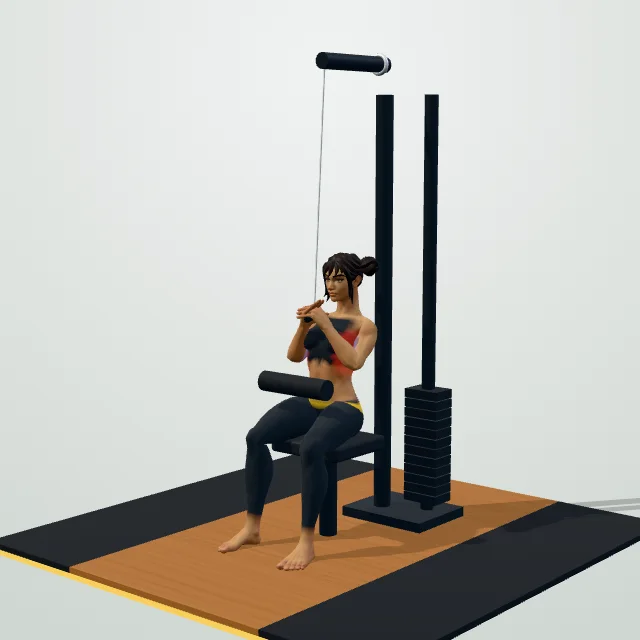
- Attach a V-bar or close neutral-grip handle to the cable.
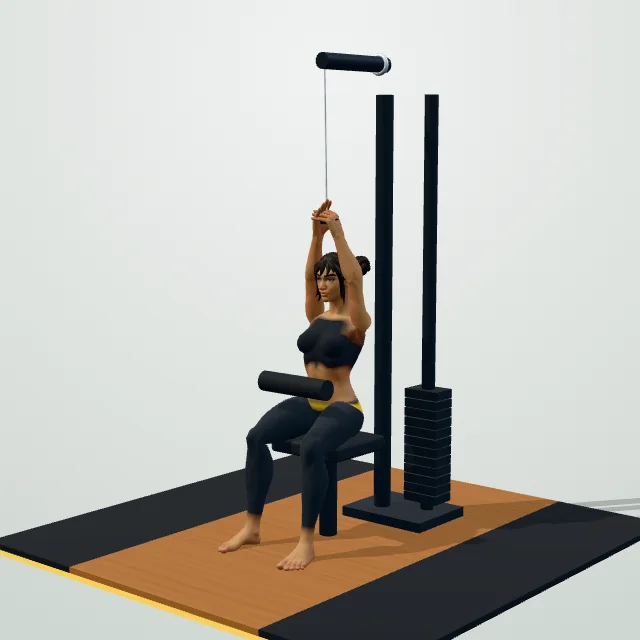
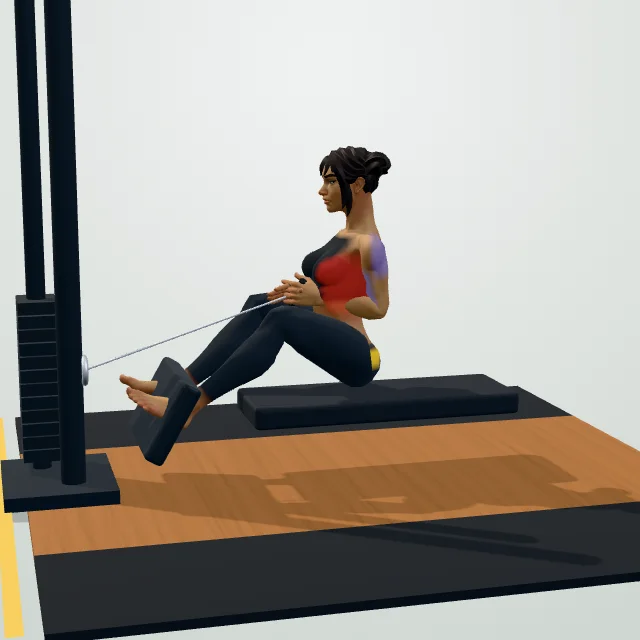
- Sit with thighs secured under the pad, arms extended overhead.
- Grip the handle with palms facing each other.
- Pull the handle down toward your upper chest, elbows driving down.
- Squeeze your shoulder blades together as it arrives at your chest.
- Control the handle back up to a full stretch.
Coach cues
- Palms facing each other, arms extended.
- Pull the handle to your upper chest.
- Elbows drive down and back.
- Control the return, full stretch at the top.
Breathing: Breathe out as you pull the handle down, breathe in as you let it rise.
Common mistakes
Make it easier / Make it harder
Sets and reps by goal
| Goal | sets | reps | Rest |
|---|---|---|---|
| Strength | 3–5 | 3–6 | 2–4 min |
| Muscle growth | 3–4 | 6–12 | 90–150 s |
| Endurance | 2–3 | 15–20 | 30–60 s |
The close-grip lat pulldown uses a narrow, neutral V-bar handle instead of a wide straight bar, letting your hands stay close together and your palms face each other as you pull down toward your chest. The closer grip changes the angle of pull enough that it is worth treating as a distinct variation rather than just a smaller version of the standard lat pulldown.
What muscles does the close-grip lat pulldown work
The lats remain the prime mover, but the close, neutral grip shifts a bit more emphasis onto the lower lats and increases biceps involvement compared with a wide overhand grip, since the neutral hand position is a stronger, more natural pulling angle for the biceps. The upper back still assists as your shoulder blades draw together at the bottom of the pull.
Benefits of the close-grip lat pulldown
- Deeper pull to the chest, since the narrow handle does not need to travel as wide, often allowing a more complete range of motion for the lats.
- More biceps involvement, making it a useful back exercise for lifters who also want extra arm work in the same set.
- Comfortable, neutral grip that many lifters find easier on the wrists and shoulders than a wide overhand grip.
- Good variety alongside the wide-grip pulldown, letting you train the same muscle group through a different angle across a training block.
Close-grip vs wide-grip lat pulldown
A wide overhand grip on the standard lat pulldown emphasizes back width and the outer lats, with less biceps assistance. The close-grip version narrows the hand position, usually to a neutral V-bar, which shifts more work to the lower lats and increases the biceps' share of the effort. Neither is more "correct" — many programs use the wide grip for one working set and the close grip for another, training the lats through two different pulling angles in the same session or across a week.
How to do the close-grip lat pulldown correctly
Setup
Attach a V-bar or close neutral-grip handle to the cable. Sit with your thighs secured under the pad and grip the handle with palms facing each other, arms extended overhead.
The pull
Pull the handle down toward your upper chest, driving your elbows down and back and squeezing your shoulder blades together as the handle arrives near your sternum. Keep your torso upright with only a slight backward lean, rather than swinging back to help finish the pull.
What you should feel
You should feel a strong contraction through the lower lats and a solid squeeze between your shoulder blades, with more forearm and biceps involvement than the wide-grip version. If you feel it almost entirely in your biceps, slow the pull down and focus on driving your elbows down first.
Sets, reps and how often to train it
For back and arm development, 3 sets of 10–12 reps with 60–90 seconds of rest works well, using a weight that lets you keep a controlled, upright torso through every rep. Train pulling movements 2 times a week, using the close-grip and wide-grip pulldown on different days or as complementary exercises in the same session. See how many sets and reps for programming guidance, or the back and biceps workout, which pairs well with this exercise.
Variations and alternatives
An underhand, shoulder-width grip on a straight bar gives a similar biceps-biased effect if your gym has no V-bar attachment. If you have built enough strength, the chin-up trains a very similar close, neutral-to-underhand pulling pattern with your full body weight instead of a cable stack, making it a natural progression once pulldowns start to feel light.
Safety and who should modify it
Keep the pull directed toward your chest rather than behind your neck, and avoid using your body weight to yank the handle down if the load is too heavy — this often strains the shoulder or lower back. Anyone with elbow or wrist discomfort should check that their grip width feels natural rather than forced. Stop for sharp pain in the shoulder, elbow or wrist, and if you are pregnant, recovering from an upper-body injury, or new to resistance training, start light and build up the weight gradually.
Workout plans with this exercise
Questions people ask
What does the close-grip lat pulldown work?
Close-grip vs wide-grip lat pulldown: which is better?
What attachment do I need for a close-grip lat pulldown?
Does the close-grip lat pulldown work the biceps?
Is the close-grip lat pulldown good for beginners?
How many close-grip lat pulldowns should I do?
What can I do instead of a close-grip lat pulldown?
General fitness information, not medical advice. Check with a doctor or physiotherapist before starting if you have a health condition, an injury or are pregnant. Stop if you feel chest pain, dizziness or sharp pain.