Back · Gym
Seated cable row: build back thickness with steady tension
A cable-machine row done seated, pulling a handle into your torso while your hips stay fixed. Here is the setup, grip choices and technique that keep tension on your back throughout.
- Primary
- LatsUpper back
- Secondary
- BicepsRear delts
- Level
- Beginner
- Type
- Compound · Both sides together
- Sets × reps
- 3 × 10-12 reps
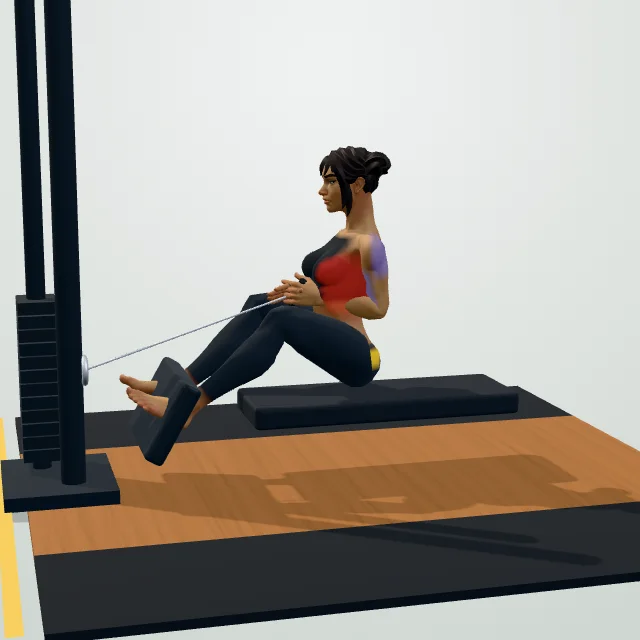
How to do it
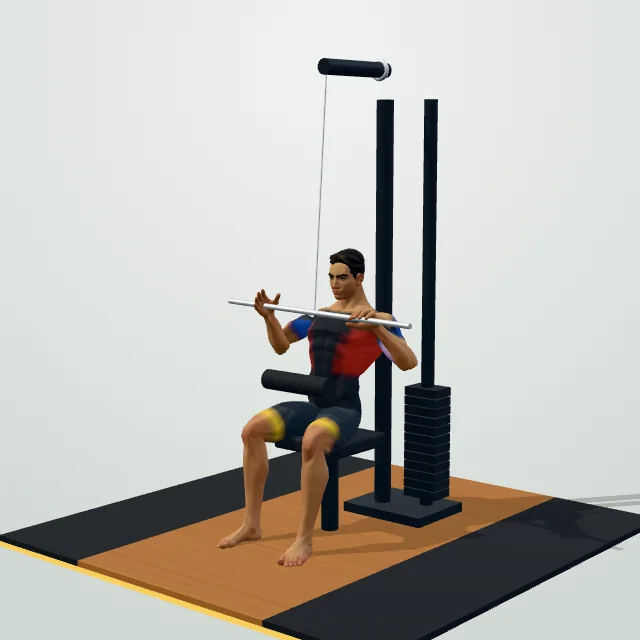
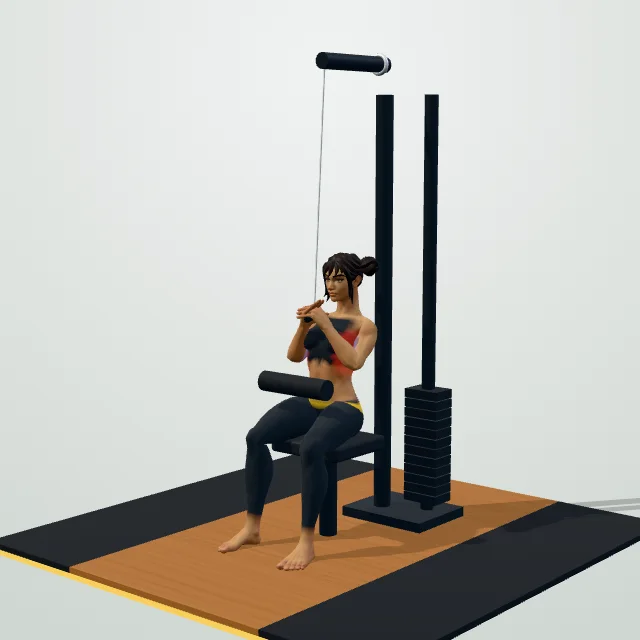
- Sit with feet braced on the platform, knees slightly bent.
- Grip the handle with arms extended and torso upright.
- Pull the handle into your lower torso, elbows driving back.
- Squeeze your shoulder blades together at the end of the pull.
- Return the handle under control, allowing a full stretch.
- Keep your torso upright throughout, without rocking.
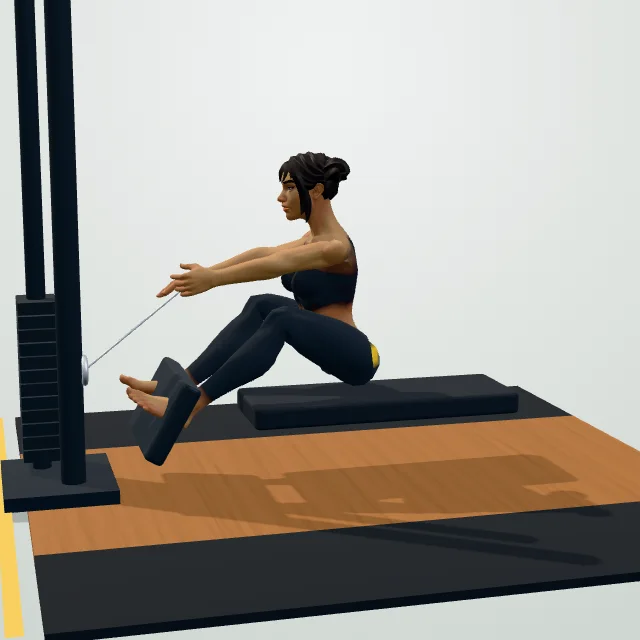
Coach cues
- Sit tall, feet braced on the platform.
- Pull the handle into your torso.
- Squeeze your shoulder blades together.
- Return under control, torso stays upright.
Breathing: Breathe out as you pull the handle in, breathe in as you return it.
Common mistakes
Make it easier / Make it harder
Sets and reps by goal
| Goal | sets | reps | Rest |
|---|---|---|---|
| Strength | 3–5 | 3–6 | 2–4 min |
| Muscle growth | 3–4 | 6–12 | 90–150 s |
| Endurance | 2–3 | 15–20 | 30–60 s |
The seated cable row is a horizontal pulling exercise performed sitting at a low cable station, pulling a handle into your torso while your hips and torso stay fixed against a foot platform or pad. The constant tension of a cable, combined with a stable seated position, makes it one of the most controlled ways to train back thickness with none of the balance demands of a free-weight row.
What muscles does the seated cable row work
The lats and upper back are the prime movers, pulling your elbows back and squeezing your shoulder blades together, with the biceps and rear delts assisting the pull. Because the cable keeps tension on the muscle through the entire range, including the fully stretched position at the front of the rep, many lifters feel a more continuous back contraction here than with a barbell row, where tension can ease off slightly at the top and bottom.
Benefits of the seated cable row
- Constant cable tension through the full range of motion, including a deep stretch at the front of the rep.
- Fixed torso position removes the hip-hinge and balance demands of a free-standing barbell row, letting you isolate the back muscles.
- Easy to adjust load in small increments on a stack machine, which suits precise progressive overload.
- Multiple grip attachments — wide bar, close V-handle, or single handle — let you shift emphasis across the back.
Seated cable row vs barbell row and lat pulldown
The barbell row uses a hip-hinge position that adds lower-back and core demand on top of the pull itself; the seated cable row removes that, isolating the back more directly with steady cable tension. Compared with the lat pulldown, which pulls a bar down from overhead in a vertical line, the seated cable row pulls horizontally into the torso — both are valuable, since vertical and horizontal pulling train the back through different angles and most complete back workouts include one of each.
How to do the seated cable row correctly
Setup
Sit with your feet braced on the platform, knees slightly bent, and grip the handle with your arms extended and torso upright. Sit tall rather than rounding your lower back forward to reach the handle.
The pull
Pull the handle into your lower torso, driving your elbows back and squeezing your shoulder blades together, while keeping your torso upright rather than leaning back to help the pull. Return the handle under control, letting your shoulder blades protract and your torso lean slightly forward for a full stretch, without rounding your lower back.
What you should feel
You should feel a strong contraction between your shoulder blades at the end of the pull and a deep stretch across the upper back at the front. If you feel your lower back working hard or rounding, you are likely using your torso to swing the weight instead of pulling with your arms and back.
Grip options and what they change
A wide bar attachment with an overhand grip emphasizes the upper back and rear delts; a close, neutral-grip V-handle shifts more focus onto the lats and allows a deeper pull into the torso. A single handle lets you row one arm at a time, similar in effect to the one-arm dumbbell row but with the constant tension of a cable.
Sets, reps and how often to train it
For back thickness and strength, 3 sets of 10–12 reps with 60–90 seconds of rest works well, using a weight where the last 2–3 reps are genuinely challenging without your torso rocking to help. Train rowing movements 2 times a week as part of a balanced pulling routine alongside a vertical pull. See how many sets and reps and progressive overload for more detail, or the back and biceps workout, which is built around this exercise.
Variations and alternatives
If you do not have access to a cable machine, the resistance band row replicates the constant-tension, seated pulling pattern closely and can be done anywhere. The chest-supported row offers a similar strict, momentum-free pull using dumbbells and an incline bench instead of a cable stack.
Safety and who should modify it
Keep your torso relatively still and upright rather than rocking back and forth to move the weight, which is the most common technical fault on this machine and can strain the lower back over time. Stop for sharp back or shoulder pain, and if you have an existing lower-back injury, reduce the weight and focus on keeping your torso stationary before adding load. If you are pregnant or recovering from a back or shoulder injury, check with a doctor or physiotherapist before starting a new pulling exercise.
Workout plans with this exercise
General fitness · Beginner
Beginner Full-Body Gym Workout
Strength · Intermediate
Upper/Lower Split (4 Days)
Build muscle · Intermediate
4-Day Muscle-Building Workout Plan
Build muscle · Intermediate
5-Day Body-Part Split (Bro Split)
Build muscle · Intermediate
Back and Biceps Workout
General fitness · Beginner
Beginner Gym Workout Plan for Women
More exercises for back
Questions people ask
What is a seated cable row?
What muscles does the seated cable row work?
Seated cable row vs barbell row: which is better?
Which grip attachment is best for cable rows?
Why does my lower back hurt during cable rows?
How many seated cable rows should I do?
What can I use instead of a seated cable row?
General fitness information, not medical advice. Check with a doctor or physiotherapist before starting if you have a health condition, an injury or are pregnant. Stop if you feel chest pain, dizziness or sharp pain.