Glutes · Gym
Cable glute kickback: isolating the glutes on the cable
The cable glute kickback anchors an ankle strap to a low pulley so you can drive your leg back against steady resistance, isolating one glute at a time through a long, controlled range.
- Primary
- Glutes
- Secondary
- Hamstrings
- Level
- Beginner
- Type
- Isolation · One side, then the other
- Sets × reps
- 3 × 12-15 reps per side
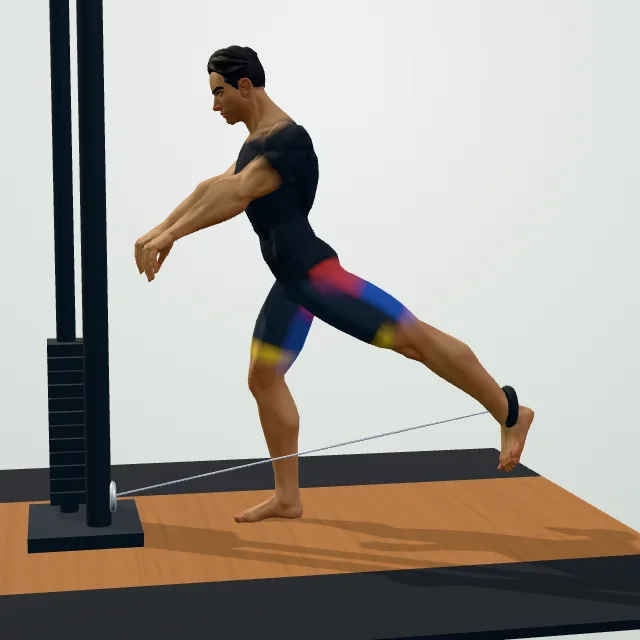
How to do it
- Attach an ankle strap to a low cable pulley and clip it to your ankle.
- Face the machine and hold the frame for balance.
- Hinge forward slightly with a soft bend in your standing knee.
- Drive your leg straight back and up, squeezing your glute at the top.
- Pause briefly at full extension.
- Return under control without letting the cable pull your leg forward fast.
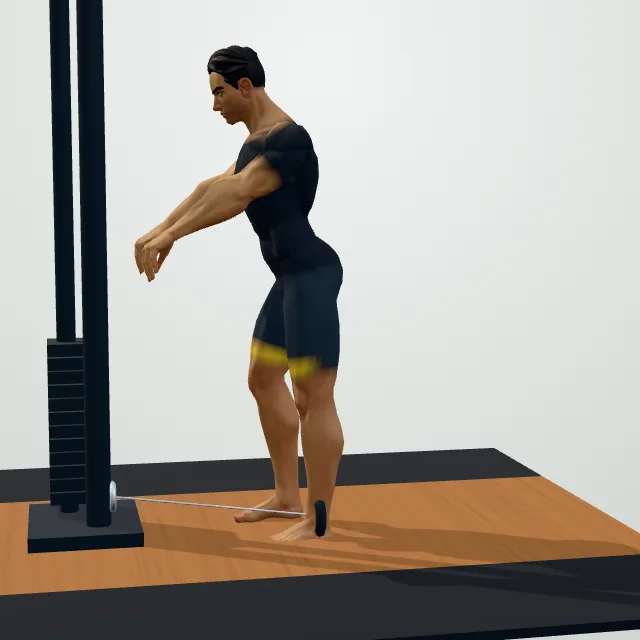
Coach cues
- Hold the frame, brace your core.
- Drive the leg back, not up high.
- Squeeze the glute at the top.
- Control the return, no swinging.
Breathing: Breathe out as you drive your leg back, breathe in as you return to the start.
Common mistakes
Make it easier / Make it harder
Sets and reps by goal
| Goal | sets | reps | Rest |
|---|---|---|---|
| Strength | 3–5 | 6–8 | 90–120 s |
| Muscle growth | 3–4 | 10–15 | 60–90 s |
| Endurance | 2–3 | 15–20 | 30–60 s |
The cable glute kickback uses an ankle strap attached to a low cable pulley, so you can extend your hip backward against constant tension from start to finish. Unlike bodyweight versions, the cable keeps the resistance steady even at the top, where most hip-extension exercises lose tension.
Muscles worked and why constant tension matters
The glutes are the prime mover, with the hamstrings assisting as your leg extends behind you. Bodyweight kickbacks (like the donkey kick) lose most of their resistance once gravity stops helping; the cable keeps pulling the whole time, which means the glute has to work through the entire range, including the fully extended top position where it contracts hardest.
Benefits
Because the load is adjustable in small increments, the cable kickback is easy to progress week to week, unlike bodyweight glute exercises where adding difficulty is more awkward. It is also a genuine single-leg isolation move, letting you fix a weaker side without the stronger leg compensating, and the standing position lets you brace against the machine for stability while focusing entirely on the hip. Many lifters also find it easier to build a strong mind-muscle connection with the glute here than in compound lifts, since there is nothing else competing for your attention.
Technique in detail
Attach an ankle strap to a low pulley and clip it around your ankle. Face the machine, hold the frame for balance, and hinge your torso forward slightly with a soft bend in your standing knee. Keeping your knee bent at roughly the same angle throughout, drive your leg straight back and up, squeezing your glute hard at the top — avoid swinging the leg using momentum or leaning your torso back to "help" the movement, both of which shift the load off the glute and onto your lower back. Return under control to the start without letting the cable slam your leg forward.
How to program it
3 sets of 12–15 reps per side works well as an isolation finisher after a compound glute exercise like the hip thrust or a squat. Keep the weight moderate — this is not a heavy-load exercise, and chasing weight usually just adds momentum and reduces the glute's share of the work. Focus on a slow, controlled tempo and a hard pause at the top instead, and train it once or twice a week alongside your main glute or leg session rather than as a standalone workout.
Variations and alternatives
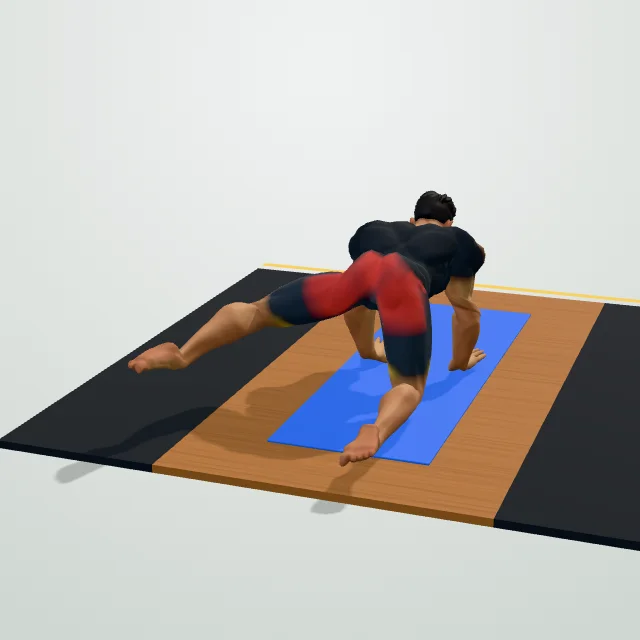
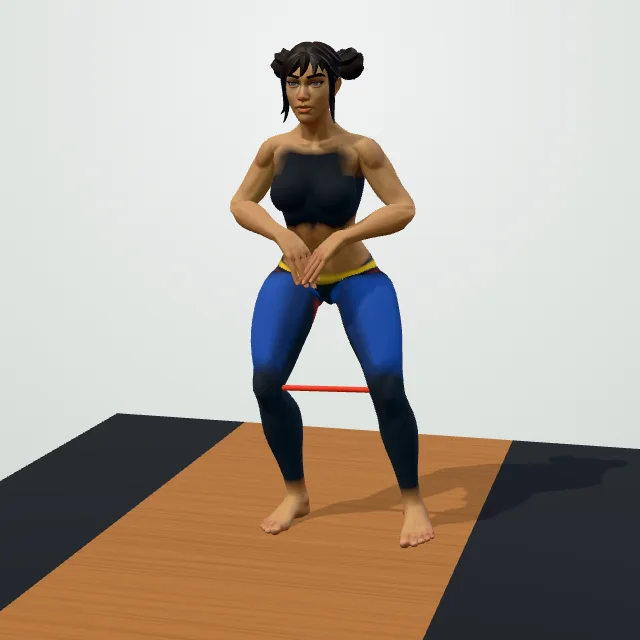
Standing on a slightly elevated platform lets you increase the range of motion by starting your leg further behind neutral. If no cable machine is available, the donkey kick trains the same hip-extension pattern on the floor using body weight, or a resistance band anchored to a low point can substitute for the cable at home.
Cable kickback vs. donkey kick
Both exercises extend the hip in a similar way, but the cable version is done standing with constant resistance, while the donkey kick is done on all fours using only body weight, with resistance concentrated near the top of the range. The cable version is easier to load progressively and keeps the working leg isolated one side at a time; the donkey kick needs no equipment and is a good starting point before moving to cables.
Safety notes
Avoid overextending your lower back to gain extra height at the top — the movement should stop once your hip is fully extended, not when your spine arches further. Anyone with lower back or hip pain should keep the weight light and prioritize a controlled tempo over range. Stop if you feel pain in the lower back or hip joint rather than a muscular burn in the glute.
Where it fits in a workout
Place the cable glute kickback near the end of a lower-body session, after your main compound lift, since it works best as a targeted finisher rather than the exercise you build a workout around. It slots naturally into a glute-focused workout alongside hip thrusts, lateral band walks, and cable pull-throughs.
Workout plans with this exercise
More exercises for glutes
Questions people ask
What muscles does the cable glute kickback work?
How do you set up a cable glute kickback?
Do cable kickbacks build glutes?
Why don't I feel cable kickbacks in my glutes?
What is a good cable glute kickback alternative?
How heavy should I go on cable kickbacks?
Are cable kickbacks better than the glute kickback machine?
General fitness information, not medical advice. Check with a doctor or physiotherapist before starting if you have a health condition, an injury or are pregnant. Stop if you feel chest pain, dizziness or sharp pain.