Back · Gym
Face pull: the cable move your shoulders are missing
Pull a rope toward your face while rotating your hands back — a small-looking exercise that does an outsized job of balancing heavy pressing work.
- Primary
- Rear deltsUpper back
- Level
- Beginner
- Type
- Isolation · Both sides together
- Sets × reps
- 3 × 12-15 reps
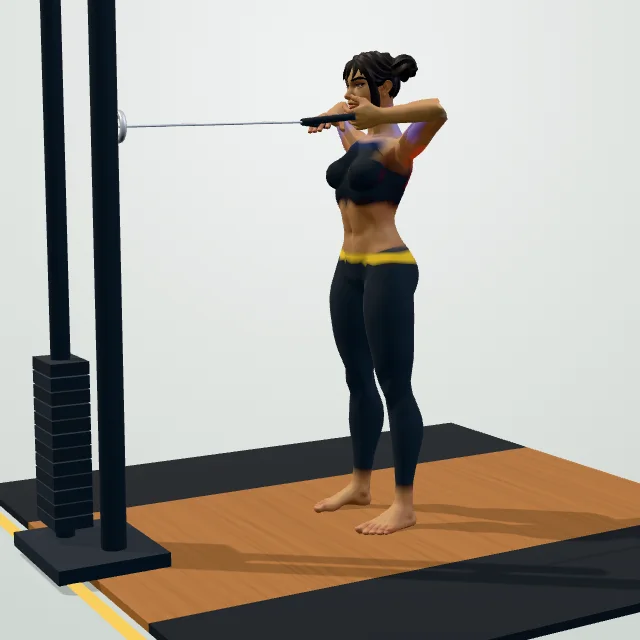
How to do it
- Set the cable to roughly eye height and attach a rope handle.
- Grip the rope, step back, and brace with a slight forward lean.
- Pull the rope toward your face, driving your elbows out to shoulder height.
- Rotate your hands so your knuckles finish pointing behind you.
- Return under control, keeping tension on the cable throughout.
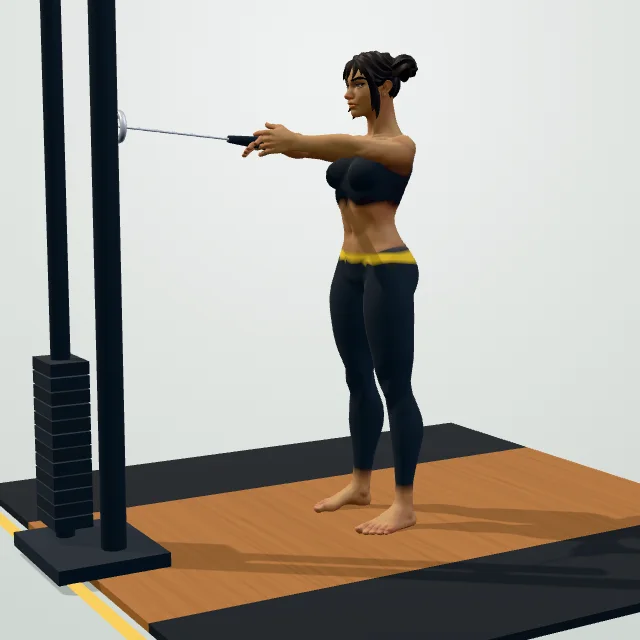
Coach cues
- Elbows high, hands to your ears.
- Finish with knuckles pointing back.
- Keep upper arms at shoulder height.
- Control the return, no swinging.
Breathing: Breathe out as you pull the rope to your face, breathe in as you return to the start.
Common mistakes
Make it easier / Make it harder
Sets and reps by goal
| Goal | sets | reps | Rest |
|---|---|---|---|
| Strength | 3–5 | 6–8 | 90–120 s |
| Muscle growth | 3–4 | 10–15 | 60–90 s |
| Endurance | 2–3 | 15–20 | 30–60 s |
What muscles does the face pull work
The main targets are your rear delts and the muscles of your upper back that pull your shoulder blades together, plus your traps helping to control the shoulder blades. The finishing external rotation — hands turning so your knuckles point behind you — also recruits the small rotator cuff muscles that stabilize the shoulder joint. Almost nobody trains external rotation directly with other common exercises, which is exactly the gap the face pull fills. Because the load is light and the range of motion is forgiving, it is also an exercise nearly anyone can do regardless of training age, from someone new to the gym to an experienced lifter managing a cranky shoulder.
Benefits
Because most gym programs are heavy on pressing (bench press, overhead press, push-ups) and comparatively light on rear delt and external rotation work, shoulders can drift into a rounded, internally rotated posture over time. Regular face pulls build the opposing muscles, which can help support healthier shoulder positioning and is one reason the exercise shows up so often in "shoulder health" and "prehab" routines rather than only in aesthetic-focused programs.
Technique: cable height, elbow path and the finish
Set the cable pulley to roughly upper-chest to eye height and attach a rope. Grip the rope with an overhand or neutral grip, step back to create tension, and stand with a slight forward lean and braced core. Pull the rope toward your face by driving your elbows out and back at shoulder height — think "elbows high, hands to ears" rather than pulling straight back at chest height, which turns it into a row instead of a face pull. As your hands approach your face, rotate them so your knuckles finish pointing behind you; this external rotation at the end is what separates a face pull from a simple rear delt row and is the part people skip most often when the weight is too heavy.
Keep your upper arms roughly parallel to the floor throughout — if your elbows drop below shoulder height, you have gone too heavy or lost tension in your upper back. You should feel this across your rear shoulders and upper back, not in your neck or lower back.
How to program face pulls
Because the target muscles respond well to higher reps and light-to-moderate load, 2–3 sets of 12–15 reps with a controlled 1-second pause at the finish works well, 2–3 times a week. Face pulls are commonly placed either as a warm-up before pressing work to "wake up" the rear delts and rotator cuff, or at the end of a shoulder or back session as a finisher — both placements are reasonable, and doing it both ways across the week is common practice. It fits naturally into a shoulder workout or a back and biceps session.
Alternatives without a cable machine
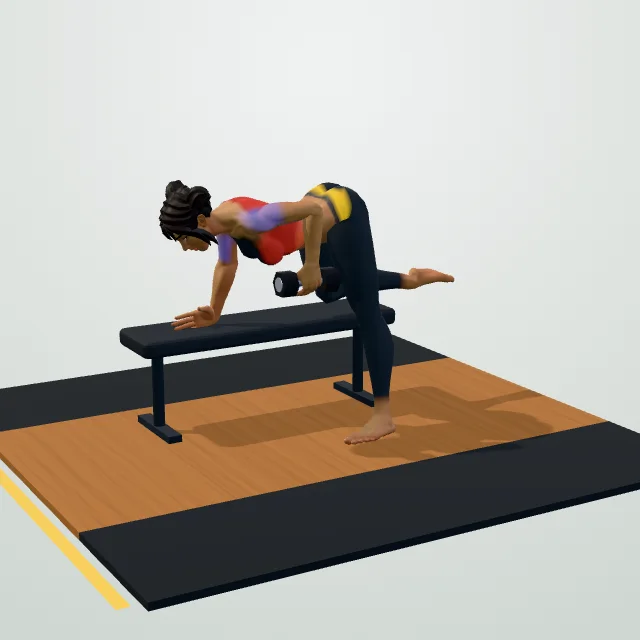
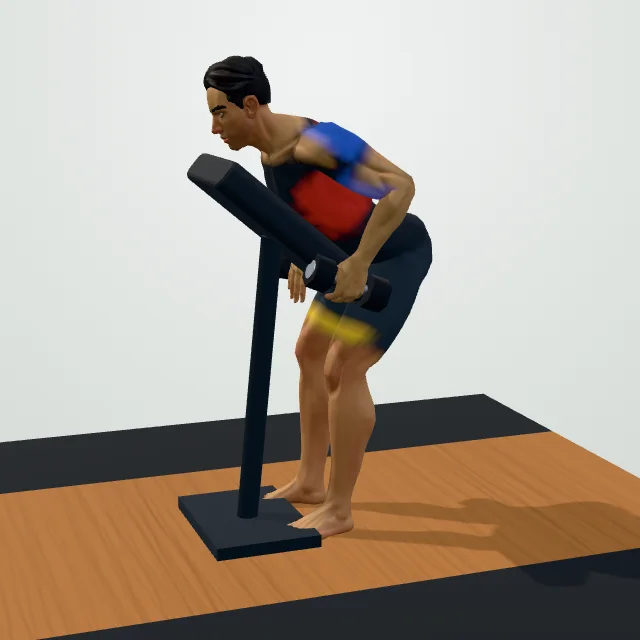
A band pull-apart trains a similar horizontal pulling pattern with a resistance band and works well at home or as a warm-up. A prone Y-T-W raise done face-down on a bench or floor targets the same rear delt and upper back muscles without any equipment at all, and a rear delt fly is a close dumbbell substitute if a cable station is not free.
Safety
Keep the load light — this is not meant to be a heavy strength exercise, and going too heavy usually just removes the external rotation that makes it useful. If you feel pinching at the front of the shoulder rather than a stretch and squeeze across the back, lower the cable height slightly or check that your elbows are not drifting too low. Anyone recovering from a shoulder injury should get individual guidance from a physiotherapist before adding this or any rotator cuff work back in.
Questions people ask
What muscles do face pulls work?
Is a face pull a back or shoulder exercise?
Are face pulls a push or pull exercise?
How heavy should face pulls be?
Can I do face pulls without a cable machine?
How often should I do face pulls?
General fitness information, not medical advice. Check with a doctor or physiotherapist before starting if you have a health condition, an injury or are pregnant. Stop if you feel chest pain, dizziness or sharp pain.