Back · Gym
Lat pulldown: build a wider back with a wide grip
A cable-machine exercise that pulls a bar down to your upper chest, training the same movement pattern as a pull-up with adjustable resistance. Here is the grip width and technique that build a wider back.
- Primary
- Lats
- Secondary
- BicepsUpper backRear delts
- Level
- Beginner
- Type
- Compound · Both sides together
- Sets × reps
- 3 × 8-12 reps
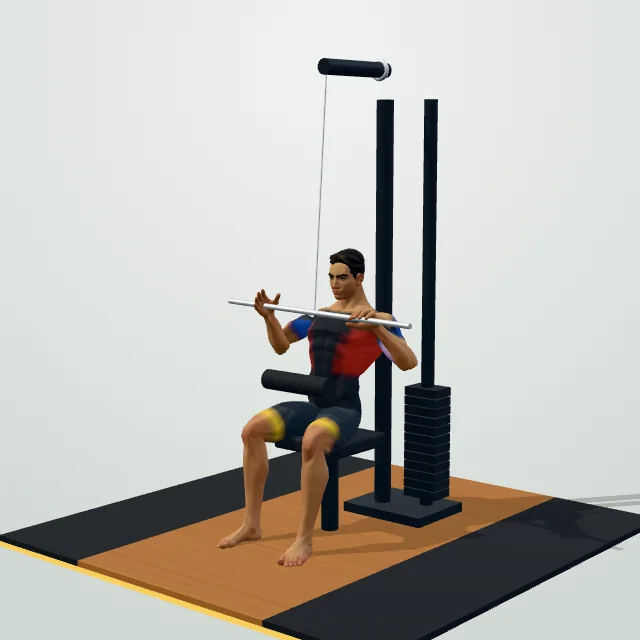
How to do it
- Sit with thighs secured under the pad, grip the bar wider than shoulder-width.
- Lean your torso back slightly, chest up.
- Pull the bar down toward your upper chest, elbows driving down and back.
- Squeeze your shoulder blades together as the bar arrives.
- Control the bar back up to a full stretch.
- Reset your torso lean between reps.
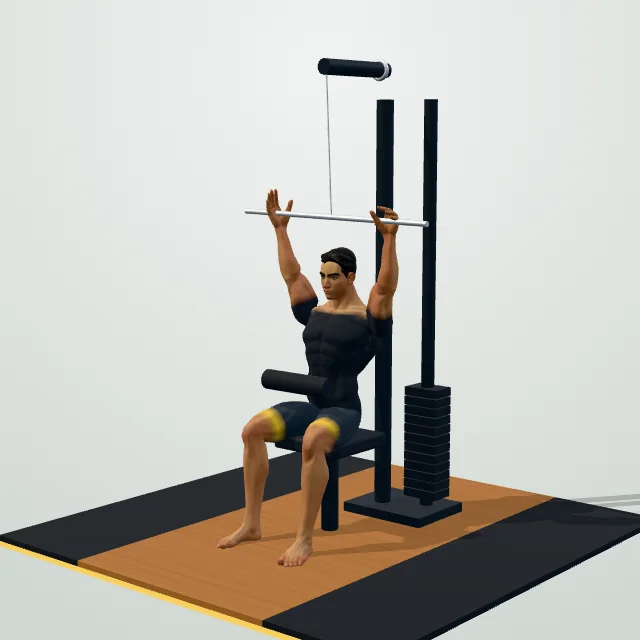
Coach cues
- Grip wide, lean back slightly.
- Pull elbows down and back.
- Squeeze your shoulder blades at the bottom.
- Control the bar back up, full stretch.
Breathing: Breathe out as you pull the bar down, breathe in as you let it rise.
Common mistakes
Make it easier / Make it harder
Sets and reps by goal
| Goal | sets | reps | Rest |
|---|---|---|---|
| Strength | 3–5 | 3–6 | 2–4 min |
| Muscle growth | 3–4 | 6–12 | 90–150 s |
| Endurance | 2–3 | 15–20 | 30–60 s |
The lat pulldown is a seated cable exercise where you pull a bar down from overhead to your upper chest, training the same vertical-pulling pattern as a pull-up but with a stack of weight you can adjust to your current strength. It is one of the most common ways to build back width, especially for people who cannot yet do bodyweight pull-ups.
What muscles does the lat pulldown work
The lats are the prime mover, pulling your upper arms down and in toward your torso, with the biceps, upper back and rear delts assisting. A wide grip emphasizes the lats and the width of the upper back slightly more, which is the direct answer to "what does wide grip lat pulldown work" — it is not a fundamentally different exercise from a narrower grip, just a shift in emphasis.
Benefits of the lat pulldown
- Adjustable resistance, letting beginners build pulling strength before they can perform a full bodyweight pull-up.
- Builds the same movement pattern as the pull-up, so consistent lat pulldown training genuinely does help with pull-ups, though it does not fully replace practicing the pull-up itself.
- Seated and stable, removing the grip-endurance and full-bodyweight demand of a hanging exercise, so you can focus purely on the back muscles.
- Multiple attachment options — wide bar, close V-handle, or single handle — let you vary the angle and emphasis across sessions.
Lat pulldown vs pull-up
The pull-up lifts your entire body weight and demands more grip and core stability, since nothing supports your torso. The lat pulldown pulls a bar down while you stay seated, letting you set the resistance to a level you can control for the reps you want, which makes it a useful entry point and volume tool alongside pull-up training. Is lat pulldown the "same" as a pull-up? The movement pattern is very similar, but the pull-up trains full-bodyweight pulling strength and stability that the seated pulldown does not directly replicate — the two work well together rather than as substitutes.
How to do the lat pulldown correctly
Setup
Sit with your thighs secured under the pad and grip the bar wider than shoulder-width, hands roughly even on both sides. Lean your torso back slightly, around 10–20 degrees, keeping your chest up rather than rounding forward.
The pull
Pull the bar down toward your upper chest by driving your elbows down and back, squeezing your shoulder blades together as the bar arrives. Avoid leaning back further and further to help the bar down — a small, controlled lean is fine, but swinging your whole torso turns the exercise into momentum rather than a strict lat contraction.
What you should feel
You should feel the pull concentrated across your lats and upper back, with the biceps assisting toward the bottom. If you feel it mainly in your arms or shoulders, check that your elbows are driving down and back rather than just bending.
Sets, reps and how often to train it
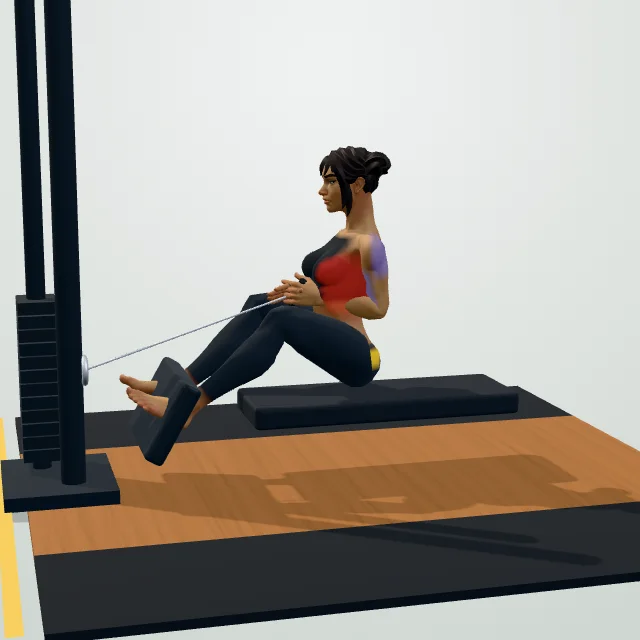
For back development, 3 sets of 8–12 reps with 60–90 seconds of rest works well, using a weight that leaves 1–3 reps in reserve rather than requiring a big torso lean to finish the set. Train pulling movements 2 times a week, pairing this with a horizontal row such as the seated cable row for balanced back development. See how many sets and reps and progressive overload for more detail, or the upper/lower split, which includes this exercise.
Grip variations and alternatives
A wide overhand grip emphasizes back width and the outer lats; a narrower or neutral grip, as in the close-grip lat pulldown, shifts more work onto the lower lats and biceps and often allows a deeper, more complete pull. Behind-the-neck pulldowns are best avoided for most lifters, since they place the shoulder in a more vulnerable position for little extra benefit. If you have no machine, the negative pull-up or an assisted or band-supported pull-up can substitute.
Safety and who should modify it
Avoid pulling the bar behind your neck, which stresses the shoulder joint in a position most people do not need for effective back training. Anyone with shoulder impingement or a rotator cuff issue should keep the bar in front of the body and stop the set if pulling causes pinching pain. If you are pregnant, recovering from a shoulder injury, or new to resistance training, start with a light weight to learn the elbow-driven pulling pattern before increasing load.
Questions people ask
What does the lat pulldown work?
Is the lat pulldown the same as a pull-up?
Does the lat pulldown help with pull-ups?
Is the lat pulldown a compound exercise?
What grip width is best for lat pulldowns?
How many lat pulldowns should I do?
Why should I avoid pulling the bar behind my neck?
General fitness information, not medical advice. Check with a doctor or physiotherapist before starting if you have a health condition, an injury or are pregnant. Stop if you feel chest pain, dizziness or sharp pain.