Cardio · Home or gym
Jump rope: cardio and coordination with small, fast jumps
Jump rope turns a few feet of floor into a full cardio session. Here is the form, rhythm and programming that make it work without wrecking your shins.
- Primary
- Calves
- Secondary
- Front deltsForearmsQuads
- Level
- Beginner
- Type
- Compound · Both sides together
- Sets × reps
- 4 × 60 s
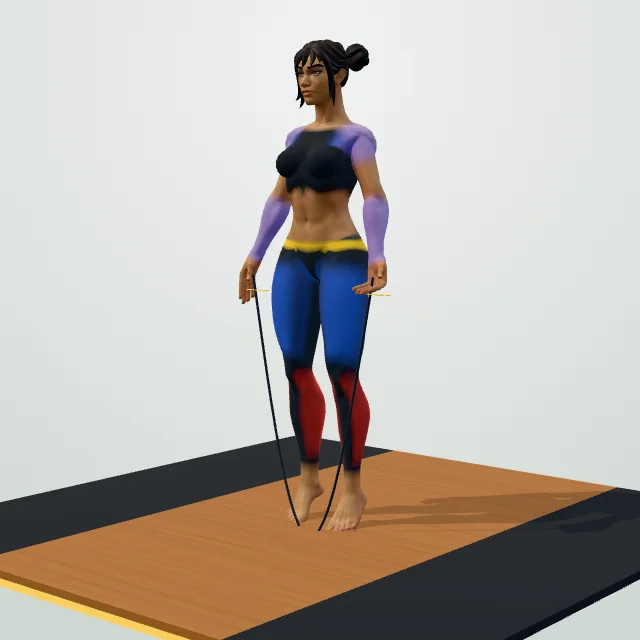
How to do it
- Hold a rope handle in each hand, arms relaxed at your sides.
- Swing the rope overhead using small circles from the wrists.
- Jump just enough to let the rope pass under your feet.
- Land softly on the balls of your feet, knees slightly bent.
- Keep a steady rhythm as the rope comes back around.
- Reset your grip if needed and repeat for the set time.
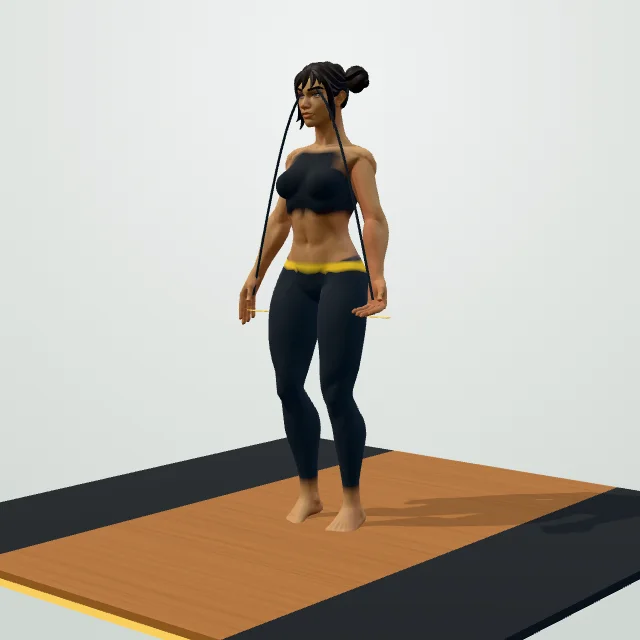
Coach cues
- Elbows close to your sides.
- Turn the rope from your wrists.
- Jump just high enough to clear it.
- Land soft on the balls of your feet.
Breathing: Breathe in a steady rhythm with your jumps; do not hold your breath.
Common mistakes
Make it easier / Make it harder
Jump rope is one of the most efficient cardio tools there is: a rope, a few feet of floor, and short, fast jumps that spike your heart rate in minutes. It has stayed a staple in boxing gyms and home workouts alike because it trains footwork, coordination and conditioning at the same time, with equipment that fits in a bag.
What muscles does jump rope work?
Each small hop is powered mainly by the calves, which do the repeated quick push-off that keeps you bouncing between rope turns. Your quads absorb the landing and help reset for the next jump, while the forearms and wrists do the actual work of turning the rope — not the shoulders or upper arms, which stay fairly still. The front of the shoulders and the upper back hold your arm position steady turn after turn, and your core braces to keep your torso upright instead of bobbing with each jump.
Benefits
- Fast cardio. Because the calves and heart work continuously, even a few minutes of jump rope raises your heart rate faster than an equivalent walk or light jog.
- Coordination and footwork. Timing the jump to the rope trains rhythm and reaction speed, which is why boxers and other combat athletes use it as a staple warm-up.
- Bone and tendon loading. The repeated light impact through the lower leg is a mild, manageable stress that can support bone density over time, alongside other weight-bearing activity.
- Portable and cheap. A rope and a couple of square metres of floor is all you need, at home, in a hotel room or at the gym.
Technique: wrist turn, jump height and posture
Stand tall with your elbows close to your sides, forearms angled slightly out, and turn the rope with small circles from the wrists — not big swings from the shoulders. Jump just high enough to let the rope pass under your feet, an inch or two off the floor, and land softly on the balls of your feet with your knees slightly bent to absorb the impact. Keep your core braced and your gaze forward rather than down at your feet, which helps you find a steady rhythm instead of chasing the rope. The most common technical error is jumping far too high or swinging the rope with the whole arm, both of which tire you out fast and throw off your timing; if you keep catching the rope on your feet, slow the pace down and shrink the jump height before trying to speed back up.
How to program jump rope
| Use | Work | Rest |
|---|---|---|
| Beginner cardio | 30-60 sec, steady pace | 30-60 sec, repeat 6-10 rounds |
| HIIT / boxing-style intervals | 30-60 sec, hard effort | 15-30 sec, repeat 8-15 rounds |
| Warm-up | 1-2 sets of 60 sec, easy pace | none, move into the workout |
As a standalone cardio session, jump rope works well built around an interval timer, alternating work and rest rounds rather than one long continuous set, and it fits naturally into plans like the 15-minute HIIT workout. Watching your heart-rate zone during a set is a useful check — a hard 30-60 second round should push most people into zone 4 or 5, while an easy warm-up round should stay closer to zone 2-3. For calorie tracking, the calories burned calculator gives an honest estimate rather than an inflated one; jump rope burns a meaningful amount for the time invested, but it is not a shortcut around overall energy balance.
Variations and low-impact options
New to it or working around knee or shin sensitivity: start with a slower single bounce per rope turn and keep the hop height minimal, or practise the timing without a rope at all — the "jump rope without rope" drill — before adding the rope back in. Once the basic timing feels automatic, you can progress to alternating-foot jumps, high-knee jumps, or double unders, where the rope passes twice per jump; each of these raises the coordination and conditioning demand without changing the basic wrist-turn technique. A weighted rope adds extra work for the forearms and shoulders and can be a useful progression once your footwork is solid, but it is not necessary to get a good cardio effect.
Jump rope vs. running and other cardio
Minute for minute, jump rope tends to raise your heart rate faster than an easy jog because the calves and coordination demand are higher, which makes it efficient for short sessions when time is tight. Running builds more overall aerobic endurance over longer efforts and has less repetitive calf loading per minute, so the two complement each other well rather than replacing one another. Compared with high knees or jumping jacks, jump rope adds the coordination challenge of timing the rope, which is part of why it holds attention better for many people over a long set.
Safety and who should modify it
Use a slower, lower-impact pace if you have knee, shin or calf pain, are new to higher-impact cardio, or are pregnant — check with a doctor or physiotherapist first if pain is present.
Jump rope is a repeated small-impact exercise through the calves and shins, so build up total time gradually rather than jumping straight into long sessions, especially on hard flooring. A rubber mat can reduce joint stress if you train on concrete or tile. Stop if you feel sharp joint pain, chest pain, dizziness or unusual breathlessness, and progress your total weekly time in small steps of about 5-10%.
More exercises for cardio
Questions people ask
What muscles does jump rope work?
Is jump rope a good cardio workout?
Is jump rope bad for your knees?
How do I start jumping rope as a beginner?
Jump rope vs. running — which is better?
Can I practise jump rope without a rope?
Does jumping rope help you lose weight?
General fitness information, not medical advice. Check with a doctor or physiotherapist before starting if you have a health condition, an injury or are pregnant. Stop if you feel chest pain, dizziness or sharp pain.