Cardio · Home, no equipment
Tuck jumps: explosive power, knees to chest
Tuck jumps ask you to jump straight up, pull both knees to your chest at the peak, then land soft and reset. It is one of the more demanding plyometric drills, so landing quality matters more than height.
- Primary
- QuadsHip flexors
- Level
- Advanced
- Type
- Compound · Both sides together
- Sets × reps
- 3 × 8 reps
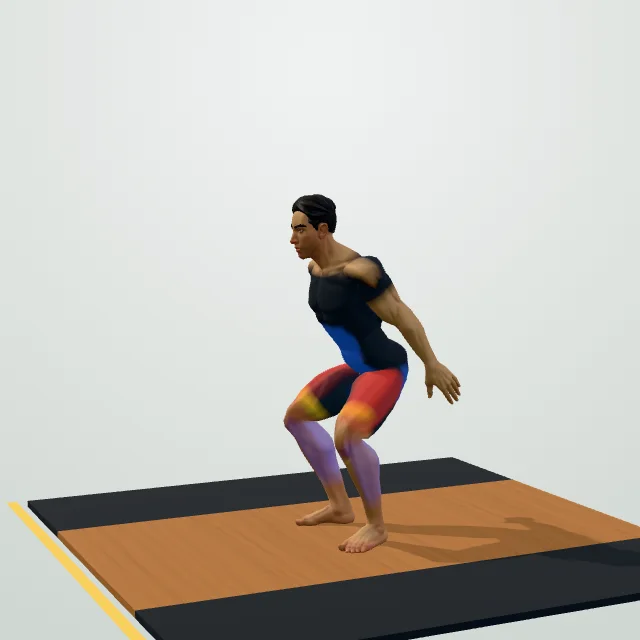
How to do it
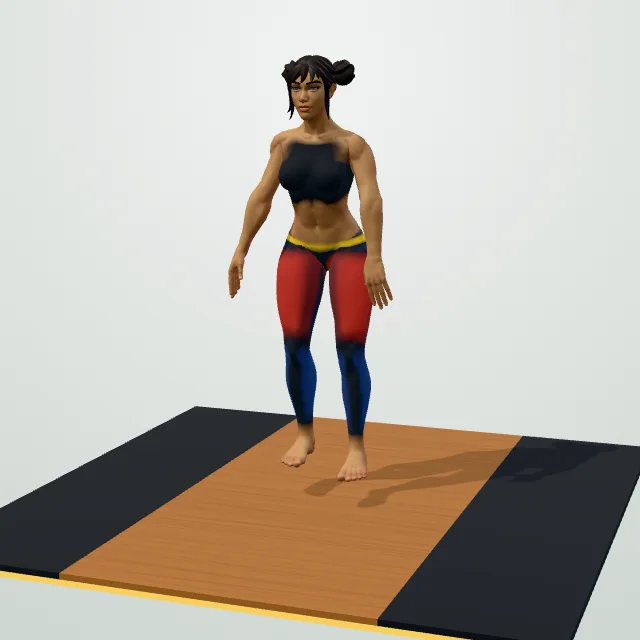
- Stand feet hip-width apart, knees slightly bent.
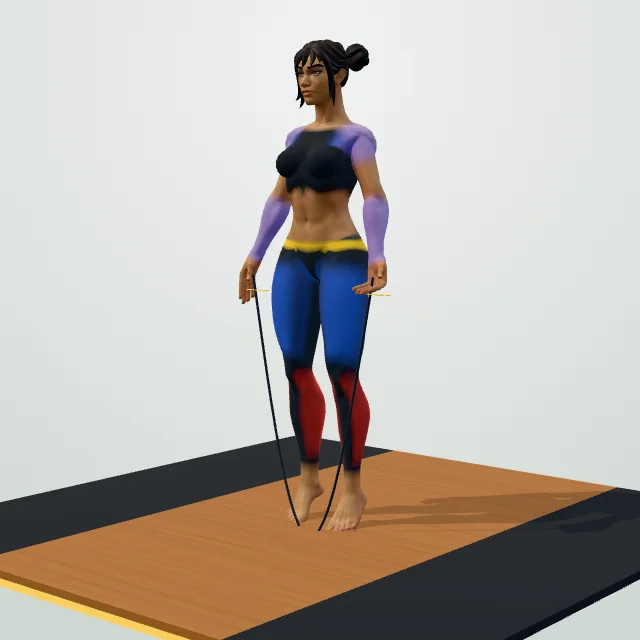
- Swing your arms back and bend your knees to load the jump.
- Jump straight up, driving both knees toward your chest.
- Extend your legs back down before landing.
- Land softly on the balls of your feet, knees bending.
- Reset your stance before the next rep.
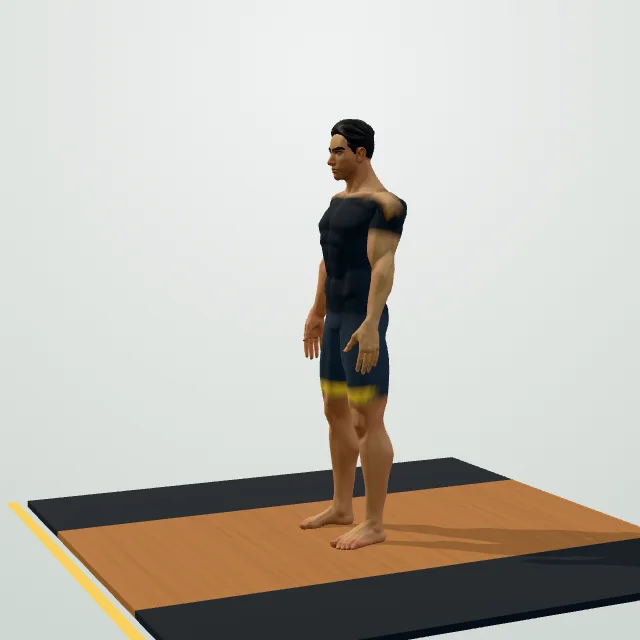
Coach cues
- Load your arms and knees, then jump.
- Drive both knees to your chest.
- Extend your legs before you land.
- Land soft, reset before the next jump.
Breathing: Breathe out sharply as you jump, and breathe in as you land and reset.
Common mistakes
Make it easier / Make it harder
Sets and reps by goal
| Goal | sets | reps | Rest |
|---|---|---|---|
| Strength | 4–5 | 3–6 | 2–4 min |
| Muscle growth | 3–4 | 6–12 | 90–150 s |
| Endurance | 2–3 | 15–25+ | 30–60 s |
Tuck jumps take a vertical jump and add a mid-air pull: at the top of the jump, both knees drive up toward your chest before your feet reset for landing. It is a demanding plyometric exercise used to build explosive power and to assess landing control, which is why coaches often watch tuck jump technique as closely as height.
What muscles do tuck jumps work?
The quads and hip flexors drive the explosive jump and the knee tuck at the top, while the glutes add power through the hip extension of the jump itself. The abs and hip flexors work together hard to pull the knees up quickly and then reset the legs before landing, and the calves handle the final push-off and the impact absorption on landing. Because the movement is fast and repeated, tuck jumps train your ability to produce and absorb force quickly — a different quality from a slow, heavy squat.
Benefits
- Explosive lower-body power. Tuck jumps train fast force production in the hips and legs, which can carry over to sprinting, jumping and change-of-direction sports.
- Landing assessment. Coaches and physiotherapists sometimes use a timed set of tuck jumps (a tuck jump assessment) to check landing symmetry and control, useful feedback even outside a clinical setting.
- Core and hip flexor demand. Pulling both knees up quickly and repeatedly works the hip flexors and abs harder than most other jumping drills.
- No equipment. Just enough floor space and a ceiling high enough to jump safely.
Technique: the jump, the tuck and the landing
Stand with feet hip-width apart, knees slightly bent. Swing your arms down and back, then explosively extend your hips and knees to jump straight up, driving both knees up toward your chest at the peak of the jump. Extend your legs back down before you land, landing softly on the balls of your feet with your knees bending to absorb the impact, then immediately reset your stance before the next rep. The most common technical fault is landing stiff-legged or with the knees caving inward, both of which put unnecessary stress through the knees — a soft, symmetrical landing matters more than tucking the knees higher. If you cannot land under control every rep, you are going too fast or jumping too high for your current level.
How to program tuck jumps
| Goal | Sets | Reps | Rest |
|---|---|---|---|
| Power development | 3-4 | 5-8 | 90 sec, full recovery |
| Conditioning finisher | 2-3 | 20-30 sec of continuous jumps | 45-60 sec |
Because tuck jumps train explosive power, low reps with full rest work better than fatiguing sets — landing quality drops fast once your legs tire, and a sloppy landing is where jumping injuries happen. Place tuck jumps early in a workout, before heavier lifting, while your legs are fresh and your landing mechanics are sharp. Two sessions a week is enough for most people; build a base with jump squats and box jumps before adding tuck jumps if you are new to plyometric training.
Variations and progressions
Beginners should start with a smaller knee lift — closer to a high jump squat than a full tuck — before chasing a high knee-to-chest position, since landing control matters more than tuck height. A single-leg tuck jump progression exists but is significantly more advanced and demands solid two-footed landing control first. If knee or ankle pain rules out jumping altogether, a mountain climber trains a similar hip flexor and core pattern without any impact.
Safety and who should modify it
Reduce the knee height or avoid tuck jumps if you have knee, ankle or Achilles pain, or are early in recovery from a lower-body injury — check with a doctor or physiotherapist first.
Tuck jumps are one of the higher-impact plyometric exercises on this site, landing hard and repeatedly through the knees and ankles. Warm up thoroughly first, keep reps low with full rest between sets, and stop the moment your landings start losing symmetry or control, since fatigued landing mechanics are when most jumping injuries happen.
More exercises for cardio
Questions people ask
What muscles do tuck jumps work?
How do you do a tuck jump properly?
What are tuck jumps good for?
Are tuck jumps hard on the knees?
Are tuck jumps good for beginners?
How many tuck jumps should I do?
What is a tuck jump assessment?
General fitness information, not medical advice. Check with a doctor or physiotherapist before starting if you have a health condition, an injury or are pregnant. Stop if you feel chest pain, dizziness or sharp pain.