Cardio · Home, no equipment
Marching in place: simple, low-impact cardio
Marching in place lifts your knees one at a time while you stay on the spot, raising your heart rate without any jumping or impact. It is a good starting point for cardio if walking or running is not comfortable yet.
- Primary
- Hip flexorsQuads
- Level
- Beginner
- Type
- Compound · Alternate sides
- Sets × reps
- 2 × 60 s
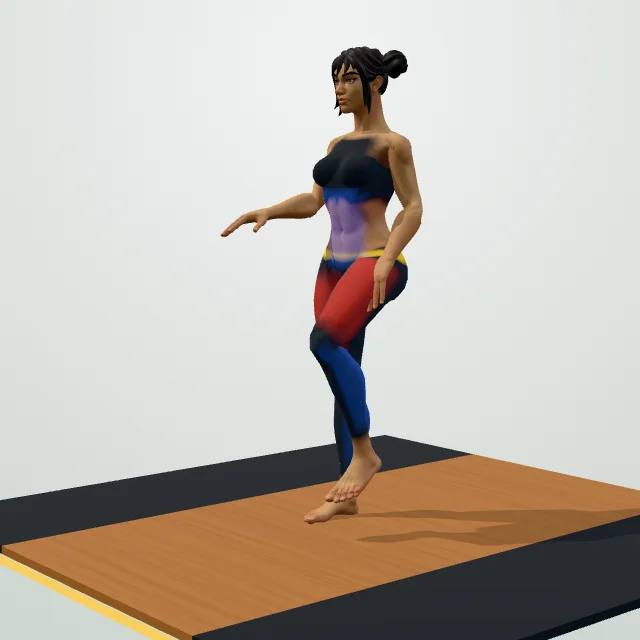
How to do it
- Stand tall, feet hip-width apart.
- Lift one knee up toward waist height.
- Swing the opposite arm forward as you lift.
- Lower that foot back down under control.
- Repeat on the other side, keeping a steady rhythm.
- Continue for time, breathing steadily throughout.
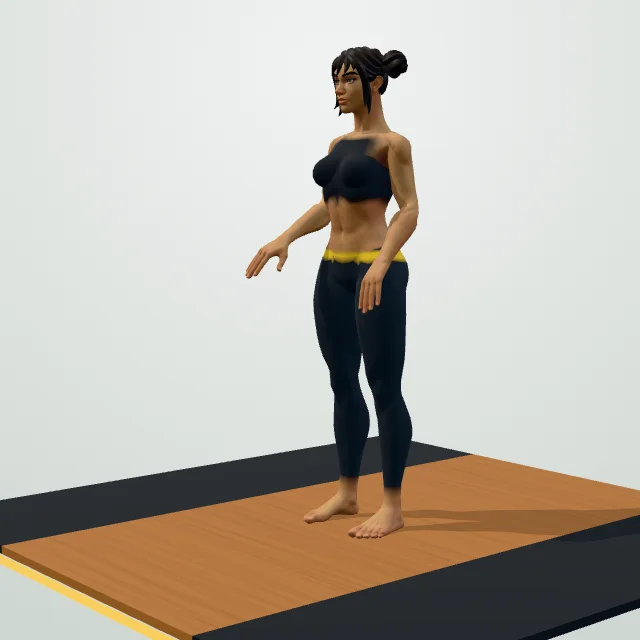
Coach cues
- Stand tall, lift your knee up.
- Swing your opposite arm forward.
- Keep a steady, even rhythm.
- Breathe steadily as you go.
Breathing: Breathe steadily and rhythmically in time with your steps, never holding your breath.
Common mistakes
Make it easier / Make it harder
Marching in place means lifting your knees one at a time while staying on the same spot, swinging your arms as you go, instead of traveling forward like walking. It raises your heart rate with no jumping and very little impact on your joints, which makes it a common starting point for low-impact cardio at home.
What muscles does marching in place work?
Lifting your knee uses the hip flexors and quads of the lifted leg, while your calves and abs work on the standing side to keep you balanced and upright. It is primarily a cardiovascular exercise rather than a strength one — the main effect is raising your heart and breathing rate, with light, repeated muscle work in the hips and legs rather than heavy loading of any single muscle.
Marching in place benefits
- Very low impact. One foot stays in contact with the floor at all times, unlike jogging or jumping jacks, which suits joints that do not tolerate impact well.
- No equipment or space needed. It needs no equipment and works in a small area of floor space, indoors, in almost any weather.
- A gentle way to raise heart rate. It is a useful warm-up before other exercise, or a standalone light cardio session on an easier day.
- Easy to sustain. Because it is low intensity, most people can keep marching for longer continuous stretches than higher-impact cardio.
How to march in place with good form
Stand tall with your feet hip-width apart, then lift one knee up toward waist height while swinging the opposite arm forward, the same natural cross-body pattern as walking. Bring that foot back down and repeat on the other side, keeping a steady, even rhythm. Keep your chest up and your core lightly braced rather than leaning back, and let your arms swing naturally instead of staying still at your sides — the arm swing is part of what raises your heart rate.
You can march at a gentle pace for a warm-up or a slower, seated session, or lift your knees higher and pump your arms harder to increase the intensity once you are comfortable with the basic pattern.
How to program marching in place
| Level | Sets | Time | Rest |
|---|---|---|---|
| Beginner / warm-up | 2 | 60 sec | 30-45 sec |
| Building endurance | 2-4 | 60-90 sec | 20-30 sec |
| Continuous cardio session | 1 | 10-20 minutes at an easy, steady pace | - |
General activity guidelines suggest building toward 150-300 minutes of moderate activity a week, and marching in place can count toward that total alongside walking, cycling or other light cardio. Start with short bouts and gradually add time or pace as your fitness improves, rather than jumping straight to a long session. Tracking your effort with our heart rate zone calculator can help you keep this at an easy, sustainable pace.
Marching in place vs walking
Marching in place raises your heart rate in a similar way to walking, since it uses the same muscles at a similar pace, but it does not move you forward and so does not carry the same impact from repeated forward steps or the balance demands of changing terrain. It is a reasonable substitute for walking when space, weather or mobility make walking outside difficult, though walking outdoors adds extra benefits like varied terrain and fresh air that marching in place cannot fully replace.
Variations and progressions
If standing marching is too demanding, march seated in a sturdy chair, lifting your knees and swinging your arms while seated. As fitness improves, raise your knees higher, add a bigger arm swing, or progress to high knees for a faster, more intense version of the same pattern. A step-up onto a low step is another gentle way to add more leg work once marching in place feels easy.
Safety and who should take extra care
Marching in place is low impact and generally safe for most people, but it is still exercise — build up duration gradually rather than starting with a long session.
Stop and rest if you feel chest pain, dizziness, or unusual breathlessness beyond normal effort. If you have a heart condition, high blood pressure, or a balance problem, check with a doctor before starting a new cardio routine, and hold a wall or chair nearby if you feel unsteady. See our exercise for seniors guide for more low-impact options.
More exercises for cardio
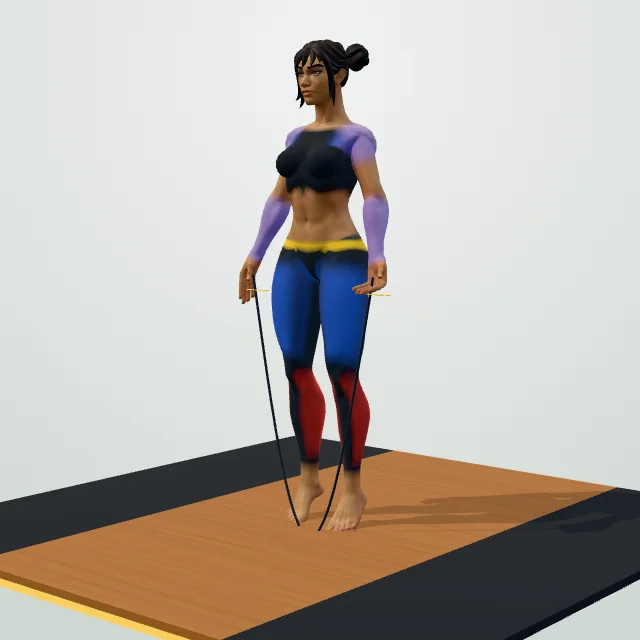
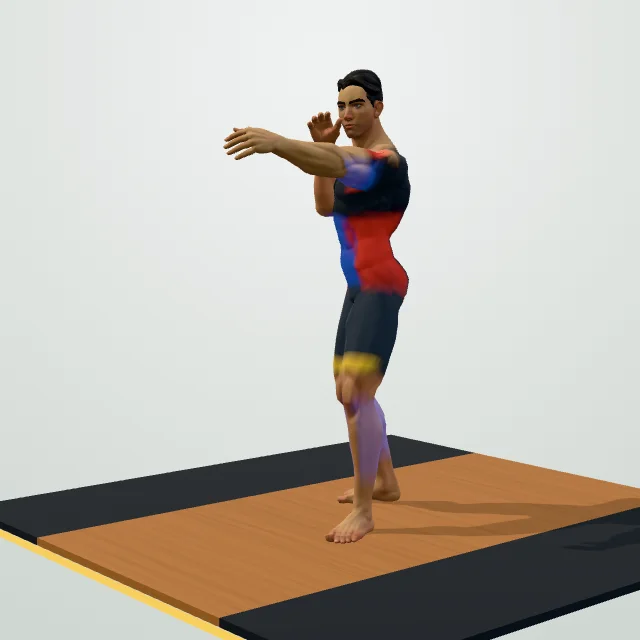
Questions people ask
Is marching in place good exercise?
Does marching in place count as steps?
Is marching in place as good as walking?
What muscles does marching in place work?
Can you lose weight marching in place?
Is marching in place good for seniors?
How long should I march in place?
General fitness information, not medical advice. Check with a doctor or physiotherapist before starting if you have a health condition, an injury or are pregnant. Stop if you feel chest pain, dizziness or sharp pain.