Cardio · Home, no equipment
High knees: running in place with drive
High knees is a running-in-place drill that trades stride length for a fast, high knee lift. Here is the form that makes it a real cardio and running-mechanics tool, not just fast jogging on the spot.
- Primary
- Hip flexorsQuads
- Level
- Beginner
- Type
- Compound · Alternate sides
- Sets × reps
- 3 × 30 s
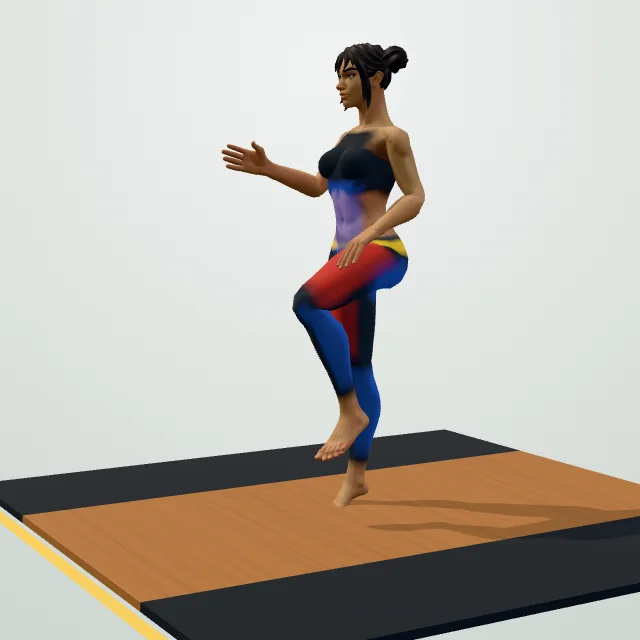
How to do it
- Stand tall with a slight forward lean from the ankles.
- Drive one knee up to hip height as the opposite arm drives forward.
- Land on the ball of your foot under your hips.
- Switch legs quickly as the raised foot comes down.
- Keep your chest up and core braced throughout.
- Repeat at a quick, controlled cadence.
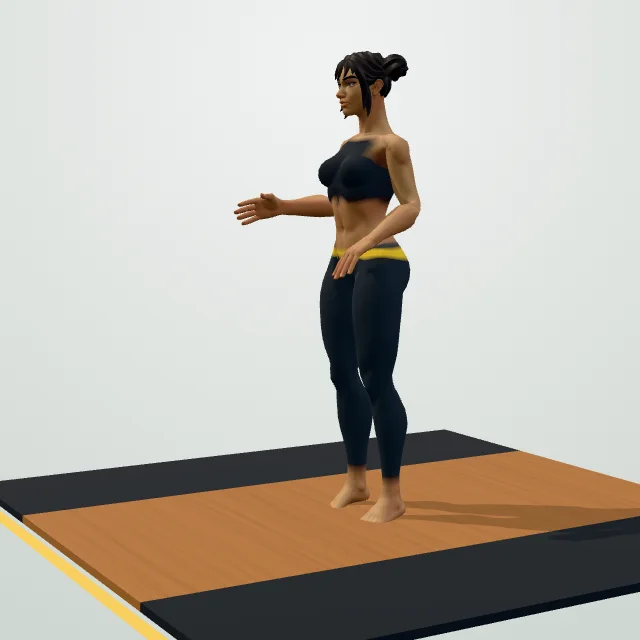
Coach cues
- Chest up, slight forward lean.
- Drive the knee to hip height.
- Land soft on the ball of your foot.
- Switch legs fast, stay tall.
Breathing: Breathe quickly and rhythmically with the pace; exhale sharply on each knee drive.
Common mistakes
Make it easier / Make it harder
High knees looks like jogging on the spot, but the point is different: instead of covering distance, you drive each knee up toward hip height as fast as you can, then reset. It is a staple warm-up and running-mechanics drill because it isolates the part of a running stride — the knee drive — that most jogging never trains directly.
What muscles do high knees work?
Every rep starts with the hip flexors, which pull the thigh up toward your chest, and the quads, which extend the lower leg as it comes back down. The standing leg's calves handle the quick push-off that keeps you bouncing between reps, while the abs brace to keep your torso upright instead of leaning back as your knees rise. Because you alternate legs quickly, high knees also asks your glutes to control balance on a single leg for a split second on every rep — a small but real stability demand that steady jogging does not create.
Benefits
- Running mechanics. Coaches use high knees to reinforce a strong knee drive and upright posture, both of which carry over into sprint and distance running form.
- Fast heart-rate spike. The quick, repeated hip flexor drive raises your heart rate quicker than an equivalent jog in place, making it efficient for short cardio bursts.
- Hip flexor activation. As a warm-up, high knees wakes up the hip flexors before a run or a leg session, when a cold hip flexor is more prone to feeling tight.
- No equipment or space. A couple of square metres of floor is all you need, indoors or out.
Technique: knee height, posture and cadence
Stand tall with a slight forward lean from the ankles, not the waist. Drive one knee up until your thigh is roughly parallel to the floor — hip height, not just a lift off the ground — while the opposite arm drives forward, then switch legs quickly as the raised foot comes back down under your hips. Land on the ball of your foot each time rather than the heel, and keep your chest up and core braced so your torso stays upright instead of leaning back to compensate for the knee drive. The most common technical error is doing a fast shuffle without ever bringing the knees to hip height — that turns the drill into low-value jogging in place rather than the knee-drive drill it is meant to be. If knee height is hard to judge, briefly touch your palms at hip height in front of you and try to tap each knee against them.
How to program high knees
| Use | Work | Rest |
|---|---|---|
| Running warm-up | 20-30 sec | none, move into strides or the run |
| Cardio interval / HIIT | 20-30 sec, hard effort | 20-40 sec, repeat 6-10 rounds |
| Conditioning finisher | 3 sets of 30 sec | 30-45 sec between sets |
As a warm-up, high knees works best right before a run or a leg-dominant workout, since it primes the exact hip flexor and knee-drive pattern you are about to use. As a standalone cardio drill, short, hard intervals suit it better than long steady sets — a 20-30 second maximum-effort burst with an interval timer running keeps the intensity honest, and it slots naturally into plans like the 15-minute HIIT workout. Tracking your heart-rate zone during a set of high knees is a useful sanity check — a well-driven set at 20-30 seconds should push you into zone 4 or 5 for most people, since the movement is short but intense.
Variations and low-impact options
The most searched question here is how to do high knees without jumping or heavy impact: march in place, deliberately driving each knee to hip height at a slower, controlled tempo, which keeps the hip flexor pattern without the repeated landing force. This regression works well for beginners, for people with knee or shin discomfort, and as a gentler warm-up option. Once that feels easy, add pace gradually before chasing the fastest possible cadence, since sloppy fast reps train less than a smaller number of full-height, controlled ones.
High knees vs. running in place and butt kicks
Plain running in place, without a deliberate knee target, mostly trains cardio endurance with far less hip flexor demand than high knees — it is an easier but less specific option. Butt kicks, which flick the heel up toward the glutes instead of driving the knee up, target the hamstrings and the back half of the running stride rather than the front, so the two drills complement each other well in a warm-up when paired together.
Safety and who should modify it
Use the slower marching version if you have knee, hip or shin pain, or are new to higher-impact cardio — check with a doctor or physiotherapist first if pain is present.
High knees is a repeated single-leg landing, so it carries more impact through the knees and shins than walking or steady jogging. Build volume gradually, land on the ball of your foot rather than the heel, and stop if you feel sharp joint pain, chest pain, dizziness or unusual breathlessness.
Workout plans with this exercise
General fitness · Beginner
30-Day Home Workout Plan (No Equipment)
Fat loss · Intermediate
15-Minute HIIT Workout (No Equipment)
Fat loss · Advanced
20-Minute Tabata Workout
Fat loss · Beginner
4-Week Fat-Loss Workout Plan
General fitness · Beginner
The 7-Minute Workout
More exercises for cardio
Questions people ask
What muscles do high knees work?
Is high knees a good cardio exercise?
How high should your knees go in high knees?
Can I do high knees without jumping?
Do high knees help you run faster?
High knees vs. running in place — what is the difference?
Are high knees bad for your knees?
General fitness information, not medical advice. Check with a doctor or physiotherapist before starting if you have a health condition, an injury or are pregnant. Stop if you feel chest pain, dizziness or sharp pain.