Cardio · Home, no equipment
Butt kicks: flick your heels, warm up your hamstrings
Butt kicks (called heel flicks in some warm-up routines) flick each heel up toward your glutes instead of driving the knee forward. It targets the hamstrings and the back half of a running stride.
- Primary
- Hamstrings
- Level
- Beginner
- Type
- Compound · Alternate sides
- Sets × reps
- 3 × 30 s
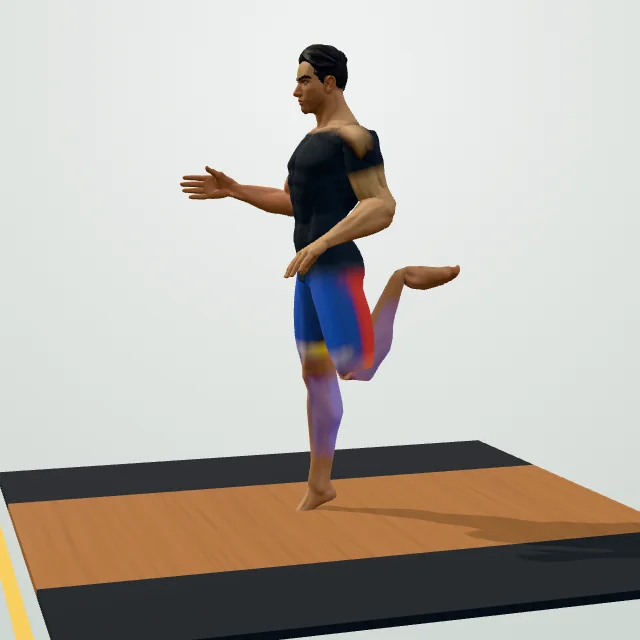
How to do it
- Stand tall with a slight forward lean and jog lightly in place.
- Flick one heel up toward your glutes on each step.
- Land lightly on the ball of your foot between kicks.
- Keep your knees under your hips, not swinging forward.
- Alternate legs at a quick, even rhythm.
- Keep your torso tall and arms relaxed throughout.
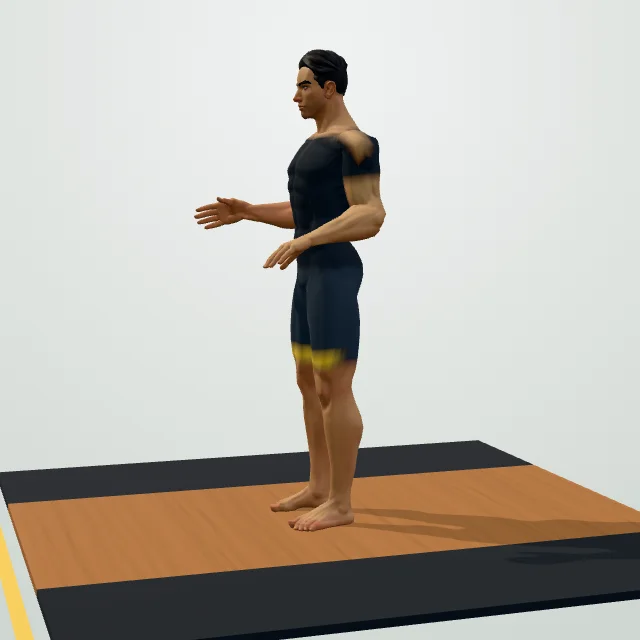
Coach cues
- Jog tall, slight forward lean.
- Flick each heel up toward your glutes.
- Knees stay under your hips.
- Keep a light, even rhythm.
Breathing: Breathe quickly and rhythmically with the pace; do not hold your breath.
Common mistakes
Make it easier / Make it harder
Butt kicks — sometimes called heel flicks in UK warm-up routines — are a running-in-place drill where you flick each heel straight up behind you toward your glutes instead of driving the knee forward. It targets the part of a running stride that high knees does not: the fast heel recovery that happens right after your foot leaves the ground.
What muscles do butt kicks work?
The hamstrings do most of the work here, bending the knee quickly to flick the heel up on every rep — a different action from the hip-flexor-dominant knee drive of high knees. The standing leg's calves handle the quick, small hop that keeps the rhythm going, and the quads and hip flexors assist as the leg resets back down. As a warm-up drill, butt kicks is valued less for building hamstring strength and more for waking the hamstrings up and priming their quick, repeated contraction before a run or a leg session.
Benefits
- Hamstring activation. A short set gets the hamstrings firing quickly, which is useful before running or sprinting, when a cold hamstring is more prone to feeling tight.
- Pulse raiser. Like other running-in-place drills, a fast set of butt kicks raises your heart rate quickly with minimal equipment or space, which is why it's a common answer to why heel flicks are a good pulse raiser in warm-up routines.
- Running mechanics. It reinforces a quick, tight heel recovery, part of an efficient running stride, complementing the forward knee drive trained by high knees.
- Low setup. No equipment, and only a couple of square metres of floor.
Technique: heel height, posture and rhythm
Stand tall with a slight forward lean and jog lightly in place. On each step, instead of just lifting the foot, actively flick the heel up and back toward your glutes — aim for the heel to actually reach or nearly touch your glutes rather than a shallow kick a few inches off the floor. Keep your knees roughly under your hips rather than swinging forward, since the drill is about the heel snapping up, not about knee drive. Land lightly on the ball of your foot between kicks and keep your torso tall and your arms moving in a relaxed running rhythm. The most common mistake is a shallow, lazy kick that barely lifts the heel — without a real flick toward the glutes, the hamstrings barely engage and the drill loses its point.
How to program butt kicks
| Use | Work | Rest |
|---|---|---|
| Running warm-up | 20-30 sec | none, move into strides or the run |
| Cardio interval / HIIT | 20-30 sec | 20-40 sec, repeat 6-8 rounds |
| Conditioning finisher | 3 sets of 30 sec | 30-45 sec between sets |
Butt kicks earns its keep most as a warm-up, run right before high knees and a few running strides, so both halves of the stride — knee drive and heel recovery — get primed together. Used as a short conditioning burst, pair it with an interval timer so the work-to-rest ratio stays consistent rather than drifting longer as you fatigue. It also fits well inside a dynamic warm-up routine or a HIIT circuit alongside jumping jacks or mountain climbers.
Variations for beginners and for more challenge
Beginners or anyone with knee, hip or hamstring discomfort should slow the tempo right down and focus purely on the heel-to-glute flick rather than speed — a slower, correct rep trains the pattern better than a fast, shallow one. Once the movement feels natural, increasing cadence is the main way to progress, since butt kicks is not meant to be loaded or made structurally harder the way a strength exercise is. Some people add a light resistance band around the ankles to add tension to each flick, though this is optional and not necessary for the warm-up or conditioning goals it usually serves.
Butt kicks vs. high knees
The two drills are usually taught together because they train opposite halves of the same stride. High knees drives the knee forward and up, emphasising the hip flexors and quads; butt kicks flicks the heel up and back, emphasising the hamstrings. Neither replaces the other — a warm-up that includes both covers more of the running stride than either alone.
Safety and who should modify it
Slow the tempo and keep kicks small if you have hamstring, knee or hip pain, or a history of hamstring strains — check with a doctor or physiotherapist first if pain is present.
Butt kicks is generally low-risk, but a hamstring that is cold, tight or previously injured can be aggravated by a fast, forceful flick before it is warmed up. Ease into the pace over the first several reps rather than starting at full speed, and stop if you feel a sharp pull behind the thigh, not just normal warm-up effort.
More exercises for cardio
Questions people ask
What muscles do butt kicks work?
Are butt kicks and heel flicks the same exercise?
Why are heel flicks a good pulse raiser?
How do you do butt kicks properly?
Are butt kicks cardio?
Butt kicks vs. high knees — what is the difference?
Can beginners do butt kicks?
General fitness information, not medical advice. Check with a doctor or physiotherapist before starting if you have a health condition, an injury or are pregnant. Stop if you feel chest pain, dizziness or sharp pain.