Cardio · Home, no equipment
Jumping jacks: a full-body cardio classic
Jumping jacks (also called star jumps) turn a simple out-and-in jump into a fast, full-body warm-up or conditioning drill. Here is how to time the arms and legs, and how to do them without jumping if that suits you better.
- Primary
- CalvesSide delts
- Secondary
- GlutesOuter hipsQuads
- Level
- Beginner
- Type
- Compound · Both sides together
- Sets × reps
- 3 × 45 s
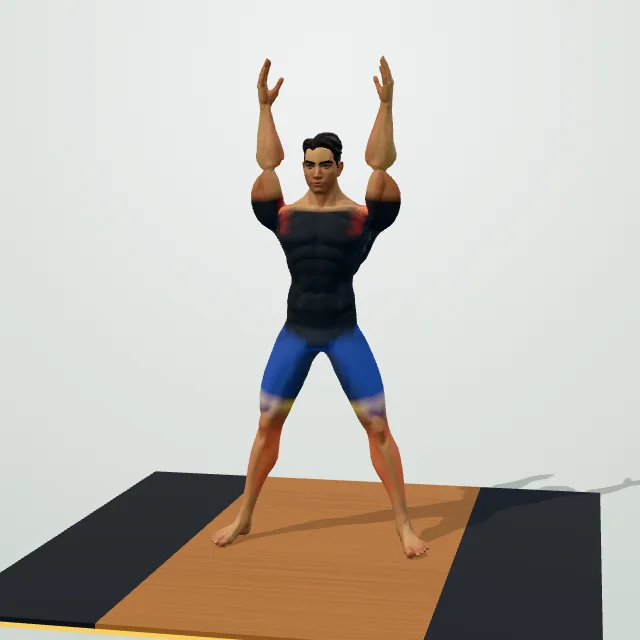
How to do it
- Stand tall, feet together, arms at your sides.
- Bend your knees slightly to load the jump.
- Jump your feet out past shoulder-width as your arms swing overhead.
- Land softly on the balls of your feet, knees soft.
- Jump your feet back together as your arms lower.
- Repeat at a steady, even rhythm.
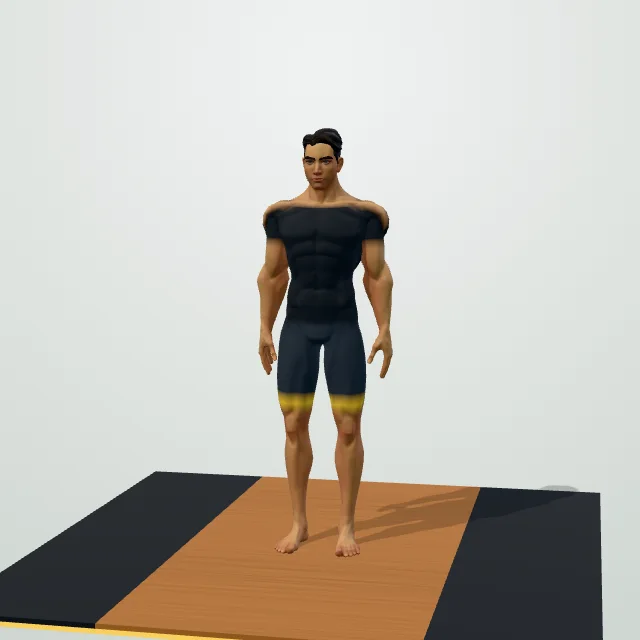
Coach cues
- Feet together, arms at your sides.
- Jump feet out as arms sweep overhead.
- Land soft on the balls of your feet.
- Keep a steady, even rhythm.
Breathing: Breathe in a steady rhythm with the movement; do not hold your breath through the set.
Common mistakes
Make it easier / Make it harder
Jumping jacks — the out-and-in jump with your arms sweeping overhead — are one of the most recognisable cardio moves there is, and one of the most efficient: no equipment, almost no space, and your whole body is working within a few reps. Most people meet them in a warm-up, but a steady set of jumping jacks is also a legitimate, if simple, conditioning tool on its own.
What muscles do jumping jacks work?
Jumping jacks work more muscle at once than their simplicity suggests. The calves absorb and produce the small, repeated jump, while the side delts drive the arms up and out on every rep. Underneath, the glutes and outer hips control the leg splay and stop your knees from wobbling inward, and the quads help absorb each landing. Because the whole body moves together at a quick tempo, jumping jacks raise your heart rate faster than most muscles-worked lists suggest — the cardiovascular demand, not any single muscle, is the main training effect.
Jumping jacks benefits
- Fast warm-up. A minute of jumping jacks raises core temperature and heart rate quicker than static stretching, which is why they open so many warm-up routines.
- No equipment, tiny footprint. You need about a square metre of floor and nothing else, making them one of the most accessible cardio exercises for home or travel.
- Coordination practice. Timing arms and legs together is a simple but real coordination skill, useful for beginners and for keeping that skill sharp as you age.
- Scalable intensity. Pace, work time and the low-impact step-out version let you dial the demand up or down for almost any fitness level.
Technique: timing, landing and rhythm
Start standing tall, feet together, arms at your sides. In one motion, jump your feet out past shoulder-width while your arms swing up to meet overhead, then reverse it — feet back together, arms back down — on the next beat. The two most common technical faults are on opposite ends of the same problem: landing flat and stiff-kneed, which sends impact straight up into the knees, or losing the rhythm so arms and legs stop moving together. Aim to land softly on the balls of your feet with a slight knee bend, and keep the tempo even rather than rushing the first few reps and fading. If you search jumping jacks without jumping or a quiet jumping jack alternative, step one foot out at a time instead of hopping — same arm swing, same muscles, far less impact and noise, which works well for people with knee pain or a downstairs neighbour.
How to program jumping jacks
| Use | Work | Rest |
|---|---|---|
| Warm-up | 30-60 sec | none, move into dynamic stretches |
| Cardio interval / HIIT | 30-45 sec | 15-30 sec, repeat 6-10 rounds |
| Steady conditioning finisher | 3 sets of 45 sec | 30-45 sec between sets |
As a warm-up, a minute of jumping jacks before dynamic stretches is enough to raise your temperature without any real fatigue cost. As a conditioning tool, jumping jacks slot well into interval-style training — an interval timer keeps your work-to-rest ratio honest without you watching a clock, and they show up as a station in plans like the 15-minute HIIT workout and the 7-minute workout. If you train by heart-rate zone, a steady set of jumping jacks at a controlled pace sits comfortably in zone 2-3 for most beginners, moving toward zone 4 once you push the pace or shorten the rest.
Variations and progressions
The low-impact step-out jack is the standard regression: step instead of jump, keep the same arm swing, and build tempo before adding the hop back in. Once bodyweight jumping jacks feel easy, adding a pair of light dumbbells increases resistance on the arm swing, though this raises shoulder demand and is not necessary for most goals. Some people search jumping jacks with weights or weighted jumping jacks specifically for this reason — start very light, since the extra load changes the shoulder mechanics more than it changes the cardio benefit.
Jumping jacks vs. jump rope and high knees
Jumping jacks, jump rope and high knees are often used interchangeably in a warm-up or HIIT circuit, and the choice mostly comes down to equipment and impact preference. Jump rope demands more coordination and a bit more space overhead but burns calories slightly faster once you can hold a rhythm; high knees emphasise hip flexor and core drive over the shoulder work of a jumping jack. Rotating between all three keeps a warm-up or cardio block from getting stale while training a similar energy system.
Safety and who should modify it
Use the step-out version if you have knee, ankle or hip pain, are pregnant, or are returning from a lower-body injury — check with a doctor or physiotherapist first if any of those apply to you.
Jumping jacks are low-risk for most healthy adults, but the repeated small jump does add impact through the shins, knees and hips, so build volume gradually rather than jumping straight into long sets. Stop if you feel sharp joint pain, chest pain, dizziness or unusual breathlessness, and land softly rather than stiff-legged to keep the impact manageable.
Workout plans with this exercise
General fitness · Beginner
30-Day Home Workout Plan (No Equipment)
Fat loss · Intermediate
15-Minute HIIT Workout (No Equipment)
Fat loss · Beginner
4-Week Fat-Loss Workout Plan
General fitness · Beginner
10-Minute Morning Workout
General fitness · Beginner
The 7-Minute Workout
Mobility · Beginner
6-Minute Dynamic Warm-Up
More exercises for cardio
Questions people ask
What muscles do jumping jacks work?
Are jumping jacks good for weight loss?
Can I do jumping jacks without jumping?
How many jumping jacks should a beginner do?
Is jumping jacks a good warm-up?
Jumping jacks vs. jump rope — which is better?
Are jumping jacks safe during pregnancy?
General fitness information, not medical advice. Check with a doctor or physiotherapist before starting if you have a health condition, an injury or are pregnant. Stop if you feel chest pain, dizziness or sharp pain.