Cardio · Home, no equipment
Skater jumps: lateral power and balance
Skater jumps bound sideways from one leg to the other, landing balanced on a single foot each time. The lateral push and the stick of the landing are what make this a real athletic drill, not just a hop.
- Secondary
- Outer hipsCalves
- Level
- Intermediate
- Type
- Compound · Alternate sides
- Sets × reps
- 3 × 30 s
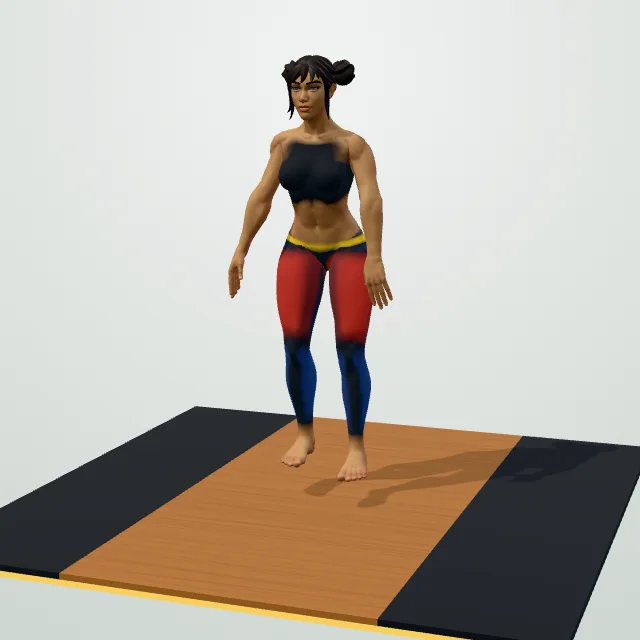
How to do it
- Balance on one leg, knee slightly bent.
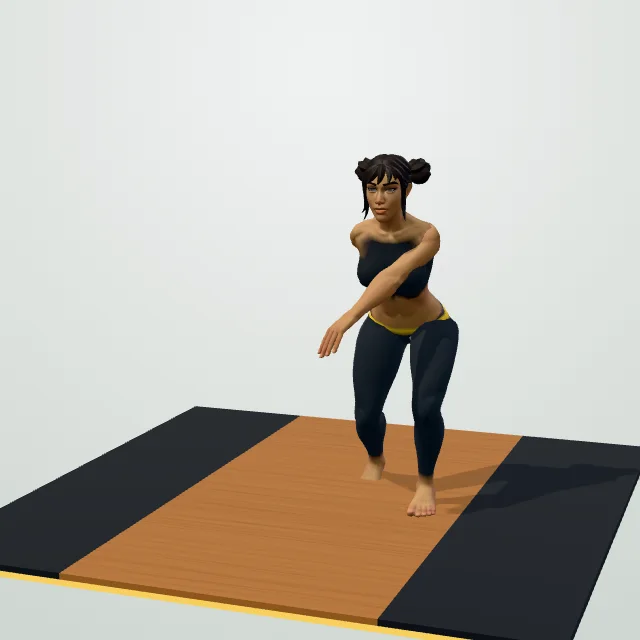
- Push off explosively to bound sideways.
- Swing your arms across your body for momentum.
- Land on the opposite leg with a soft, bent knee.
- Let the trailing leg swing behind you for balance.
- Pause to stick the landing before bounding back.
Coach cues
- Push off, bound sideways.
- Land soft on the opposite leg.
- Knee tracks over your toes.
- Stick the landing before the next bound.
Breathing: Breathe out as you push off, and breathe in as you stick each landing.
Common mistakes
Make it easier / Make it harder
Skater jumps — often called skater hops — mimic a speed skater's stride: you push off one leg, bound sideways, and land balanced on the opposite leg while the trailing leg swings behind you for balance. It is a lateral plyometric exercise, training power and control in a direction most straight-ahead cardio and lifting never touches.
What muscles do skater jumps work?
The push-off leg's glutes and quads generate the sideways bound, with the glutes doing extra work to drive you laterally rather than just up. On landing, the outer hip muscles (abductors) fire hard to stabilize the hip and stop your knee from caving inward — a key reason coaches use skater jumps to build knee stability for cutting and change-of-direction sports. The calves assist both the push-off and the controlled landing, and your core braces throughout to keep your torso from twisting as you jump side to side.
Benefits
- Lateral power. Most jumping exercises move you forward or up; skater jumps train explosive strength in the side-to-side direction used in sports like basketball, tennis and skiing.
- Single-leg balance and control. Sticking each landing on one leg builds stability that a two-footed jump does not.
- Knee and hip stability. The outer hip muscles work hard to control the landing, which can support healthier movement patterns for cutting and pivoting.
- Scalable intensity. A smaller, low-impact hop and a full explosive bound train the same pattern at very different intensities.
Technique: the bound, the landing and the reach
Start balanced on one leg, knee slightly bent. Push off that leg explosively to bound sideways, swinging your arms across your body for momentum, and land on the opposite leg with a soft, bent knee, letting the trailing leg swing behind you for balance. Pause for a moment to stick the landing under control before bounding back the other way — this pause is what separates a controlled skater jump from a bouncy, momentum-driven shuffle. Keep your chest up and your landing knee tracking over your toes rather than caving inward, which is the technical fault coaches watch for most closely, since it is the same fault linked to knee injury risk in cutting sports.
How to program skater jumps
| Goal | Sets | Reps | Rest |
|---|---|---|---|
| Power / plyometric training | 3-4 | 6-8 per side | 60-90 sec |
| Conditioning circuit | 3 | 30 sec of continuous bounds | 30-45 sec |
For pure power development, treat skater jumps like any plyometric: low reps, full rest, and a stuck landing on every rep rather than rushing into the next bound. For conditioning, continuous bounds for 20-30 seconds raise your heart rate quickly and fit well into a HIIT circuit timed with an interval timer. Place skater jumps early in a session while your legs are fresh and your landing control is sharp — fatigued landings are where most jumping-exercise injuries happen. Build up from lateral lunges first if lateral movement under load is new to you.
Variations and progressions
Beginners should start with a small, low-impact skater hop — a light lateral step-and-touch rather than a full bound — to learn the balance and landing pattern before adding power. Skater jumps with a stick (a longer pause holding each landing) build stability specifically; skater jumps for distance or with a bigger bound build power specifically. More advanced athletes sometimes progress toward a box jump or single-leg jump work once lateral landing control is solid on both sides.
Safety and who should modify it
Reduce the bound to a small step-and-touch if you have knee, ankle or hip pain, or are new to lateral jumping — check with a doctor or physiotherapist first if pain is present.
Skater jumps load the knees and hips laterally, a direction many people train less than forward and backward movement, so build up gradually rather than starting with maximum bounds. Watch for the landing knee caving inward, a sign to slow down and shorten the bound. Stop the set once landings start losing control, and avoid this exercise during a flare of knee or ankle pain.
More exercises for cardio
Questions people ask
What muscles do skater jumps work?
What is a skater jump?
Are skater jumps good for beginners?
Skater jumps vs. lateral bounds — is there a difference?
Are skater jumps bad for your knees?
How many skater jumps should I do?
Can skater jumps be done without jumping?
General fitness information, not medical advice. Check with a doctor or physiotherapist before starting if you have a health condition, an injury or are pregnant. Stop if you feel chest pain, dizziness or sharp pain.