Cardio · Home, no equipment
Plank jacks: core stability meets cardio
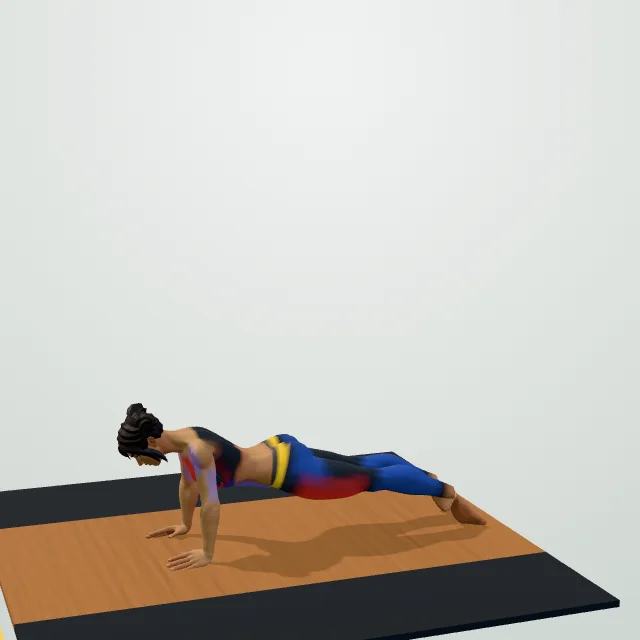
A plank jack is a plank with your legs jumping in and out like a jumping jack. It is a simple way to add cardio to a core hold without losing the brace that makes a plank work.
- Primary
- AbsOuter hips
- Secondary
- Front deltsGlutes
- Level
- Intermediate
- Type
- Compound · Both sides together
- Sets × reps
- 3 × 30 s
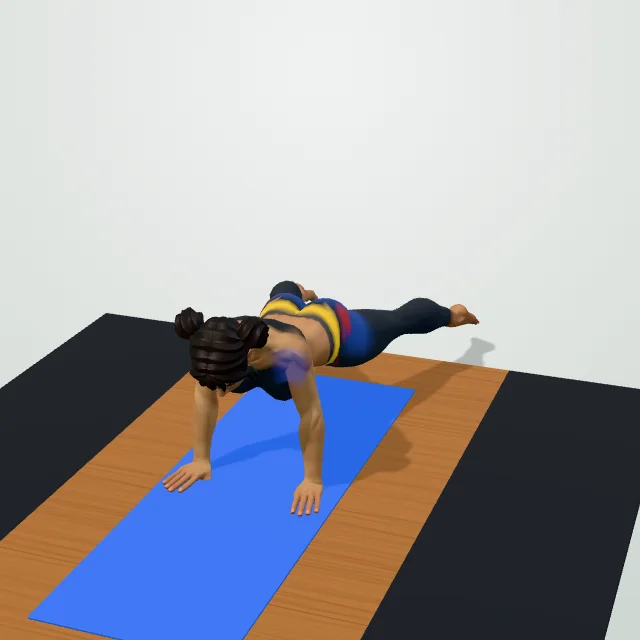
How to do it
- Set up in a high plank, hands under shoulders, body in a straight line.
- Brace your core before you start moving your legs.
- Hop both feet out to about shoulder-width apart.
- Hop your feet back together in the same motion.
- Keep your hips level throughout, no piking or sagging.
- Repeat at a controlled, steady pace for the set time.
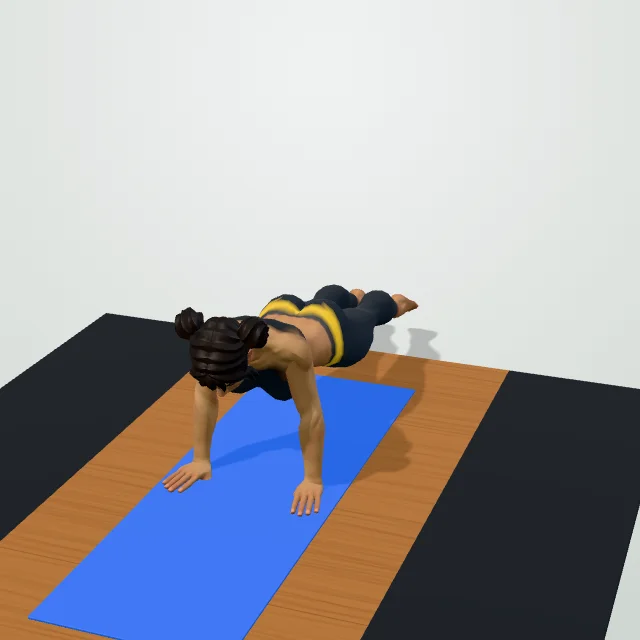
Coach cues
- Straight line from head to heels.
- Brace your core before you jump.
- Hips level, no piking or sagging.
- Feet out and back, stay controlled.
Breathing: Breathe steadily throughout; exhale as your feet jump out and inhale as they come back together.
Common mistakes
Make it easier / Make it harder
Plank jacks put you in a plank position and add a jumping-jack leg action, hopping your feet wide and back together while your upper body stays locked in place. The result is a hybrid: the anti-movement core bracing of a plank, plus the heart-rate spike of a cardio jump, done at the same time.
What muscles do plank jacks work?
The abs do the main job here, resisting the urge to sag or twist as your legs jump — this anti-rotation, anti-extension bracing is the same skill a standard plank trains, just under more disturbance. Your inner and outer thighs, the adductors and abductors, drive each leg out and back together, while the front of the shoulders and upper back support your body weight through the arms the whole time. The glutes help keep your hips level so they do not pike up or sag as your feet move.
Benefits
- Core stability under fatigue. Holding a braced plank while your legs move is a harder anti-movement challenge than a static plank alone.
- Added cardio. The repeated leg jump raises your heart rate more than a still plank hold, making it a useful core-and-cardio hybrid move.
- No equipment. Like most plank variations, it needs only floor space and body weight.
- Time-efficient. It trains two qualities — core bracing and conditioning — in one exercise instead of two separate ones.
Technique: hand position, hip height and tempo
Set up in a high plank with hands under your shoulders, body in a straight line from head to heels. Brace your core hard before you start jumping, then hop your feet out to about shoulder-width or slightly wider and back together, keeping your hips level throughout — they should not rise up or sag down as your legs move. Keep the jumps small and controlled rather than as high or fast as possible; the goal is a stable torso, not speed. The most common technical error is letting the hips pike upward to compensate for a tiring core, which turns the exercise into an easier hip-hinge instead of the harder plank hold it should be. If your hips start rising, that is the signal to slow down or stop the set rather than push through with poor position.
How to program plank jacks
| Use | Work | Rest |
|---|---|---|
| Core-cardio finisher | 3-4 sets of 20-30 sec | 30-45 sec between sets |
| HIIT circuit station | 20-30 sec, hard effort | 10-20 sec, repeat 6-10 rounds |
| Beginner core work | 2-3 sets of 10-15 sec | 45-60 sec between sets |
Plank jacks work well as one station in a circuit alongside mountain climbers and jumping jacks, since all three combine core or leg work with cardio, and they fit naturally into plans like the 10-minute abs workout or the 15-minute HIIT workout. Using an interval timer keeps your work-to-rest ratio honest across rounds, which matters more here than chasing a high rep count with sloppy hip position.
Variations and low-impact options
If jumping is too much impact through the wrists or shoulders, step the feet out one at a time instead of hopping both together — this keeps the same core and hip demand with far less landing force. Adding a shoulder tap between jack reps increases the anti-rotation challenge further, since you briefly balance on three points instead of four. Once standard plank jacks feel easy, progressions like plank jack to mountain climber, or plank jack to push-up, add more total work per rep without changing the core setup.
Plank jacks vs. jumping jacks and mountain climbers
Jumping jacks train the same leg pattern standing upright, which is much easier on the shoulders and wrists but gives almost no core-bracing demand. Mountain climbers drive the knees in one at a time from the same plank position, closer to a running pattern, while plank jacks move both legs out and back together — a different, more lateral hip demand. Choosing between them mostly comes down to whether you want more hip-flexor drive (mountain climbers) or more hip abduction and adductor work (plank jacks).
Safety and who should modify it
Use the step-out version if you have wrist, shoulder or lower-back pain, or are new to plank holds — check with a doctor or physiotherapist first if pain is present.
Plank jacks load the wrists and shoulders under body weight while the core is also under fatigue, so stop the set as soon as your hips start sagging or piking rather than grinding out extra reps with poor form. Stop for sharp joint pain, chest pain, dizziness or unusual breathlessness, and build volume gradually.
Workout plans with this exercise
More exercises for cardio
Questions people ask
What are plank jacks?
What muscles do plank jacks work?
Are plank jacks effective?
How do I do plank jacks properly?
Plank jacks vs. jumping jacks — what is the difference?
Can I do plank jacks without jumping?
How many plank jacks should I do?
General fitness information, not medical advice. Check with a doctor or physiotherapist before starting if you have a health condition, an injury or are pregnant. Stop if you feel chest pain, dizziness or sharp pain.