Cardio · Home, no equipment
Burpee: a full-body bodyweight conditioning move
The burpee moves from standing to a push-up and back to a jump in one continuous rep, training your chest, legs and cardio system with no equipment at all.
- Secondary
- GlutesTricepsFront deltsAbsCalves
- Level
- Intermediate
- Type
- Compound · Both sides together
- Sets × reps
- 3 × 10 reps
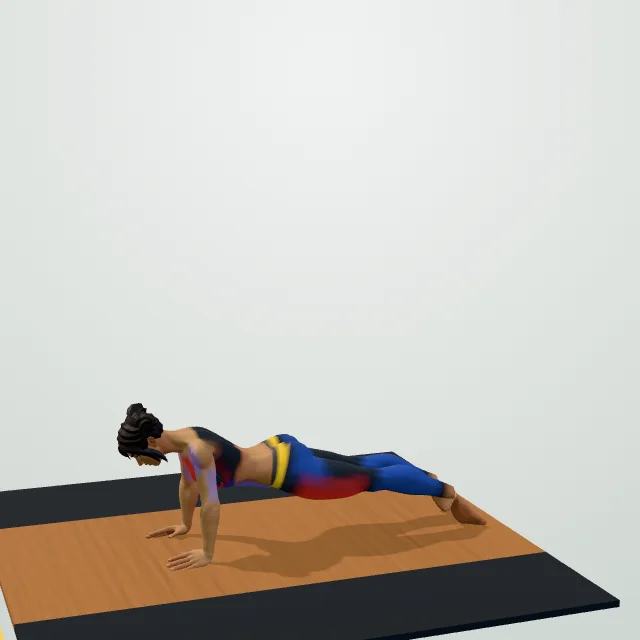
How to do it
- Stand tall with feet shoulder-width apart.
- Squat down and place your hands on the floor in front of you.
- Jump or step your feet back into a plank.
- Lower your chest to the floor, or hold a plank if skipping the push-up.
- Push back up and jump or step your feet back to your hands.
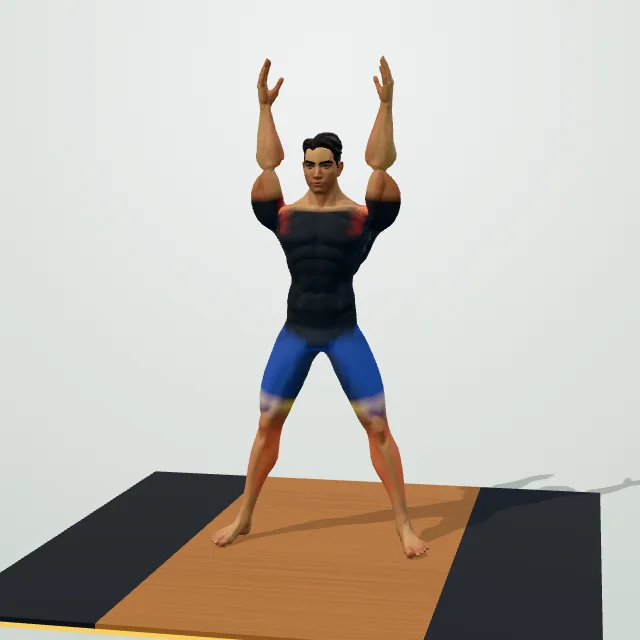
- Stand up and jump, reaching your arms overhead.
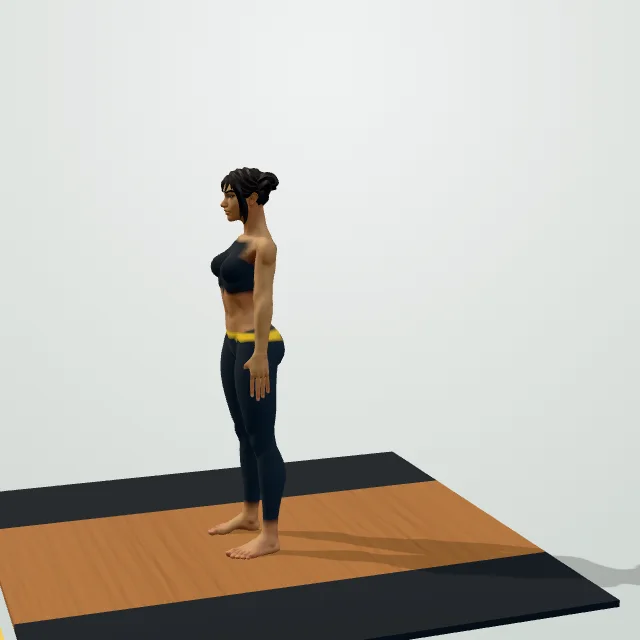
Coach cues
- Squat down, hands flat on the floor.
- Step or jump back into a plank.
- Chest to the floor, push back up.
- Jump your feet in, then jump up.
Breathing: Breathe out as you drop down and push up; breathe in as you stand and jump.
Common mistakes
Make it easier / Make it harder
The burpee is a bodyweight exercise that moves from standing, down to the floor for a push-up, and back up into a jump, all in one continuous rep. It needs no equipment at all, which is a big part of why it is one of the most common moves in home workouts and HIIT circuits worldwide.
What muscles does the burpee work
The push-up portion works your chest, triceps and front delts, while the squat-and-jump portion works your quads and glutes. Your abs brace throughout to hold your plank position and transition smoothly between the ground and the jump, which is why burpees are considered a genuine full-body exercise rather than a core-only or leg-only move.
Benefits of the burpee
- Trains your whole body in one movement, combining a push-up, a squat and a jump without needing any equipment.
- Builds cardio conditioning fast, since the constant up-and-down transitions raise your heart rate quickly.
- Highly portable, so it works anywhere, at home, outdoors or traveling with no gym required.
- Scales to any fitness level, from a slow, step-back version for beginners to an explosive jump-and-push-up version for advanced trainees.
How to do the burpee with proper form
The drop
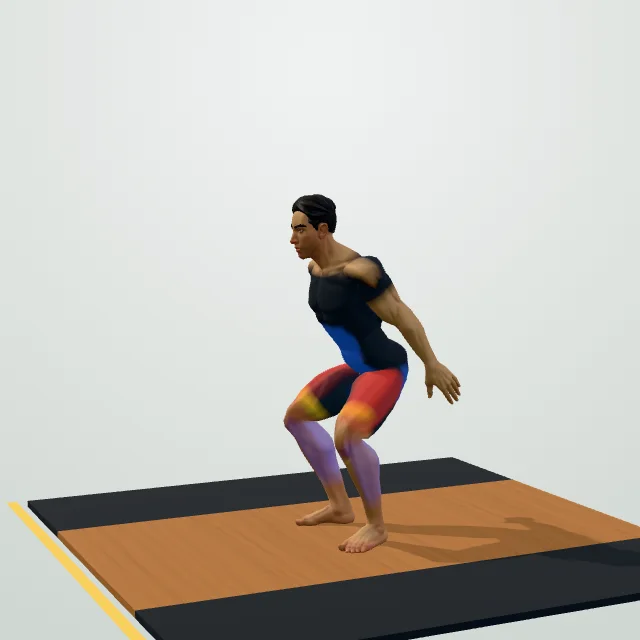
Stand tall, squat down and place your hands flat on the floor in front of you, then jump or step your feet back into a plank position.
The push-up
Lower your chest to the floor and push back up, keeping your core braced so your hips do not sag. If a full push-up is too much, hold a plank instead and skip the chest-to-floor portion.
The jump
Jump or step your feet back in toward your hands, then stand up and jump, reaching your arms overhead to finish the rep.
Burpees for beginners: how to scale it down
A full burpee has several demanding parts, and beginners do not need to do all of them at once. Step your feet back one at a time instead of jumping, hold a plank instead of doing a full push-up, and step up to standing instead of jumping at the top. Build these back in one at a time as your fitness and confidence improve — there is no need to perform the most advanced version to get a good workout.
Sets, reps and how to program it
For conditioning, 3 sets of 8–10 reps with 60–90 seconds of rest works well for most people, or short timed intervals of 20–30 seconds inside a HIIT circuit using the interval timer. Because burpees are demanding on the whole body, most people include them a few times a week rather than every day, and pace the reps so your form holds up for the whole set rather than rushing and breaking technique.
Variations and progressions
A burpee broad jump adds a forward jump at the top instead of jumping straight up, useful for HYROX-style training. Removing the push-up and the final jump makes it far more beginner-friendly, while adding a tuck jump or a pull-up at the top (a "burpee pull-up") makes it considerably harder for advanced trainees. If burpees are uncomfortable for your wrists or shoulders, mountain climbers or a jump squat can substitute for part of the conditioning stimulus.
Safety and who should modify it
Sagging hips in the plank position and landing stiff-legged on the jump are the two most common technique issues — brace your core throughout and land softly with slightly bent knees. People with a current wrist, shoulder or knee injury, pregnancy, or high blood pressure or heart disease should check with a doctor or physiotherapist before this kind of repeated, high-intensity movement, and everyone should stop for chest pain, dizziness or unusual breathlessness rather than pushing through it.
Workout plans with this exercise
General fitness · Beginner
30-Day Home Workout Plan (No Equipment)
Fat loss · Intermediate
15-Minute HIIT Workout (No Equipment)
Fat loss · Advanced
20-Minute Tabata Workout
Fat loss · Beginner
4-Week Fat-Loss Workout Plan
More exercises for cardio
Questions people ask
What is a burpee?
How do I do a burpee as a beginner?
What muscles do burpees work?
Are burpees good cardio?
Is a burpee a core exercise?
Are burpees safe for beginners?
What is a burpee broad jump?
General fitness information, not medical advice. Check with a doctor or physiotherapist before starting if you have a health condition, an injury or are pregnant. Stop if you feel chest pain, dizziness or sharp pain.