Full body · Home or gym
Dumbbell thruster: a squat-to-press full-body finisher
The dumbbell thruster links a front squat straight into an overhead press in one continuous rep, making it one of the most efficient full-body conditioning exercises there is.
- Primary
- QuadsGlutesFront delts
- Level
- Intermediate
- Type
- Compound · Both sides together
- Sets × reps
- 3 × 10-12 reps
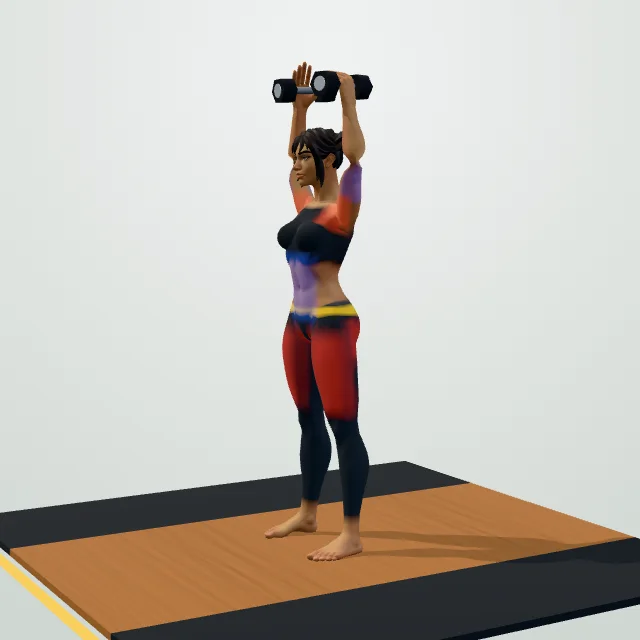
How to do it
- Hold two dumbbells at your shoulders, feet shoulder-width apart.
- Sit back and down into a full squat, chest up.
- Drive up through your feet to stand explosively.
- Use the upward momentum to press the dumbbells overhead.
- Lock out overhead, then lower the dumbbells back to your shoulders.
- Squat again straight into the next rep.
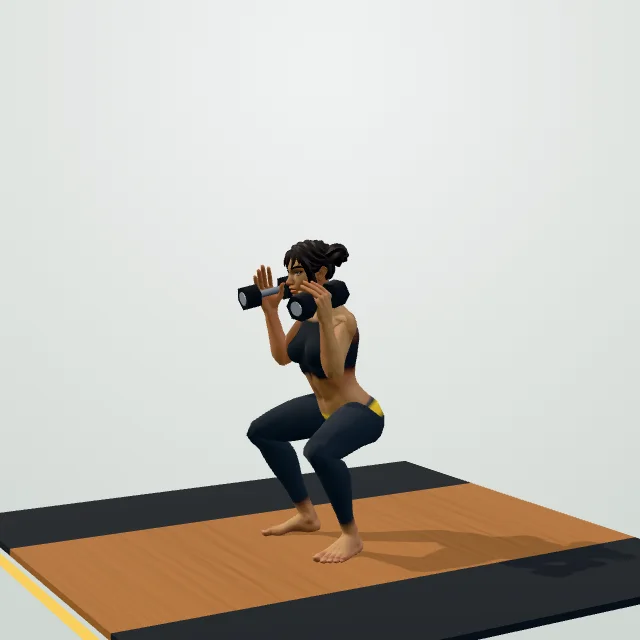
Coach cues
- Dumbbells at your shoulders, feet shoulder-width.
- Squat down, chest up, knees track your toes.
- Drive up and press overhead in one motion.
- Lock out overhead, then reset at your shoulders.
Breathing: Breathe in on the way down into the squat; breathe out as you drive up and press.
Common mistakes
Make it easier / Make it harder
Sets and reps by goal
| Goal | sets | reps | Rest |
|---|---|---|---|
| Strength | 3–5 | 3–6 | 2–4 min |
| Muscle growth | 3–4 | 6–12 | 90–150 s |
| Endurance | 2–3 | 15–20 | 30–60 s |
The dumbbell thruster combines a front squat and an overhead press into one seamless rep: you squat down, then use the upward drive from your legs to help press the dumbbells overhead. Because it trains your legs, shoulders and core in a single continuous movement, it is a favorite for conditioning circuits and full-body finishers.
What muscles does the dumbbell thruster work
The squat portion targets your quads and glutes, while the press works your front delts and triceps. Your abs brace throughout to transfer force from your legs up into the press, which is why a thruster feels far more demanding on your heart rate than either a squat or a press done on its own.
Benefits of the dumbbell thruster
- Trains multiple muscle groups at once, making it a time-efficient way to work legs, shoulders and core in a single exercise.
- Builds real conditioning, since the constant transition between squat and press raises your heart rate quickly.
- Teaches you to transfer power from your legs into your upper body, a useful athletic skill beyond the gym.
- Scales easily from light dumbbells for beginners to a loaded barbell for advanced lifters.
How to do the dumbbell thruster with proper form
The squat
Hold two dumbbells at your shoulders and sit back and down into a full squat, keeping your chest up and knees tracking your toes, until your hips drop below knee height.
The press
Drive up through your feet to stand explosively, and use that upward momentum to flow straight into pressing the dumbbells overhead without pausing at the top of the squat. Lock out overhead, then lower the dumbbells back to your shoulders as you squat straight into the next rep.
Thruster vs push press and wall ball
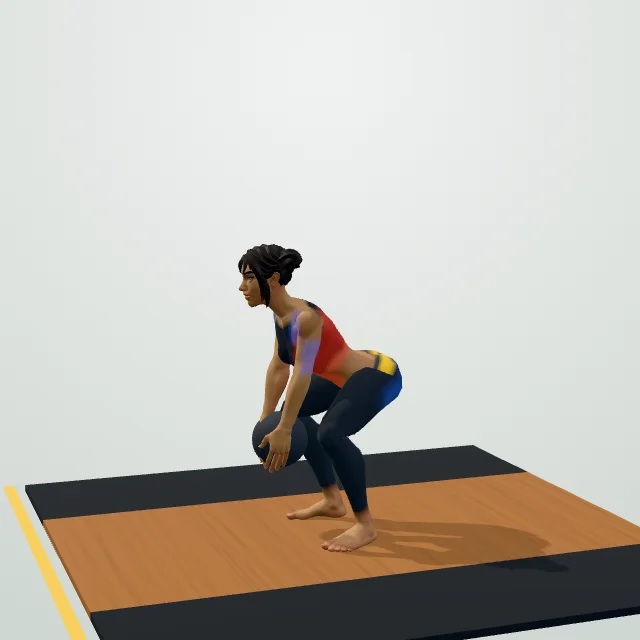
The push press uses a similar leg drive but starts from standing with only a slight dip, not a full squat, so it moves more weight overhead with less overall fatigue per rep. The wall ball shot follows nearly the same squat-to-press pattern but throws a medicine ball at a wall target instead of pressing dumbbells, which is why the two exercises are often used interchangeably in conditioning workouts.
Sets, reps and how to program it
For conditioning, 3–4 sets of 10–12 reps with short rest, or timed rounds inside a HIIT circuit using the interval timer, work well with a moderate dumbbell weight you can press without your squat form breaking down. For a more strength-focused stimulus, fewer reps with heavier dumbbells and full rest between sets shifts the emphasis toward leg and shoulder strength rather than conditioning. See compound vs isolation exercises for why moves like this earn a place early in a workout.
Variations and progressions
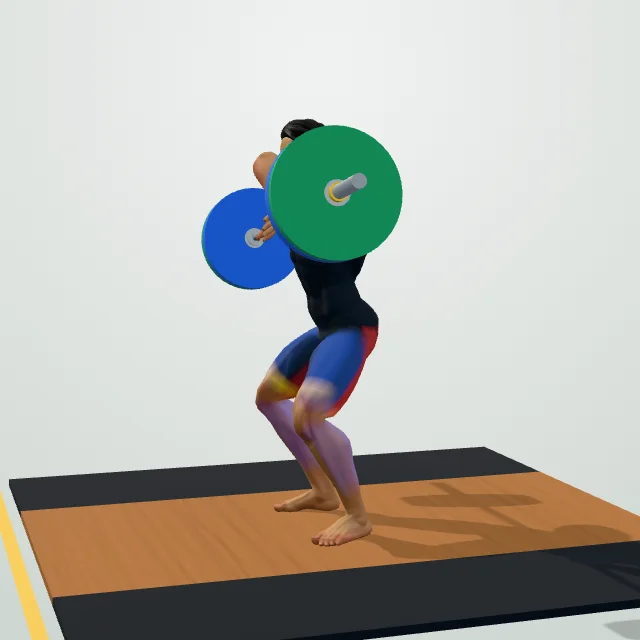
A barbell thruster allows heavier total loading once your technique with dumbbells is solid, while a kettlebell thruster using one or two kettlebells is a good home-friendly option. If overhead pressing bothers your shoulders, break the movement into a separate goblet squat and dumbbell shoulder press until your mobility improves.
Safety and who should modify it
Pressing with an arched lower back is the main fault to watch for — brace your core and press in as straight a line as your shoulder mobility allows, rather than compensating with your spine. People with shoulder impingement, a current knee or back injury, or high blood pressure or heart disease should check with a doctor or physiotherapist before this demanding a combination lift, and everyone should stop for sharp joint pain, dizziness or unusual breathlessness.
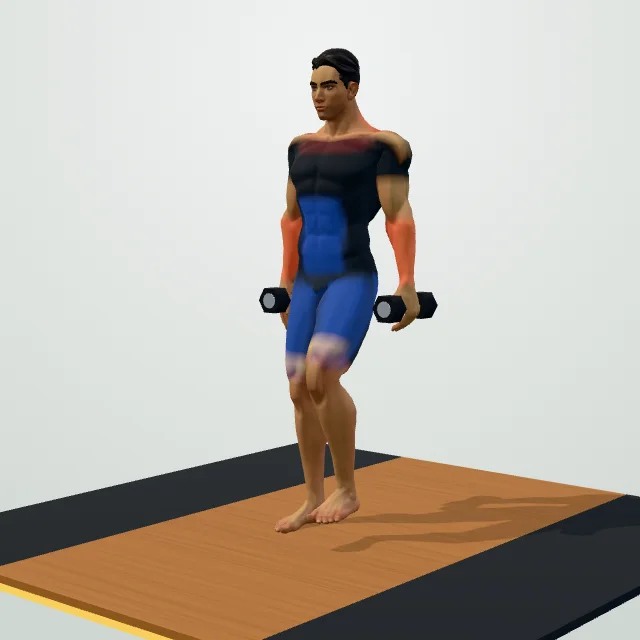
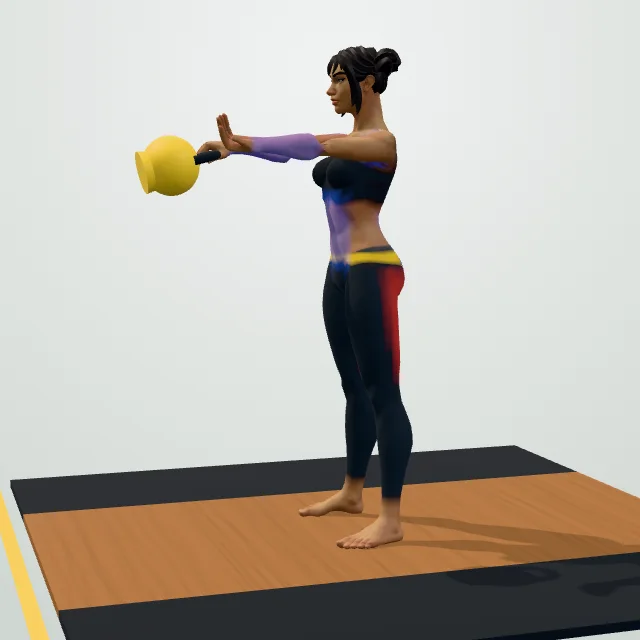
More exercises for full body
Questions people ask
What is a dumbbell thruster?
What muscles do dumbbell thrusters work?
Are dumbbell thrusters good for building muscle?
How do I do a dumbbell thruster with proper form?
Thruster vs push press: what is the difference?
What can I do instead of dumbbell thrusters?
Are dumbbell thrusters good for beginners?
General fitness information, not medical advice. Check with a doctor or physiotherapist before starting if you have a health condition, an injury or are pregnant. Stop if you feel chest pain, dizziness or sharp pain.