Full body · Gym
Power clean: a technical full-body power lift
The power clean pulls a barbell from the floor to your shoulders in one explosive movement, catching it in a quarter-squat. It is a genuine skill lift, so learn it light and, ideally, with a coach before adding real weight.
- Primary
- GlutesHamstringsTraps
- Secondary
- QuadsUpper backFront deltsCalves
- Level
- Advanced
- Type
- Compound · Both sides together
- Sets × reps
- 5 × 3 reps
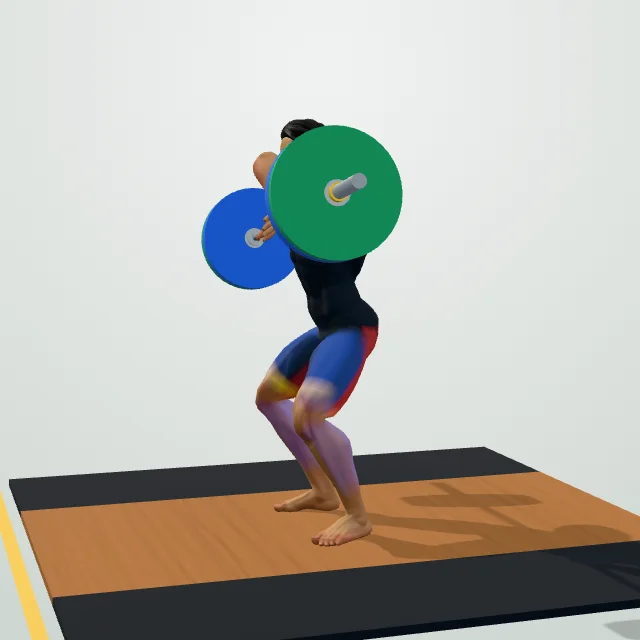
How to do it
- Stand with the bar over mid-foot, feet hip-width.
- Grip just outside your legs and set your hips like a deadlift.
- Pull the bar past your knees, keeping your back flat and the bar close.
- Explosively extend your hips, knees and ankles as the bar passes your thighs.
- Shrug and pull yourself under the bar, rotating your elbows around fast.
- Catch the bar on your shoulders in a quarter-squat, elbows up.
- Stand tall to finish the rep.
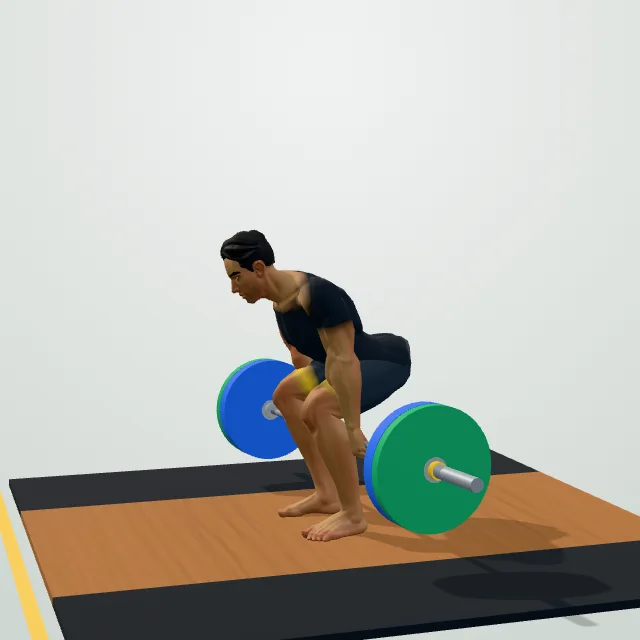
Coach cues
- Set your hips, back flat, bar over mid-foot.
- Pull the bar past your knees under control.
- Extend hard, hips, knees and ankles together.
- Pull yourself under, catch it on your shoulders.
Breathing: Take a breath and brace before you pull; breathe out after you catch the bar.
Common mistakes
Make it easier / Make it harder
Sets and reps by goal
| Goal | sets | reps | Rest |
|---|---|---|---|
| Strength | 3–5 | 3–6 | 2–4 min |
| Muscle growth | 3–4 | 6–12 | 90–150 s |
| Endurance | 2–3 | 15–20 | 30–60 s |
The power clean is an Olympic-lifting movement: you pull a barbell from the floor and, using a fast hip extension, move it all the way from the ground to your shoulders in one motion, catching it in a partial squat. Unlike a slow strength lift, it is judged as much on timing and technique as on how much weight is on the bar, which is why coaches almost always teach it with an empty bar first.
What muscles does the power clean work
The glutes and hamstrings drive the explosive hip extension that powers the bar upward, with the traps and upper back pulling you under the bar as it rises. Your quads absorb the catch in the quarter-squat, and your front delts and forearms control the bar on your shoulders, which is why the power clean is considered one of the most complete full-body power exercises in strength training.
Benefits of the power clean
- Develops explosive hip power that transfers directly to sprinting, jumping and change-of-direction sports.
- Trains rate of force development, meaning how quickly you can produce force, not just how much.
- Builds full-body coordination, since the lift links the legs, hips, back and shoulders in one fast sequence.
- Widely used by athletes, including in football, athletics and other sports where explosive power matters.
How to do the power clean with proper technique
The first pull
Start with the bar over your mid-foot, hips set similar to a deadlift, and pull the bar past your knees under control, keeping your back flat and the bar close to your shins.
The second pull
As the bar passes your thighs, explosively extend your hips, knees and ankles together to accelerate the bar upward, keeping your arms straight until that extension is complete.
The catch
Once the bar is moving fast, shrug and pull yourself underneath it, rotating your elbows around quickly to catch it across your shoulders in a quarter-squat, then stand tall to finish the rep.
Power clean vs hang clean
The power clean starts from the floor, giving you a longer pull and more time to build speed. The hang power clean starts from above the knee, cutting out the first pull, which makes it a common regression for learning the second pull and the catch before adding the full floor-to-shoulder pull back in.
Power clean vs deadlift and kettlebell swing
The power clean shares its starting position with the deadlift, but where the deadlift is a slow, maximal-effort pull to standing, the clean is a fast pull followed by a catch under the bar, which makes it far more technical. If you want a similar explosive hip-power benefit with much less skill required, the kettlebell swing trains a comparable hip-snap pattern and is a sensible substitute for anyone not ready to learn the full lift.
Sets, reps and how to program it
Because it depends on speed and precise technique, the power clean is trained with low reps, typically 3–5 sets of 2–3 reps, resting fully between sets so every rep stays fast and clean rather than grinding through fatigue. It is usually placed early in a workout, right after the warm-up, while you are freshest. See progressive overload for how to add weight gradually once your form is consistent.
Learning the power clean safely
This is a genuinely technical lift, and technique errors compound quickly at speed, so most reputable coaching guidance recommends learning it with an empty barbell or light dumbbells and, ideally, hands-on coaching from a qualified strength coach before adding meaningful weight. Start with the hang power clean from above the knee to simplify the pull, and only add weight once every rep looks identical.
Safety and who should modify it
Catching the bar with a rounded back, or loading weight before your technique is solid, are the most common causes of strain with this lift, so prioritize a braced, controlled catch over chasing heavier weight. Because it is gym equipment and technically demanding, it is not suited to home training or beginners without supervision. People with a current back, shoulder or wrist injury, or who are new to lifting, should learn simpler hinge and pressing patterns first and build up to Olympic-lift variations with a coach.
More exercises for full body
Questions people ask
What is a power clean?
What muscles does the power clean work?
Power clean vs hang clean: what is the difference?
Do I need a coach to learn the power clean?
How much weight should I power clean?
Is the power clean good for athletes?
What can I do instead of the power clean?
General fitness information, not medical advice. Check with a doctor or physiotherapist before starting if you have a health condition, an injury or are pregnant. Stop if you feel chest pain, dizziness or sharp pain.