Back · Gym
Deadlift: the full-body lift built on a strong hip hinge
The conventional barbell deadlift: pick a loaded bar off the floor by hinging at the hips with a flat back. Here is the setup, technique and programming that keep it safe and effective.
- Primary
- GlutesHamstringsLower back
- Level
- Intermediate
- Type
- Compound · Both sides together
- Sets × reps
- 3 × 3-6 reps
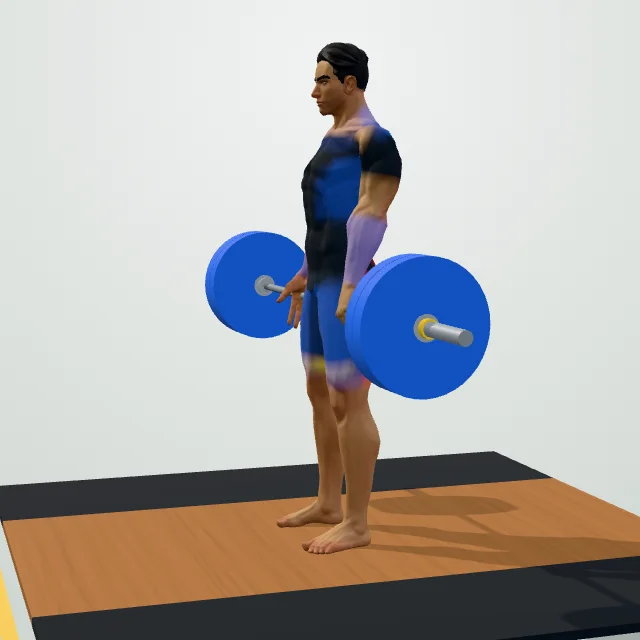
How to do it
- Stand with feet hip-width apart, the bar over your mid-foot.
- Hinge at the hips and knees to grip the bar just outside your legs.
- Set your chest up and pull your shoulder blades down and back.
- Take a breath and brace your core hard.
- Push the floor away, keeping the bar close, hips and shoulders rising together.
- Stand fully tall at the top without leaning back.
- Hinge your hips back to lower the bar along the same path.
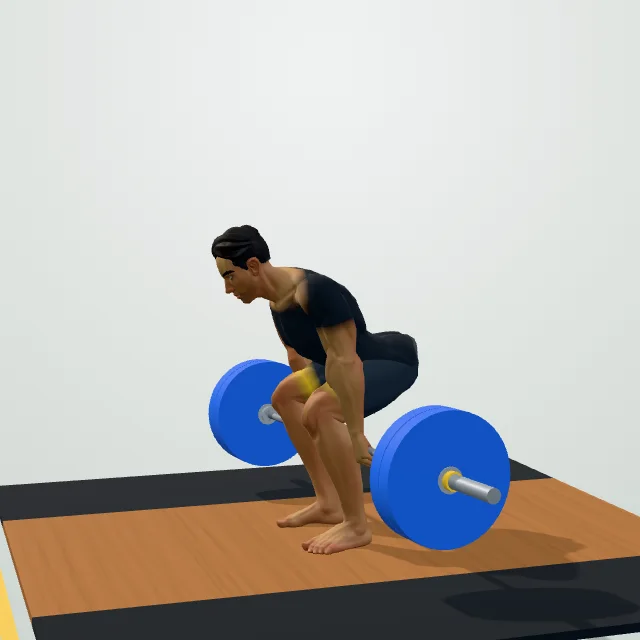
Coach cues
- Feet hip-width, bar over mid-foot.
- Hinge and grip, chest up, shoulders over the bar.
- Brace your core, set your lats.
- Push the floor away, bar stays close to your legs.
Breathing: Take a breath and brace before you pull; exhale once the hardest part of the rep is behind you.
Common mistakes
Make it easier / Make it harder
Sets and reps by goal
| Goal | sets | reps | Rest |
|---|---|---|---|
| Strength | 3–5 | 3–6 | 2–4 min |
| Muscle growth | 3–4 | 6–12 | 90–150 s |
| Endurance | 2–3 | 15–20 | 30–60 s |
The deadlift is a hip-hinge exercise where you lift a loaded barbell from the floor to hip level by bending at the hips and knees, then standing tall. It is one of the most researched lifts in strength training, and one of the most searched, because it trains almost the entire posterior chain in a single movement and carries directly over to everyday lifting, carrying and picking things up off the ground.
What muscles does the deadlift work
The deadlift is primarily a hip-extension exercise, so the glutes and hamstrings drive the lift, with the lower back working isometrically to keep your spine neutral and braced. The quads help extend the knees off the floor, while the traps, forearms and lats keep the bar close to your body. This is why "is deadlift a back or leg exercise" has no single clean answer — it is genuinely both, plus grip and core, which is what makes it such an efficient full-body lift.
Benefits of the deadlift
- Trains the whole posterior chain — glutes, hamstrings and back — in one compound movement, which is hard to match with isolation exercises alone.
- Builds real-world lifting strength, since the hip-hinge pattern is exactly what you use to pick up a heavy box or bag safely.
- Improves grip and trunk stability, both of which carry over to other lifts and daily tasks.
- Highly loadable, meaning it responds well to progressive overload over months and years of training, which is a big part of why it is a cornerstone of most strength programs.
Deadlift vs Romanian deadlift
This is one of the most common deadlift comparisons people search for. The conventional deadlift starts from a dead stop on the floor with your legs providing more knee bend, making it more of a full-body pulling lift. The Romanian deadlift starts from standing, keeps the knees only slightly bent throughout, and is performed for a controlled hamstring and glute stretch rather than a maximal floor pull. Many programs use both: the conventional deadlift for overall strength and power, and the Romanian deadlift as a more targeted hamstring and glute builder with less lower-back fatigue per set.
Deadlift vs sumo and trap bar deadlift
Widening your stance and turning your feet out turns this into a sumo deadlift, which shifts more load onto the quads and inner thighs and shortens the range of motion for some lifters. Using a hexagonal bar instead of a straight barbell, as in the trap bar deadlift, moves the load line closer to your center of gravity, which many beginners and people with back sensitivity find easier to learn safely. None of these variations is universally "better" — they suit different body proportions, goals and equipment access.
How to deadlift with proper form
Setup
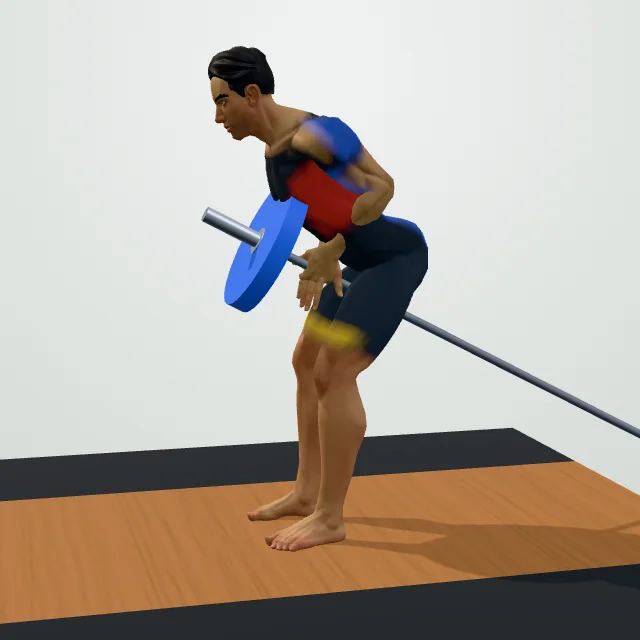
Stand with your feet hip-width apart, the bar directly over your mid-foot. Bend at the hips and knees to grip the bar just outside your legs, keeping your shins close to the bar without touching it yet. Your shoulders should sit slightly ahead of the bar, hips higher than your knees but lower than your shoulders.
Bracing and the pull
Take a breath, brace your core as though about to take a light punch, and pull your shoulder blades down and back to set your lats. Push the floor away with your legs rather than yanking the bar up with your arms and back — the bar should stay close to your shins the entire way up, and your hips and shoulders should rise at the same rate until the bar clears your knees.
Lockout and lowering
Finish by standing fully tall, hips and knees extended, without leaning back or hyperextending your lower back. Lower the bar by hinging your hips back first, letting it travel back down the same path it went up, keeping it close to your legs the whole way.
Sets, reps, rest and how heavy to go
For strength, 3–5 sets of 3–6 reps with 2–3 minutes of rest between sets is standard, using a weight that leaves 1–3 reps in reserve (an RPE of roughly 7–9) rather than grinding every set to failure. For general muscle and conditioning goals, 3 sets of 6–10 reps with slightly lighter loads also works well. Because the deadlift is demanding on the whole body, most lifters do it once or twice a week, increasing the weight in small steps of about 5–10% once the current load feels controlled for all reps. Warm up with several progressively heavier sets before your working weight, and see RPE and RIR and progressive overload for more detail, or build it into a plan with the plan builder or a ready-made strength program.
Variations and alternatives
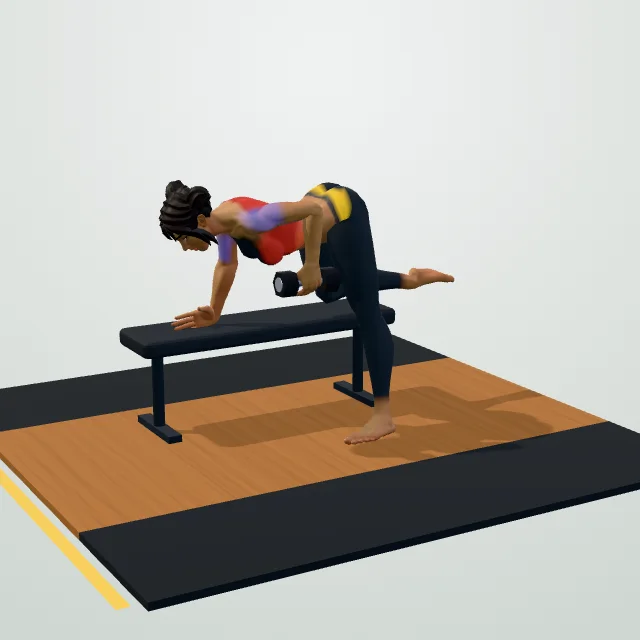
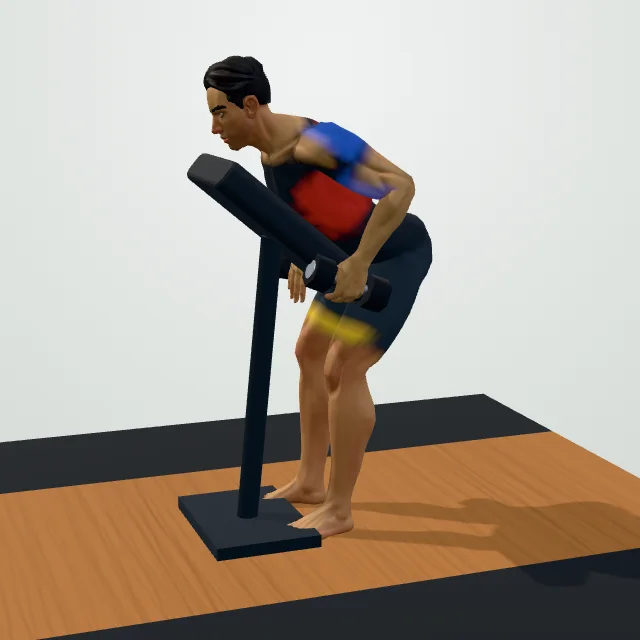
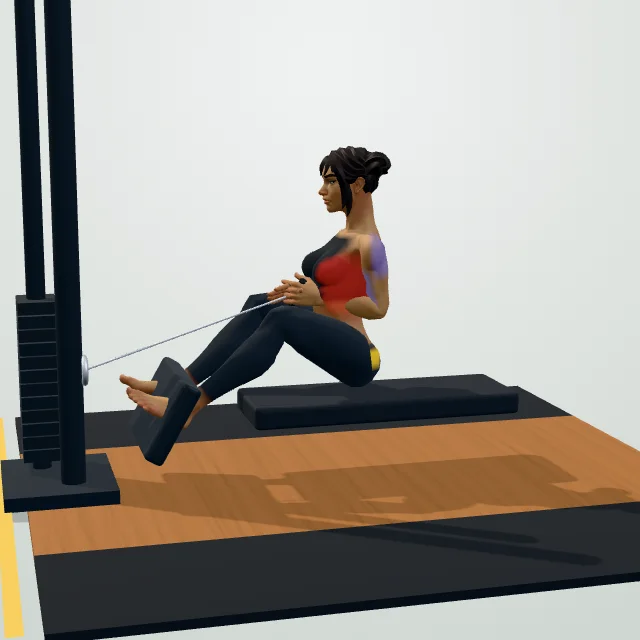
If a straight barbell does not suit you, the trap bar deadlift is a common and often easier-to-learn alternative, and the kettlebell deadlift is a good lighter-load option for beginners or home training. A kettlebell swing trains a similar hip-hinge pattern with a more dynamic, ballistic style. For those without a barbell at all, dumbbells can substitute for lighter-weight technique work, though a barbell remains the standard for progressive heavy loading.
Safety and who should modify it
A rounded lower back under load is the main technical fault linked to deadlift back strain, so stop the set if you cannot keep your spine braced and neutral, rather than forcing the rep. People with high blood pressure or heart disease should avoid holding their breath through a maximal heavy lift (a hard Valsalva strain) and should discuss heavy resistance training with a doctor first. Stop immediately for chest pain, dizziness, unusual breathlessness or sharp back or leg pain, and progress load gradually rather than jumping weight quickly. If you have a current back injury, are pregnant, or are new to lifting, learn the hip-hinge pattern with light weight or a coach before adding significant load, and see exercise for lower back pain for more guidance.
Workout plans with this exercise
Build muscle · Intermediate
Push Pull Legs Split (6 Days)
Strength · Intermediate
Upper/Lower Split (4 Days)
Build muscle · Intermediate
5-Day Body-Part Split (Bro Split)
Strength · Intermediate
5×5 Strength Program
Questions people ask
Is the deadlift a back exercise or a leg exercise?
What muscles does the deadlift work?
Are deadlifts safe?
How often should I deadlift?
Deadlift vs Romanian deadlift: which should I do?
How much weight should I deadlift?
Why does my back round when I deadlift?
General fitness information, not medical advice. Check with a doctor or physiotherapist before starting if you have a health condition, an injury or are pregnant. Stop if you feel chest pain, dizziness or sharp pain.