Full body · Home, no equipment
Bear crawl: full-body control on hands and feet
The bear crawl moves you forward on your hands and feet with your hips low and your core locked flat. It looks like a simple crawl, but keeping the back still while the limbs move is the real challenge.
- Primary
- Front deltsAbsQuads
- Level
- Intermediate
- Type
- Compound · Alternate sides
- Sets × reps
- 3 × 30 s
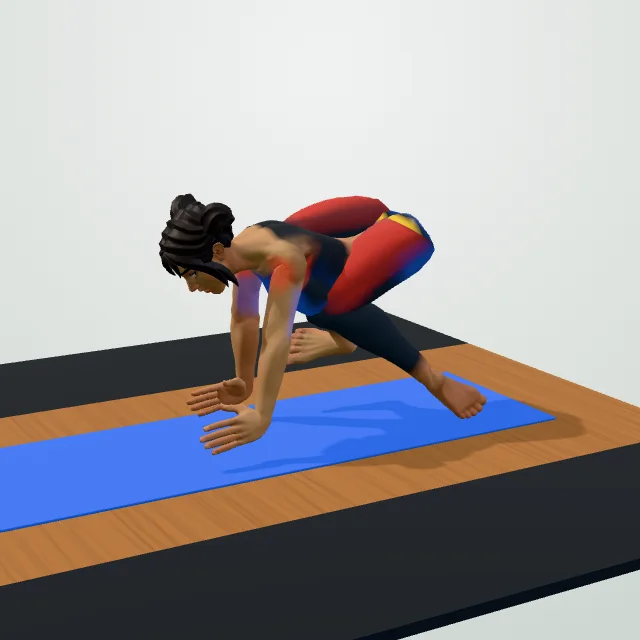
How to do it
- Start on hands and knees, hands under shoulders.
- Lift your knees so your hips sit just above knee height.
- Keep your back flat and core braced.
- Reach one hand and the opposite foot forward together.
- Take a small step with the other hand and foot.
- Repeat forward at a slow, controlled pace.
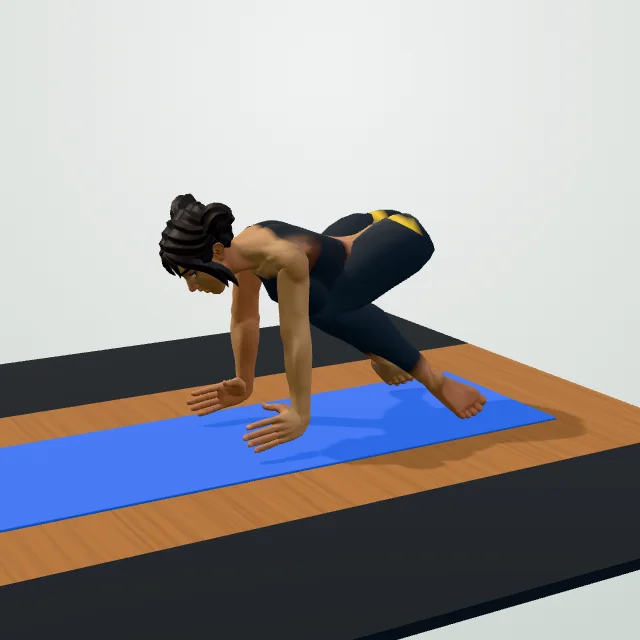
Coach cues
- Hips low, back flat like a table.
- Move opposite hand and foot together.
- Small steps, stay controlled.
- Brace your core, no hip rocking.
Breathing: Breathe steadily throughout; do not hold your breath while bracing your core.
Common mistakes
Make it easier / Make it harder
The bear crawl is a floor-based, full-body movement: hands and feet on the ground, hips lifted just above knee height, and you move forward by shifting opposite hand and foot together while your torso stays flat and still. It is a staple in athletic conditioning and functional training because the demand is less about any one muscle and more about keeping the whole body braced while it moves.
What muscles does bear crawl work?
Bear crawl muscles worked span nearly the whole body. The front delts and chest support your weight through each hand placement, while the triceps keep your arms from collapsing as you shift. The real test, though, is the abs: bracing hard to stop your hips from rocking side to side or your lower back from sagging as opposite limbs move is what separates a controlled bear crawl from an sloppy one. Your quads and glutes drive each step forward from a bent-knee, hips-low position that also asks a lot of hip mobility and control.
Benefits
- Anti-rotation core strength. Moving opposite hand and foot together while keeping the hips level trains your core to resist twisting, a different quality from a static plank.
- Full-body coordination. Few exercises ask the shoulders, core and legs to work together under load in quite the same cross-body pattern.
- Conditioning. Sustained bear crawling for time or distance raises your heart rate quickly while the shoulders and core are still under tension.
- No equipment. Just floor space, making it easy to add to a warm-up, a conditioning circuit, or a home workout.
Technique: hip height, hand placement and pace
Start on hands and knees, then lift your knees an inch or two off the floor so your hips sit just above knee height — not high in the air, which turns it into a downward-dog walk, and not low enough that your knees drag. Move by reaching one hand and the opposite foot forward together, keeping your steps small and your hands roughly under your shoulders. The single biggest technical error is letting the hips rise and fall or rock side to side as you move; keep your back flat, as if a broom handle were resting across it, and your head in a neutral line with your spine rather than craning up to look forward. Take small, controlled steps rather than big lunging ones — bigger steps almost always cost you core control.
How to program bear crawl
| Use | Work | Rest |
|---|---|---|
| Warm-up / movement prep | 2 sets of 10-15 meters | 30-45 sec |
| Core and conditioning | 3 sets of 20-30 sec | 30-45 sec |
| HIIT circuit station | 20-30 sec | as part of a timed round |
As a warm-up, a short bear crawl primes the shoulders, core and hips together before a lifting session or a conditioning circuit. As a conditioning tool, time or distance work better than reps, since the challenge is sustaining position, not counting steps. Bear crawl fits naturally into circuits alongside mountain climbers and plank holds, or as a station in a HIIT block timed with an interval timer. Two to three short sets, two or three times a week, is plenty for most people — it rewards quality control far more than volume.
Variations and progressions
Beginners often start with a bear crawl hold — simply holding the hips-low, hands-and-feet position without moving — to build the core bracing before adding the crossing-limb movement. Once the hold and forward crawl feel controlled, lateral bear crawls (moving sideways) and bear crawl with a shoulder tap (lifting one hand briefly to tap the opposite shoulder while balancing on the other three points) add extra anti-rotation demand. If floor-crawling movement is uncomfortable on the wrists or knees, plank shoulder taps train a similar bracing pattern from a fixed position.
Safety and who should modify it
Reduce the range or use the static hold version if you have wrist, shoulder or knee pain — check with a doctor or physiotherapist first if pain is present.
Bear crawl puts real load through the wrists and shoulders, so it is worth building up gradually if you are new to weight-bearing on your hands. Keep the movement slow and controlled rather than rushing it, since speed is usually what breaks down the flat-back position that makes the exercise worthwhile. Stop if you feel sharp wrist or shoulder pain, not just normal fatigue.
More exercises for full body
Questions people ask
What muscles does bear crawl work?
Is bear crawl a good exercise?
How do you do a bear crawl properly?
What muscles do bear crawls work in the core specifically?
Are bear crawls bad for your wrists or knees?
How far or how long should I bear crawl?
Can I do bear crawls at home?
General fitness information, not medical advice. Check with a doctor or physiotherapist before starting if you have a health condition, an injury or are pregnant. Stop if you feel chest pain, dizziness or sharp pain.