Calves · Gym
Seated calf raise: reaching the soleus underneath
The seated calf raise bends your knee to about 90 degrees before you press up onto your toes, a small change in position that shifts the work toward a muscle standing raises barely touch.
- Primary
- Calves
- Level
- Beginner
- Type
- Isolation · Both sides together
- Sets × reps
- 3 × 15-20 reps
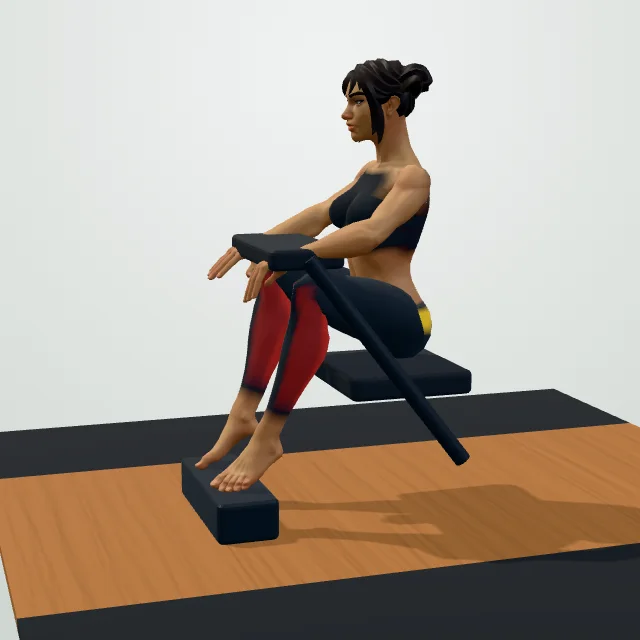
How to do it
- Sit with your knees under the padded lever, bent to about 90 degrees.
- Place the balls of your feet on the platform, heels hanging off.
- Lower your heels into a full stretch at the bottom.
- Press up onto your toes as high as you can.
- Pause and squeeze at the top for a moment.
- Lower slowly back down without letting the weight drop.
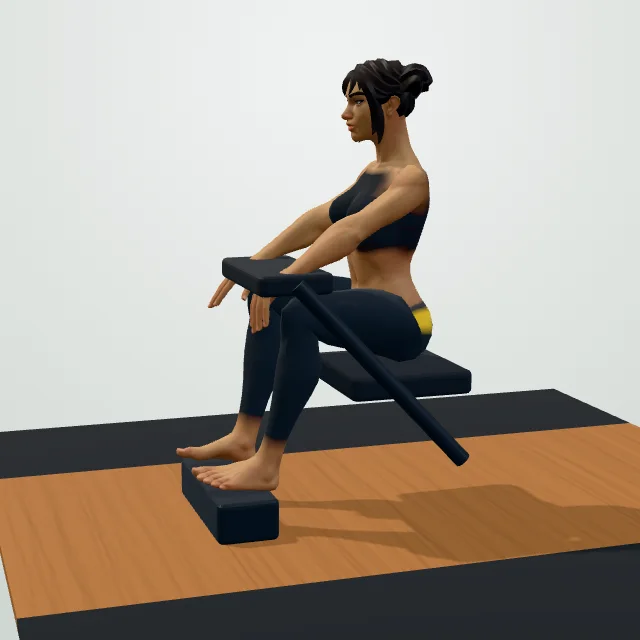
Coach cues
- Knees bent, lever secure.
- Lower into a full stretch.
- Press up high, squeeze at top.
- Lower slowly, no dropping.
Breathing: Breathe out as you press up onto your toes, breathe in as you lower back down.
Common mistakes
Make it easier / Make it harder
Sets and reps by goal
| Goal | sets | reps | Rest |
|---|---|---|---|
| Strength | 3–5 | 6–8 | 90–120 s |
| Muscle growth | 3–4 | 10–15 | 60–90 s |
| Endurance | 2–3 | 15–20 | 30–60 s |
The seated calf raise is done with your knees bent under a padded lever, pressing your heels up while seated. Bending the knee changes which calf muscle does most of the work compared with the standing version.
Muscles worked and why the bent knee matters
Your calves are made of two muscles stacked on top of each other: the gastrocnemius, which crosses the knee and the ankle, and the soleus underneath, which only crosses the ankle and works whenever your ankle bends, regardless of knee position. Bending the knee slackens the gastrocnemius, taking much of it out of the movement, and shifts the load onto the soleus — a muscle that gets comparatively little direct work from standing exercises or even walking and running at a normal pace.
Benefits
The soleus is a highly fatigue-resistant, endurance-oriented muscle, and training it directly with a seated raise supports ankle stability and stamina for running, hiking, and standing sports. Because the exercise isolates a muscle that other calf and leg exercises mostly miss, it fills a real gap in most training plans rather than duplicating work already done elsewhere. Some coaches also link a stronger soleus with better calf endurance late in a run, when the more powerful gastrocnemius starts to fatigue.
Technique in detail
Sit at the machine with your knees under the padded lever, bent to roughly 90 degrees, and the balls of your feet on the platform, heels hanging off the edge. Lower your heels into a full stretch at the bottom, then press up onto your toes as high as you can, pausing briefly with a hard squeeze at the top. Lower slowly back down rather than letting the weight drop — the soleus responds well to a slow, controlled tempo, and rushing through reps removes much of the benefit. Keep your torso still and avoid rocking forward to help the weight up, which quietly shifts effort away from the calf and onto momentum.
How to program it
Because the soleus is built for endurance, higher rep ranges tend to work well here — 3 sets of 15–20 reps is a common recommendation, sometimes more. It can be trained more frequently than many other muscles without excess soreness, so two or three sessions a week is reasonable for most people. Keep rest short, 45–60 seconds, matching the muscle's endurance-oriented nature. Progress the weight in small increments once every rep feels controlled through the full stretch-to-squeeze range, rather than adding load at the expense of range of motion.
Seated vs. standing calf raise
The seated version, with the knee bent, emphasizes the soleus underneath; the standing calf raise, with straight knees, emphasizes the larger gastrocnemius on top. Neither replaces the other — most complete calf-training plans include both, since they reach different parts of the muscle group and contribute differently to the overall shape and strength of the calf.
No machine? Train the same pattern anyway
If a seated calf raise machine is not available, sit on a chair or bench with a loaded barbell or heavy dumbbells resting across your knees, then press through your toes the same way. A step or block under your feet lets you add the same deep stretch at the bottom that the machine provides. Keep the weight light at first, since balancing a loaded barbell across your knees while seated takes a bit of practice to control safely.
Safety notes
Avoid bouncing at the bottom of the stretch, which can irritate the Achilles tendon under repeated load. Anyone with Achilles pain, a recent calf strain, or ankle instability should reduce range and check with a physiotherapist before continuing. Stop if you feel sharp pain in the ankle or Achilles rather than a muscular burn in the calf.
Where it fits in your workout
Place it near the end of a leg session, after your main squat or leg press work, since it is a low-fatigue, low-risk exercise that pairs well with a standing calf raise for complete calf training in the same session. Runners and hikers in particular benefit from including it regularly, since the soleus plays a large role in steady, repetitive ankle push-off over long distances.
Workout plans with this exercise
More exercises for calves
Questions people ask
What muscles does the seated calf raise work?
Seated vs. standing calf raise: which is better?
How many seated calf raises should I do?
Why train the soleus specifically?
How often can I train seated calf raises?
How do I make seated calf raises harder?
Is the seated calf raise good for runners?
General fitness information, not medical advice. Check with a doctor or physiotherapist before starting if you have a health condition, an injury or are pregnant. Stop if you feel chest pain, dizziness or sharp pain.